
Exclusive:Warning of flight cancellations and price hikes as jet fuel crisis hits
Supply questions for Scottish airports as conflict continues
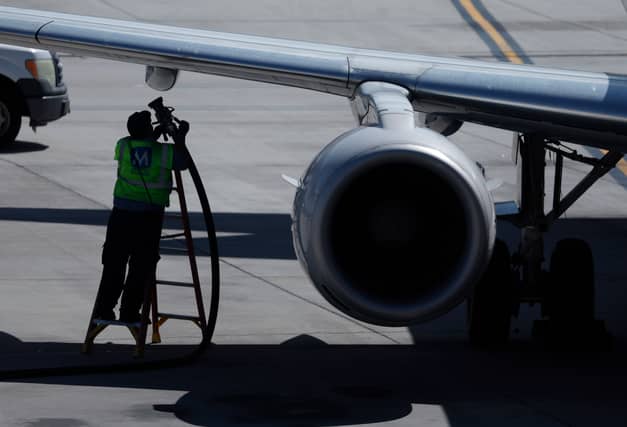


Soaring jet fuel prices as a result of the ongoing conflict in the Middle East will see more airlines cancel flights and hike ticket prices, with airports in Scotland facing additional challenges in securing supplies over the coming months, according to tourism and energy experts.
Amid growing fears around supply as a result of the Iran war, holidaymakers have been warned they could face a “nightmare” trip this summer as their flights are reallocated to different times, or even days, as carriers try to cope.
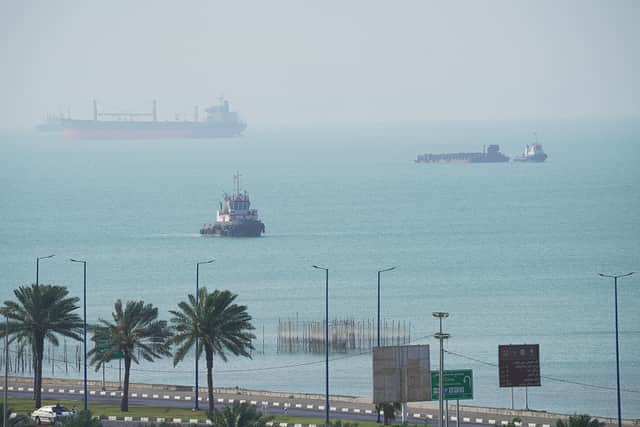
Jet fuel prices have rocketed since the start of the conflict, which has slowed production and transportation across the Middle East. The Gulf accounts for about half of Europe's imports, with the bulk of it ordinarily transported via the Strait of Hormuz, a key thoroughfare that has been effectively closed as a consequence of the war.
However, aviation sources rejected the suggestion that Scottish airports would be at any supply disadvantage, stressing that it was airlines that purchased fuel.
Sandro Carnicelli, professor of tourism and leisure studies at the University of the West of Scotland (UWS), said the volatile situation was already impacting tourism in Scotland and internationally, while John Underhill, a professor in geoscience and energy transition at Aberdeen University, raised the possibility of a “critical storm” where flights are cancelled or become much more expensive at short notice.
With only four refineries in the UK, after closures at Grangemouth and Lindsey, the UK energy minister, Michael Shanks, has asked them to maximise their jet fuel supply, and said the UK government is closely monitoring stocks.
But with no end in sight to the disruption in the Gulf, concerns are mounting that airlines, and ultimately consumers, will bear the brunt of the crisis.
Only last month, Lufthansa announced it was scrapping 20,000 European short-haul flights because a major spike in fuel prices meant that many journeys had become “unprofitable.”
Other airlines, such as KLM-France and Delta, have also temporarily cut flights, with others raising prices.
Prof Carnicelli, who is also deputy director of the Centre for Culture, Sport, and Events at the UWS, told The Scotsman that there will be “inflation on prices” for airline tickets going forward.
“I think the situation is already impacting tourism in Scotland and internationally,” he said. “The significant cancellation of flights from Lufthansa seems to be just a starting point and I believe other companies will follow soon.”
He said it was difficult to predict how the current situation would affect the numbers of people booking overseas trips this summer, and suggested the main impact would be the “increasing costs” if people still haven’t received tickets.

“Cancellations may lead to re-allocating passengers to different times and days,” he explained. “So it could be a bit of a nightmare for some passengers.”
Prof Underhill, Aberdeen University’s interdisciplinary director for energy transition, said the jet fuel crisis raised important questions about the reliance on imports.
“Jet fuel supplies were protected for 40 days or so, and those tankers that got out before the conflict have now arrived,” he explained. “There isn’t a lot coming behind them and we’re now beginning to see the impact of that.
“In this country, we rely on jet fuel imports. We didn’t used to - Grangemouth made jet fuel. Now, over a third of the imports are coming from Kuwait alone, with more coming from the UAE and Saudi Arabia.”

Prof Underhill said rising jet fuel prices would lead to knock-on costs for consumers, and airline operators, particularly those with a low-cost focus, who may deem flights to be no longer commercially viable. “We could get into a critical storm where flights are cancelled or become much more expensive at short notice,” he said.
He also added that because Scotland’s main airports were not directly connected to the Exolum pipeline system, the UK’s most extensive independent fuel pipeline network, it may add to the difficulties in securing supplies.
“The places where jet fuel comes in, mainly Avonmouth and the Isle of Grain, feeds into a network that feeds places like Heathrow and Gatwick, but domestic airports that are a long way from that pipeline system - places like Glasgow, Edinburgh, and Aberdeen - are reliant on that product being trucked in, and there being sufficient capacity to be able to do so,” he said.
“You could see a situation where some of the regional airports are more challenged to get fuel than exists within the pipeline system that feeds the likes of Gatwick … they will always get preference over the regional airports.”
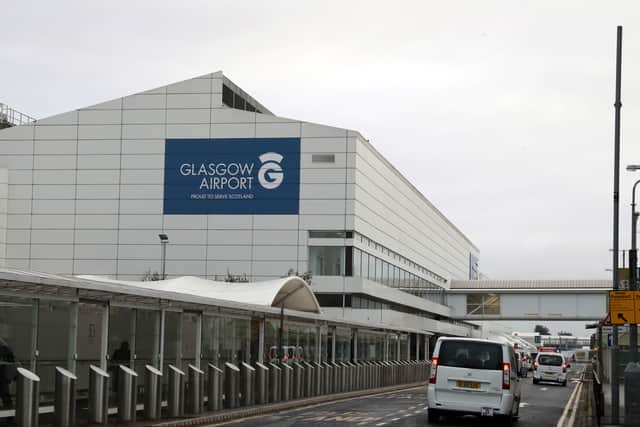
He added: “If you’re plugged into that system, jet fuel is still going to be delivered. If you’re not, and you’re a regional airport, you’re reliant on tankers, and you’re only going to get tankers if those other airports in the network have enough spare capacity.”
But a spokesman for Edinburgh Airport said: “This is not an issue we would recognise. We continue to talk to government and with airlines.”
On the outbound tourism front, Nicki Tempest-Mitchell, managing director at Barrhead Travel, said summer demand remained “strong,” with customers “continuing to book and travel with confidence.” She said the reassurance from major tour operators that they would not be introducing fuel surcharges had provided “added certainty.”
The jet fuel crisis has also sparked questions around the impact on inward travel to Scotland. Chris Greenwood, a senior research fellow at Glasgow Caledonian University’s Moffat Centre for travel and tourism business development, said ongoing geopolitical disruption was expected to “soften some long-haul demand” across several markets, notably from Australasia and parts of Asia.
However, he said such trends were being offset by a “trusted destination effect,” with Scotland increasingly viewed by European and North American visitors as a reassuring, high-quality destination.
Vicki Miller, VisitScotland’s chief executive, said the situation in the Middle East was “concerning and unpredictable,” and pointed out that in times of uncertainty, visitors can change their travel behaviour, with rising fuel costs impacing both consumers and indutry.
“International visitors book further in advance than our domestic visitors and so it’s too early to tell what impact the current situation will have on the season ahead,” she added. “However, we know that we are seeing strong interest in Scotland from our North American and European markets, with visitors still willing to travel.”
Asked about the impact of the international situation on overseas tourist numbers this summer, a spokeswoman for the Edinburgh Fringe Society said ticket sales were “in line with what we’d expect.” The Edinburgh International Festival declined to comment.
Comments
Want to join the conversation? Please or to comment on this article.