
Exclusive:Scotland's Maternity Crisis: Mother still fighting for answers over baby's death
Initial report into infant’s death condemned as ‘complete whitewash’

The mother of a baby who died after a series of failures and oversights by Scotland’s biggest health board said she is still waiting for the final copy of a formal investigation into what went wrong, some three-and-a-half years after losing her son.
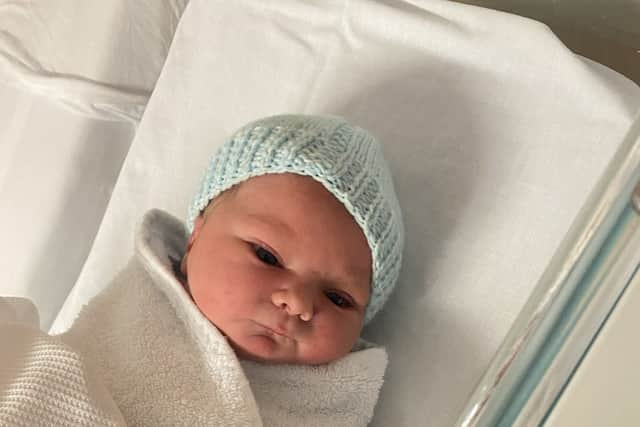
Mason Scott McLean was just three days old when he died at the Royal Children’s Hospital in Glasgow as a result of sepsis and related feeding issues. A subsequent investigation identified missed opportunities to identify how poorly he was, a breakdown in communication between NHS teams, and delays in recognising the severity of his condition.
But Julie Keegan said that an initial report into Mason’s death felt like a “complete whitewash,” with her voice and that of her partner, Angus McLean, “completely lost.” She is still awaiting the final significant adverse event review (SAER) report into what happened, and said she had significant concerns about the entire review process.
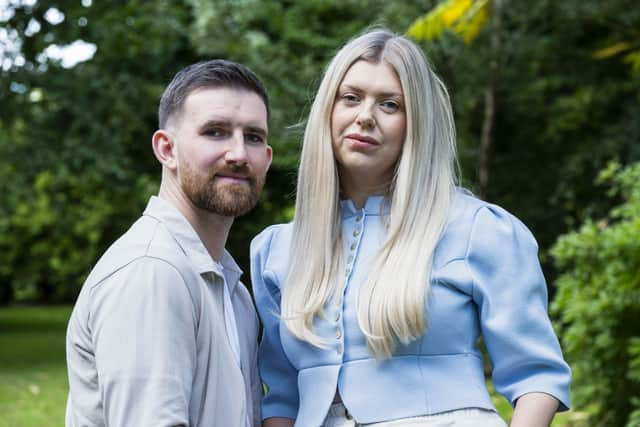

Initially, the couple had been allowed home with Mason following his birth at the city’s Princess Royal Maternity Hospital on 29 January 2023. Two days later, however,they grew concerned after he appeared lethargic and was not feeding. A community midwife reassured them after carrying out routine tests, but with Mason still not feeding, they called NHS 111 who advised them to take him to the Royal Children's Hospital A&E, part of the Queen Elizabeth University Hospital.
After three hours, Mason was transferred to the neonatal unit, but Julie, an NHS intensive care nurse, said critical information was not passed on, with tests that would have indicated the infant had sepsis, a life-threatening condition, missed.
A review carried out by NHS Greater Glasgow and Clyde concluded that staff recorded Mason's temperature incorrectly and his records were incomplete, meaning staff did not recognise how unwell he was. Mason had hypothermia but equipment was not sourced to heat him up.
However, Ms Keegan said she and Mr McLean were still waiting on the final copy of the SAER into Mason’s death, and criticised the lack of communication from the health board.
“They published it initially and I was very unhappy as it just felt like a complete whitewash, with lots of things that were medically incorrect, and the voices of me and Angus were just completely lost,” she told The Scotsman.
“I had an eight hour meeting with them where there were over 100 changes that were agreed and I was supposed to get it back by January 2025. I didn’t get it until August [2025], and none of the changes had been made, and they’d taken out things that I hadn’t asked to be taken out.”
Ms Keegan said she then had a meeting with the health board’s director of women’s and children’s services, which initially offered hope that she would get answers. In the end, however, she said she was still none the wiser.
“The director said they’d got it completely wrong and he said he’d find out what had happened,” she recalled. “He basically said, ‘I am the man to get the answers’, and that he’d get all my answers in 24 to 48 hours. I haven’t heard from him since. I’ve emailed him to ask for updates but I’ve heard nothing.

“I don’t know if I’m going to get that final copy of the report. I think they expect that if they ignore me long enough I’ll just give up, which a lot of people do, but I’ll keep fighting. I’m determined to get answers because that was my baby, and he should be alive.”
Ms Keegan, who is campaigning alongside her husband for sweeping changes to Scotland’s maternity care system, said one of the biggest areas of concern was the way health boards were allowed to investigate their own failings.
“The SAER report into Mason’s death was carried out by a consultant who worked on the intensive care unit - she wasn’t on duty that night but was investigating her colleagues,” she said. “I just don’t think that works. She knew the people she was writing the report about.
“And on the maternity side of things, it was the director of midwifery who was involved, writing about his own midwives. For me that’s a complete conflict of interest. The report I saw was written in such a way that there was no blame and it’s just not good enough.”
Ms Keegan, who said she did not want any other family to have to endure what she and Angus have gone through, also said she had concerns about the wider process of seeking answers and accountability.
“Why should a grieving mum have to sit in a room with a health board’s director of midwifery?” she asked. “I may have felt confident enough to tell her that she was wrong, but I don’t imagine a lot of families who have lost children, and who don’t come from a medical background, want to challenge someone like that.”.
A spokesman for NHSGGC said: “We continue to extend our heartfelt condolences to Mason McLean's family. While we are unable to comment on individual cases due to patient confidentiality, we again sincerely apologise for the distress they have experienced.
“A SAER was completed in August 2025 and improvements to processes, training and equipment have been implemented. We also strengthened our neonatal guidance, updated clinical pathways, and enhanced processes for temperature monitoring and clinical observations to help improve the care provided to newborn babies.
“A SAER is a formal review process that examines significant adverse events to understand what happened, identify learning, and support improvements that help prevent similar incidents from happening again.”
He added: “We would welcome the opportunity to meet with Mason’s family again, to explore as far as we can the remaining concerns they have.”
Comments
Want to join the conversation? Please or to comment on this article.