
Shona Robison pleads not to 'draw out drama' of delayed budget and makes huge council tax freeze hint

The Finance Secretary insisted she will not be “randomly taking an axe to services” as she came under pressure to offer more cash to under-pressure colleges.
Shona Robison has pleaded with opponents not to “draw out the drama” of the budget amid warnings further delays could harm local authorities’ ability to agree spending plans in time - as she hinted there will be no council tax freeze next year.
The SNP finance secretary stressed she will not be “randomly taking an axe to services” as ministers seek to reduce the overall size of the public sector workforce by 0.5 per cent each year for the rest of the decade.
Holyrood’s finance committee convener, Kenny Gibson, asked Ms Robson if that would see the workforce reduce by 20 per cent over five years, with the Finance Secretary responding: “Yes.”
Asked if this was reasonable, Ms Robison again said: “Yes.”
She added that the reduction “is significant” but “in the bigger scale it is more than achievable”.
The SNP finance secretary has vented her frustration over the lateness of the UK government’s autumn budget, to be delivered on November 26, meaning that Ms Robison will not reveal her spending plans until January.


But the finance secretary has appealed for opposition parties not to hold up the budget process for political means, warning that local councils could be put in a position where they are unable to set their budget on time.
READ MORE: Delayed Scottish Budget publication date revealed, due to 'incredibly unhelpful' UK Autumn Statement
Ms Robison appealed for “genuinely a constructive discussion” over next year’s budget plans.
She added: “I would like us to just have a think about, given we are through no fault of our own, late because of the UK government budget at the end of November and we have the backstop of the disillusion of parliament, whether we’re able to take a more pragmatic and consensual approach to agreeing (the budget).

“We don’t want to draw out the drama through the various stages of the budget, because local government, apart from anything else, needs to know its envelopes. We are keen to see whether there is space to build on that.”
Scottish Conservative finance spokesperson, Craig Hoy, told Ms Robison he had “full sympathy” with her over the UK government's delayed autumn budget.
But he added: “That is obviously going to have a knock-on effect for Scottish councils who, I think, at this point in time are very concerned that they are effectively the last link in the chain and that it could cause them real issues.”
Mr Hoy called on Ms Robison to “rule out a council tax freeze” to allow local authorities to “start their modelling earlier”.
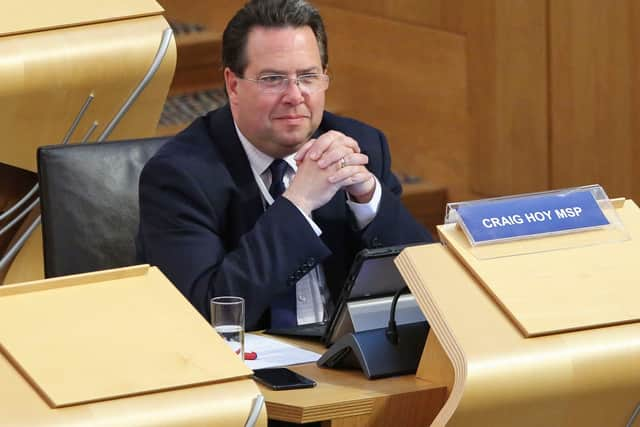
In response, Ms Robison declined to rule anything in or out ahead of the budget, but insisted there would be “no surprises” for councils, suggesting there would be no council tax freeze next year. Last year, local authorities hiked council tax to record levels in a bid to help balance the books.
Ms Robison also hinted at which opposition parties her government will be looking for support to pass the budget.
She told MSPs the Scottish Government was “trying to build on the progress we’ve made before” with opposition parties after last year winning support of the Greens and the Lib Dems in passing the budget.
She added: “Clearly there are relationships to build on in terms of last year’s budget where we secured the support of the Liberal Democrats and the Green colleagues.”
READ MORE: New Scotland college and university funding analysis shows 'most colleges are not sustainable'
Asked whether colleagues will receive a funding boost after a stark report warned most institutions face unsustainable losses and several could run out of cash by April, Ms Robison pointed to the “transformation of the college estates”, adding she was “not unsympathetic” to the calls for additional funding.
But SNP convener of the finance committee, Kenny Gibson, warned that “a lot of that work has been done” in terms of streamlining colleges.
He added: “You cannot continue to innovate while core budgets are being reduced or not allowed to grow. I think that’s, frankly, being unrealistic.”
Comments
Want to join the conversation? Please or to comment on this article.