
'Big hit to Budget' coming for Scotland as weak tax base, benefits take toll: Scottish Fiscal Commission

The SNP’s choices to boost social security and public sector pay spending without enough funding , alongside Scotland’s weaker tax base, will leave the next Scottish Government with little room for new commitments.
Whoever forms the next Scottish government after May’s election faces a “a big hit to the Budget”, Scotland’s independent fiscal forecasters have warned.
The Scottish Fiscal Commission (SFC) has said Scotland’s weaker tax base growth compared to the rest of the UK, alongside SNP ministers overcommitting funding for social security and public sector pay deals, would leave the next government inheriting “really difficult choices”.


In its delayed medium-term financial strategy, published in June, the Scottish Government admitted that day-to-day revenue spending commitments could be £2.6 billion more than the amount of funding it has available by 2030, with capital spending commitments set to exceed funding by £2.1bn.
Professor Graeme Roy, chairman of the SFC, has told journalists that whoever wins next year's Holyrood election faces a tough landscape - suggesting that a new government will struggle to introduce new spending commitments without cuts elsewhere.
Prof Roy pointed to Scotland’s weaker tax base growth than the rest of the UK, which by 2027/28 is predicted to open up a gap of £851m.
He said: “What we’ve seen is faster [income tax] growth or projected faster growth elsewhere in the rest of the UK. What that means is essentially Scottish revenues are not keeping pace as much as we thought they would have done and that suggests there’s going to be a negative reconciliation.
“That’s something to keep an eye on and it will be a concern for whoever wins the election in May. There could be quite a big reconciliation, quite a big hit to the Budget that they need to find in their first Budget that they set out.”
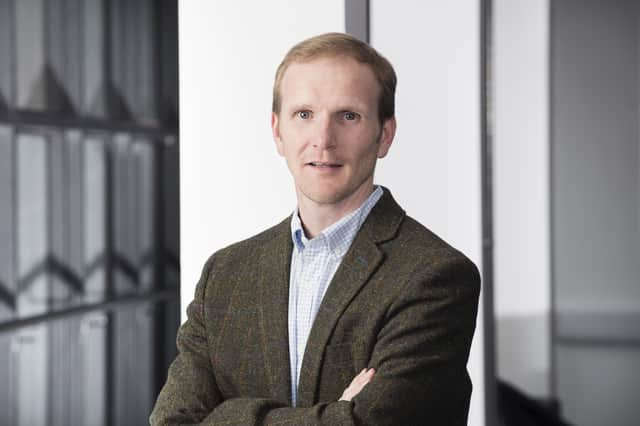
Prof Roy added: “The government is raising more revenue by increasing tax rates and adjusting bands to try and get more revenue in. But they are not raising the full amount they could do because since tax devolution, Scotland’s tax base hasn’t been keeping pace with the rest of the UK in the same way. That’s leading to lower revenues being collected.
“What we’re seeing is faster growth in the rest of the UK, largely driven by a bounce-back in financial services in London and the south east and overall, tax base growth being faster in the UK.”
The SFC has also highlighted choices made by SNP ministers, particularly increased spending and a more generous social security system and agreeing public-sector pay deals above the 3 per cent funded policy position, which will mean money will need to be found from elsewhere.
Prof Roy said: “What we’ve seen over the first few years of social security devolution is a gap between essentially the government’s commitments on spending on social security versus the equivalent funding that is flowing in.
“There are certain payments where the Scottish system is perhaps slightly more generous or open relative to the rest of the UK. There are some payments that the Scottish Government has implemented that are designed to offset UK government decisions such as the two-child benefit cap or the bedroom tax.

“There’s also the delivery of a system in Scotland designed to be more supportive of people claiming social security payments, relative to the system elsewhere in the UK.”
He added: “What we see and what we are projecting is that is going to lead to higher people flowing into these payments in Scotland relative to the rest of the UK and also fewer people flowing out of these payments once they are on these social security payments, relative of the rest of the UK.”
In 223/24, a gap of around £900m opened up.
Prof Roy said: “We’ve projected that will increase as more payments come on stream, particularly around things like the two-child benefit cap, but also as the effects of the new system kick in.”
He stressed “there’s some really big fiscal challenges in the short term for the Scottish Government to essentially balance its books”.
Prof Roy added: “Whoever wins the election in May is actually going to face some really difficult choices about balancing the books.
“They might, quite rightly, have different policy priorities, aims and objectives they want to try and achieve. But they’re going to do that by inheriting a fiscal position where we’re essentially seeing funding lagging behind the spending commitments they will inherit.
“So they are going to have to do some really difficult balancing act to essentially ensure the public finances remain sustainable.”
Scottish Labour finance spokesperson Michael Marra said “The SNP’s reckless financial and economic mismanagement has left Scotland’s public finances in chaos. Public services are under threat because SNP ministers don’t bother to make their sums add up and don’t care about economic growth.

“The SNP cannot be trusted with your money – but Scottish Labour will clean up the SNP’s mess, treat taxpayer money with the respect it deserves and get our economy growing.”
The Scottish Government’s Fiscal Sustainability Delivery Plan (FSDP) states that a spending review in December will set a savings target of between £300m and £700m a year over five years. Efficiency and productivity improvements, alongside reforming public services, is forecast to see savings grow from £600m to £1.5bn a year over the five-year period.
A target of cutting the public sector workforce by an average of 0.5 per cent every year until 2030 is expected to see savings grow from £100m to £700m a year.
Finance Secretary Shonna Robison told MSPs in July the Scottish Government would “reshape and reform our public services”.
She said: “We will protect valuable frontline services and continue to offer a progressive pay policy, which recognises that our public sector workforce is our most valuable asset.”
Comments
Want to join the conversation? Please or to comment on this article.