
Exclusive:North Sea boss warns 'polarised' oil and gas debate putting jobs at risk and makes Rosebank prediction
Efforts to tackle the climate crisis are being put at risk by the toxic debate over oil and gas, the North Sea industry leader has warned.

The head of the organisation that represents the North Sea energy industry has warned the “polarised debate” over the future of oil and gas is risking efforts to tackle the climate crisis and putting jobs on the line.
David Whitehouse, the chief executive of Offshore Energies UK (OEUK), told The Scotsman that he and his colleagues in North Sea industries “care as much about dealing with climate change as anybody”. The assertion came as he revealed some optimism about a “pathway” emerging for the controversial Rosebank oil field and Jackdaw gas field developments to be approved and drilling to begin.


Speaking at the OEUK conference in Aberdeen, Mr Whitehouse, a former production engineer for Shell, is a prime example of fossil fuels transitioning to renewable energy - as he is studying for a masters in renewable energy.
With the debate around the role oil and gas will play in the energy transition remaining as toxic as carbon emissions, Mr Whitehouse has insisted the heat is coming from extremists on both sides of the argument - with the majority wanting a measured approach to net zero that will boost the economy.
READ MORE: Rosebank and other North Sea oil and gas fields could be given green light under new guidelines
The UK government and experts have stressed oil and gas will be needed until net zero is reached.
Time for majority to ‘speak up’ on industry support
Asked about the polarised debate, Mr Whitehouse said it was "simply not the case” that “it’s one versus the other, renewables versus oil and gas”.
He added: “I do think a polarised debate is what will stop us being truly successful dealing with climate change and dealing with it in a way that supports jobs and value in our economy.
READ MORE: Acorn carbon capture: The £18bn project that could protect 35000 jobs remains a pipedream
“I think removing the polarisation from the discussion is really important.”
Mr Whitehouse warned “sometimes it feels like we’re having a polarised debate”, but the majority want to see climate change tackled “in a way that supports existing businesses and industries” and “see that role for oil and gas - domestic, home-grown oil and gas supporting communities around the country”.

He said: “So what you actually find is this isn’t a polarised debate within the public - it’s just at the extremes. Those loud voices on the extremes are what we are hearing.
“Now more so than ever, that 70 per cent who sit in the middle who want to deal with this in a pragmatic way, who recognise we need it all. Now is the time for us to speak up.”
Mr Whitehouse stressed the industry was facing “an uncertain time”.
READ MORE: GB Energy to take Scandinavian inspiration to become power company amid renewable slowdown alarm
He said: “We see the announcement of job losses at Harbour Energy. We are concerned that we are seeing record-low levels of rig activity. That has real-world consequences.”
Concern over renewables slowdown
The UK and Scottish governments have insisted the renewables boom will be ramped up at such a pace that it will keep investment flowing into offshore industries. But Mr Whitehouse has warned the pace of both the decline of the oil and gas sector and the expected expansion of renewable energy were concerning.
He said: “We have seen policy decisions over the last [few] years that I think have accelerated the decline in oil and gas. It does not have to be that way. We can reverse that and produce more of the oil and gas that the UK will need.
READ MORE: Ed Miliband: We 'owe Scotland' over £200m Acorn project funds and 'unlimited' jobs potential
“I think there’s been real momentum behind the build out of renewables, which is something that we welcome. But there are some issues to be dealt with - in terms of planning and consent, access to grid and financing those projects.
“There is a concern we are seeing a quicker decline of one significant industry, and I think we can reverse that. And we need to accelerate the build out of renewables.”
The UK Labour government has vowed to ban new oil and gas licences and is consulting on ending a long-held policy for Britain to seek “maximum economic recovery” - essentially drain all of the oil and gas from the North Sea.
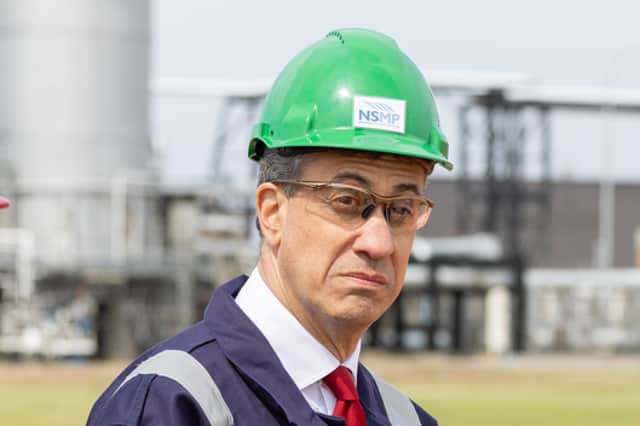
Mr Whitehouse said: “The Climate Change Committee said that on our journey to net zero, we are going to require something like 15 billion barrels of oil and gas. We’re on track to produce about a third of that.
“With supportive policy, I think we can produce at least half and that creates real value in our economy and supports our jobs.”
READ MORE: Acorn carbon capture: The £18bn project that could protect 35000 jobs remains a pipedream
He added: “What we really need, also, is there are opportunities around our existing hubs, around those assets like mini towns in the middle of the North Sea. We need the opportunity to bring in some of those other opportunities in those hubs to extend their life.”
Lifeline for Rosebank
The Rosebank and Jackdaw projects have been instructed to reapply for environmental consent after the Supreme Court ruled their permission was unlawful and will have to set out the environmental impact of burning the oil and gas contained in the developments.
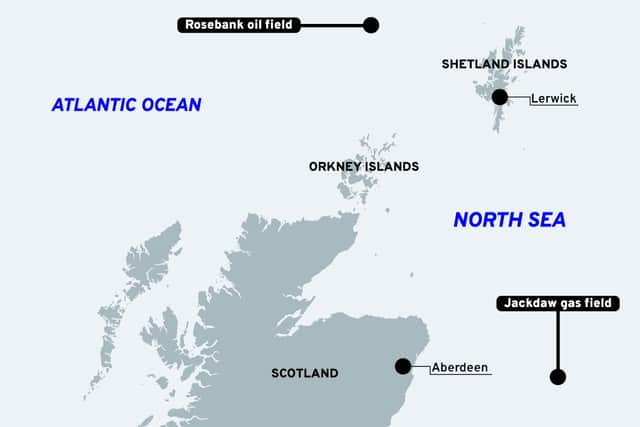
Updated guidance published by the UK government last week, suggested environmental consent could be granted to the two projects and an estimated 13 others, if the economic benefits can be proven to outweigh the climate harm.
Mr Whitehouse said the new guidance “provides a pathway to the projects”.
He said: “Now we’ve got some critical decisions that lie ahead of us and we just need to get these right.
“I wouldn’t say this is the last chance, but I think it is critical that we do get this right. We are seeing an accelerated decline in our oil and gas production in a world where I think we need that.
“We need to be really clear. This is not a debate about oil and gas versus renewables. It’s not a debate actually about dealing with climate change versus economic growth. I think if we get this right, we can deliver both. But it is an argument about whether we support our home-grown industries over imports.
“Do we support value in our economy or do we simply allow that value to be created elsewhere? That’s the debate.”
Comments
Want to join the conversation? Please or to comment on this article.