
Exclusive:Acorn carbon capture: The £18bn project that could protect 35000 jobs remains a pipedream

The key carbon capture project that could revitalise the North Sea economy in the net zero world, will still need final support from the UK government.
The project that could add almost £18bn to the economy, create or safeguard almost 35,000 jobs while cleaning up Scotland’s polluting industries has taken a giant leap forward - but there is still a long way to go to turn a pipedream into a reality.
The Acorn carbon capture utilisation and storage (CCUS) project was finally handed investment funding of £200 million in Chancellor Rachel Reeves’ spending review after years of false promises and hope. But before there are spades in the ground in a vacant field of grass at St Fergus gas terminal near Peterhead, the Labour UK government will need to give “a final investment decision” in the years ahead.
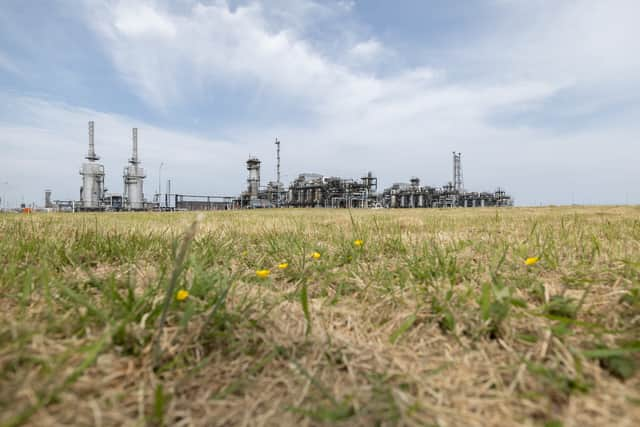

Those behind the Acorn project, including Shell and Harbour Energy, had hoped to be up and running by 2030, but the repeated delays have made the early 2030s a more realistic prospect.
It is thought it could attract up to £12bn of capital investment over a 10-year development period.
READ MORE: Ed Miliband: We 'owe Scotland' over £200m Acorn project funds and 'unlimited' jobs potential
Carbon capture technology essentially prevents harmful CO₂ emissions from being released into the atmosphere, instead harnessing the gas and injecting it deep in the seabed from where it once came from.
Climate campaigners have warned that the technology has not yet been tested at commercial scale - a claim refuted by Professor John Underhill, director for energy transition at Aberdeen University.

“The technology is proven and has been deployed successfully at Sleipner in Norway since the 1990s and at Quest in Canada for the past decade,” he said.
“There are new projects at Northern Lights in Norway, Greensands in Denmark, Porthos in Holland and just last month Perenco and Carbon Catalyst successfully injected the first molecules of carbon dioxide into the Leman gas field in the UK Southern North Sea.”
Harnessing oil and gas infrastructure
The Acorn project will repurpose former oil and gas infrastructure, including former wells which will be used to store the carbon.
Professor Underhill said that his independent geological and engineering research at Aberdeen University found the western part of the Acorn complex is “unsuitable for storage”, with the developers now focusing on Shell’s depleted Goldeneye field as the storage site.
But Professor Underhill warned that “some challenges” remain, although they are not “insurmountable”.
He said: “The field is partially overlapped by a wind farm - Marram Wind - and by an oil and gas exploratory licence, awarded to Finder Energy.”
It is estimated that an average of 10,800 jobs will be created across the UK during the decade-long development and construction period, of which 4,700 will be in Scotland. An additional 4,700 operational jobs including 2,300 expected in Scotland will also be created in the longer term.
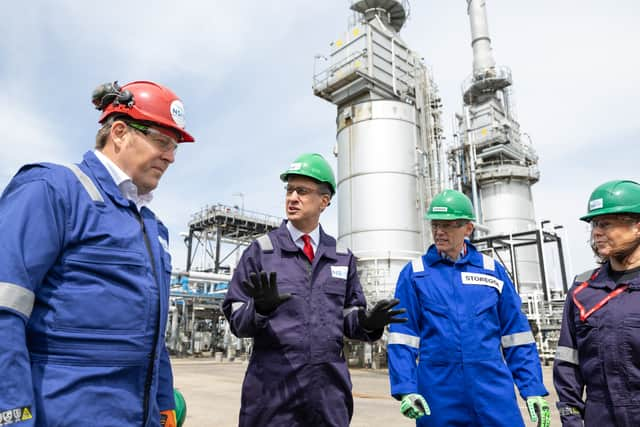
UK Energy Security and Net Zero Secretary Ed Miliband used a visit to the Acorn site this week to insist the job opportunities could be “unlimited”.
Crucially, the Acorn project could also safeguard 18,800 jobs that would otherwise be lost across the UK, including 12,100 in Scotland.
READ MORE: Labour minister: £11bn wind boom creating 1,000 jobs shows Grangemouth mistakes won't be repeated
Enrique Cornejo, head of policy at Offshore Energies UK (OEUK) told Scotland on Sunday that without the Acorn project, alongside other UK CCUS projects, “the UK is not going to be able to reach net zero”.
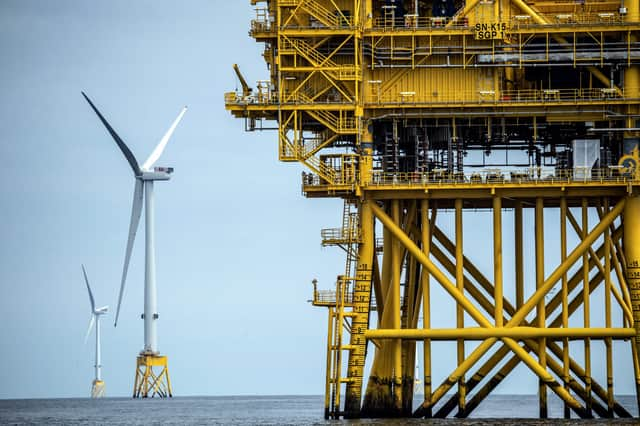
He said: “These projects really demonstrate how the offshore energy sector and the oil and gas industry is key to deliver the energy transition.
“This is a technology that is proven, it works and it’s going to be essential and pretty much the only solution for a number of industrial emitters to decarbonise and reach net zero.”
There are still hopes that by 2030, the Scottish Cluster, which includes the Acorn project and a connection to the Grangemouth hub, could capture 5-10Mt of CO₂ per year.
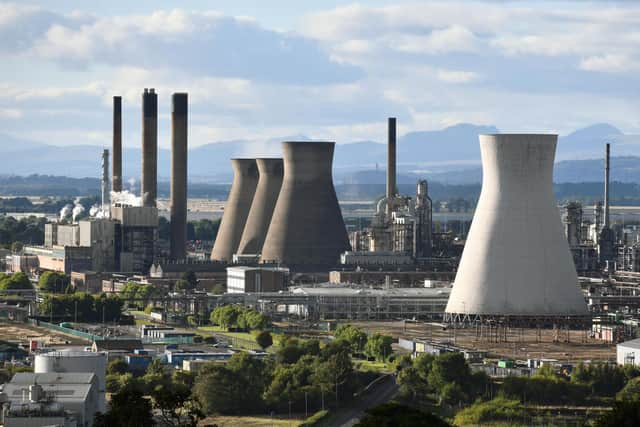
The latest greenhouse gas emissions statistics, published this week, revealed that industrial emissions in Scotland have shrunk by 7.5Mt, an almost 60 per cent reduction, since 1990. But the remaining annual industrial emissions of 5.1Mt of carbon could be dwarfed by the Acorn capacity.
Mr Cornejo said: “It has big potential to create new jobs, but more importantly, to preserve thousands of existing jobs across the UK in sectors like cement, ceramics, glass manufacturing.”
It is also thought that the Acorn project could play a key role in the UK government’s “mission” for a clean electricity system by 2030, if it can get up and running quickly.
Mr Cornejo said: “In the case of Acorn, this will enable Peterhead power station to continue delivering gas that we need. But with carbon capture, this gas will be decarbonised. This will be really important to complement our electricity system that is going to be increasingly based on renewables which are intermittent.
“Having that support from these gas-fired power plants with CCUS is going to be critical for the success of this mission.”
Amid the constant delays, Mr Cornejo said that “having legally-binding net zero targets has made the case for this project much stronger”, as well as the clean power mission.
Local tensions
Locally in the North East, there have been tensions between business leaders and the UK Labour government’s attitude to the oil and gas sector which dominates the landscape.
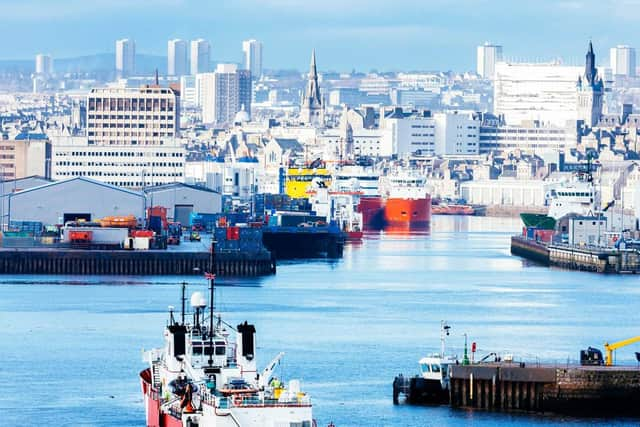
Russell Borthwick, chief executive of Aberdeen and Grampian Chamber of Commerce, said: “We welcome the Government’s recognition that Acorn is of vital strategic importance to the energy transition. This is a case the chamber has been making strongly over a number of years now.
“While we await further detail around the scale of government support, we hope it will allow work to proceed on the project’s preliminary stages and move it forward. The UK is going to require five CCS projects, at scale, to meet its climate targets – the North-east of Scotland has a vital part to play.”
The Scottish Government, which has been calling on the UK government to financially back the Acorn project for years, is expected to now hand over £80m of pledged funding that was contingent on Westminster support.

SNP Climate Action and Energy Secretary Gillian Martin, said: “While this initial funding to Acorn is welcome, it is essential that UK government investment matches the level seen in carbon capture projects south of the border.
“We will continue to work constructively with the UK Government to ensure the fastest possible deployment of the Acorn Project and the Scottish Cluster, so that a just transition for our energy workforce can be secured, while also delivering on net zero targets.”
Nic Braley, general manager of the Acorn project, said: “We will continue to work closely with UK and Scottish Governments to discuss the detail of the announcement and how we proceed.
“We look forward to developing the next phase of the project which will require both short-term and sustained long-term commitment from government to enable a final investment decision.”
Comments
Want to join the conversation? Please or to comment on this article.