
Glasgow needs a metro mayor and devolved powers or ‘risks being left behind' - think tank
The claims were opposed by the Chair of the Glasgow City Region Cabinet

Glasgow needs a metro mayor and devolved powers or “risks being left behind” other large UK cities, a prominent think-tank has warned.
Scotland’s largest city is being left behind by places like Manchester, Leeds and Bristol, a report produced by the Centre for Cities has claimed,. The report, The Missing Piece In The Big Cities’ Jigsaw, argues that city regions with directly-elected mayors receive more investment, better infrastructure and faster growth.
The document claims Scotland’s GDP would be 4.6 per cent larger than it is now if Glasgow’s economy performed in line with the average for cities its size. In England, there are ten combined local authorities which have a metro mayor. The process of local devolution began a decade ago with Greater Manchester.
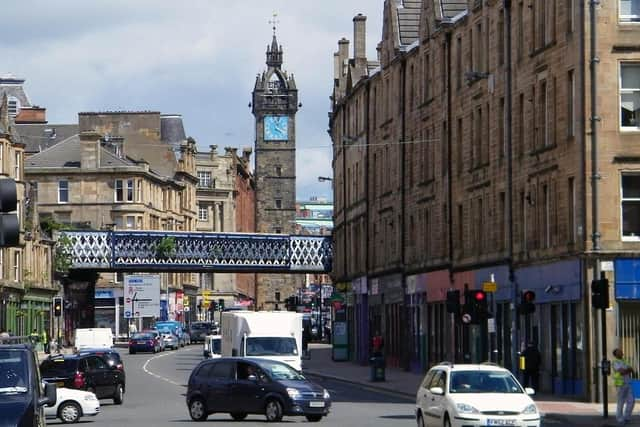

The independent and non-partisan think-tank report was welcomed by Scotland Secretary Ian Murray, as well as Glasgow South West MP Dr Zubir Ahmed, but was dismissed by Glasgow City Council leader Susan Aitken.
Andrew Carter, chief executive of Centre for Cities, compared Glasgow to other locations as he said it was an economic problem for Scotland.
Writing in The Scotsman, Mr Carter said: “Metro mayors now lead all of England’s largest cities. They are directly elected, accountable and visible to both central government and residents of their places - more can name their metro mayor than their local MP or council leader. They are delivering integrated transport systems like Manchester’s Bee Network, designing skills programmes tailored to their local economies, and attracting billions in investment.
“City region devolution is not about copying England. It’s about recognising that Glasgow – and other Scottish cities – deserve the same tools to grow, prosper and lead.
“For Glasgow, a devolution deal would unlock the power to plan transport, housing, skills and economic growth at the scale of the city region. A mayor could be a champion for the region – putting place before politics, engaging with local residents, and implementing a joined-up vision for the future.
“Creating a metro mayor would require legislation from the Scottish Government. Some opposition is to be expected, but the evidence from south of the Border is clear - metro mayors are delivering growth, raising living standards and bringing democratic accountability.
“Glasgow, by contrast, risks being left behind. The status quo is no longer good enough for the city, or for Scotland.”
Scottish Labour’s Dr Zubir claimed failing to adapt could see Scottish cities “left behind”.
He said: “You have to organise your metropolises around what your nearest competitions are. Never mind comparable European cities, comparable cities in the UK are doing better than us.
“The conclusion is quite clear, you need to build economies of scale from a higher population of 1.2 million, and Glasgow is half that. We need to grow our population base, it needs to be bigger. That leadership and organisation is best suited to a mayoral type office. I’d be very supportive of it [directly-elected mayors]. I think the sooner we actually do it, the better.
“Every other day what I see from colleagues in England, especially Manchester, is spades in the ground, cranes in the sky, and us left further behind. Scots and Glaswegians are missing out on opportunities that they should be a part of.”
Dr Zubir said considered metro mayors to be the “next stop in Scotland's devolution journey.”
A spokesperson for Mr Murray said: “We have been clear that Scottish regions would benefit hugely from elected mayors, just as English regions have. For too long power in Scotland has been held at Holyrood – we need to push devolution back to local communities."
Scottish Labour Local Government spokesperson Mark Griffin added: “For too long the SNP has hoarded power in Edinburgh and hollowed out local government. Scottish Labour has been clear that we want to push power out into communities, including giving communities the chance to choose to have mayors.”
Former Edinburgh City Council leader Donald Anderson also supported the idea, but stressed it was not just about having a mayor, but the structures around them.
The Playfair Scotland director said: “[Mayor] Andy Burnham did not make Manchester successful, but he has built on Manchester's success. If you look at council and council leadership, it’s what really helped turn Manchester around. Edinburgh and Glasgow are at risk. If we don’t evolve our government structures, we will begin to lose our position relative to the rest of the cities regions in the UK.
“Metro mayors overlaid on top of the existing council structure, along with a shift and change in policy that builds on the work of the city deals, could take that to new levels. There will be a lot of people in the local government who might see this as a threat, and I don't think they should.
“It's not something that needs to be in competition with existing structures, it can help make the existing structures work better for everybody.”
Deputy First Minister Kate Forbes did not comment on the specifics of a mayoralty.

Instead, she said: “Glasgow is key to driving the Scottish economy, which is why the Scottish Government is partly funding the city-region’s £1.13 billion growth deal. We have also supported Glasgow city region’s £160 million investment zone, with additional funding for electric vehicle infrastructure and skills development.
“We are working with partners to explore ways of devolving further powers to regional economic partnerships, including Glasgow city region, with the aim of presenting options to ministers by the end of this Parliament.”
The report prompted a rebuke from Ms Aitken, the chair of the Glasgow City Region Cabinet, who claimed “it’s simply not true to say Glasgow City Region is currently underperforming in comparison to our English peers”.
She said: “However, we do share concerns that, without parity with them on powers and resource, not only Glasgow, but also Edinburgh, Cardiff and Belfast are being disadvantaged by the UK government.
“Partners in the Glasgow City Region have long articulated our ambition for a meaningful devolution deal to build on the success of our City Deal and unleash the massive potential for inclusive growth that exists right along the Clyde corridor.
“That's why we've spent considerable time preparing a detailed proposition to deliver that kind of investment and autonomy to the region – working with both of our governments and, in particular the Deputy First Minister and the Secretary of State for Scotland.
“In that context, it is perhaps unfortunate that the Centre for Cities didn’t focus on understanding what is already happening in the Glasgow City Region before recommending it does what it has already been doing for some time.
“Contrary to the assumptions made by the Centre for Cities; without a mayor, Glasgow City Region has outperformed both Greater Manchester and the West Midlands for growth - and we have higher wages, a more highly qualified population, higher employment and considerably lower levels of child poverty. In fact, during 2023, we outperformed all but two of the English combined authorities on growth.”
However, Jane Meagher, leader of Edinburgh Council, said: “I welcome the devolving of more powers to the regions of Scotland, not just Glasgow, but with our two cities complementing each other.
“Scotland's Central Belt being largely the driving force of the Scottish economy. This is very much in line with our ambitions for the South East Scotland City Region. However we need an approach to regional leadership that works for Scotland and our context, not simply a duplication of the arrangements in England.”
Comments
Want to join the conversation? Please or to comment on this article.