
Scottish Parliament is full of serious flaws and does not live up to hopes of Donald Dewar - George Foulkes
Labour’s surprise victory in Hamilton should not deflect us from the need to respond to Scottish voters’ growing dissatisfaction with devolution, writes George Foulkes.
After more than a quarter of a century of existence, I fear the Scottish Parliament is not living up to the hopes and expectations of Donald Dewar and John Smith, its principal architects, or John P Mackintosh and Jim Boyack, who were the inspiration behind it.
In Westminster, select committees regularly challenge governments of both main parties. However, north of the Border, Parliament and its committees have largely failed to act as an effective check on the executive. This situation is compounded by the absence of a second chamber in Scotland, which could revise, improve and very occasionally throw out defective legislation.
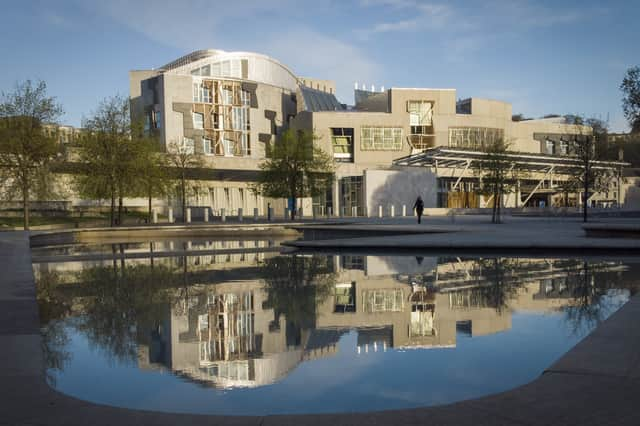

The electoral system at Holyrood was a compromise experiment that was supposed to be reviewed after a couple of elections but, in spite of manifest anomalies, it has continued. My own surprise election in 2007, with no campaign nor expenditure, is an excellent illustration of one of the many problems which plague the current system.
The inability to stick to devolved competences, which greatly increased under the SNP, has also exposed a number of serious flaws with the Holyrood set-up. Successive leaders have had a penchant for sidelining domestic issues, which should be their primary responsibility, in favour of pontificating on global crises, which Scotland has no chance of resolving.
Humza Yousaf encapsulated this misalignment of priorities throughout his tenure, as he consistently weighed in on issues in Gaza, while Scottish services declined, rapidly.
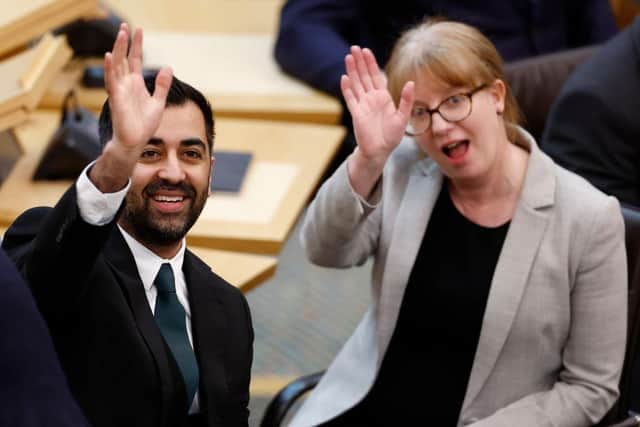
The SNP has a Cabinet bigger than many countries of comparable size, with more responsibilities, and a £1.5 million regiment of Spads to support them. However, they have failed to implement any meaningful change, and are not held properly to account, either by MSPs or a cowed media.
The SNP’s unwillingness to seriously engage with the current devolution framework means that, should they triumph next year, we will face another five years of uncertainty and decline while they hum and haw over when/if to “press the independence button”.
Hopefully, the recent by-election result can be the turning point we need. If Scottish Labour risks being even bolder and more visionary, there is an excellent chance we could seize an overall majority, and finally begin to realise the full benefits of devolution.
This means seriously engaging with some of the devolved areas that have been most neglected, such as transport. The Faeroe Islands, a devolved part of Denmark, has successfully built tunnels between a dozen or so of their Islands with more on the way.
Their Sandoy tunnel, which will last for hundreds if not thousands of years, cost £150 million - about the same as the Glen Sannox, which is already regularly breaking down. We should be more than capable of building tunnels to and between our own islands.
Beyond tunnels, there is a long list of failed or overlooked transport opportunities, which a Labour government could bring to fruition: the lack of a rail link to Glasgow Airport; failure to bring bus services in Glasgow under one public owner; lack of progress on the plan for interchangeable tickets; failure to dual the A9 - the list goes on.
On education, once the jewel in the crown of Scotland’s public services, we have witnessed a similar, if not greater, level of incompetence. The Pisa report, which measures international education standards, shows Scotland has endured a long-term decline, in reading, maths AND science.
And on the NHS, we seem incapable of the kind of transformative thinking Wes Streeting has demonstrated south of the Border. Although health is devolved, there is no shame in copying successes elsewhere in the United Kingdom – even in England.
Centralisation within Scotland is another major issue, as more and more powers have been devolved to Edinburgh. The single services for police and fire have been a failure; we need to look at greater devolution across Scotland - possibly creating new democratic institutions, such as mayors - to bring power closer to the people.
And finally, we come to Holyrood itself. A major review is long overdue and should be prioritised by whichever government comes next. Some key questions which need answered, include - would another electoral system be better? Is there a case for a second chamber? Should there be a limit on the size of the executive? And do MSPs privileges and the role of the Presiding Officer need to be reviewed?
I am sure that there are many more issues that others would want to look at, but I doubt if there are many now who disagree with the need for change. Indeed, sadly, an Abolish Holyrood movement is growing, with the threat to stand candidates for list seats next year.
To rescue Holyrood, people need to see that their money is being spent wisely and effectively, especially since we have decided to impose higher tax rates than in other parts of the country.
It is clear that this electorate is hungry for something different, and while the SNP continue to view Holyrood primarily as a space for protest, Scottish Labour are the only party which can bring about real change.
- George Foulkes is a life peer and a former Labour MP and minister.
Comments
Want to join the conversation? Please or to comment on this article.