
How new legislation would strengthen the rights of parents to ask for a Gaelic school - Kate Forbes
The Scottish Languages Bill will be debated on Tuesday, and Deputy First Minister Kate Forbes has written about the legislation’s importance.
Having been immersed in Gaelic medium education since the age of three, I recognise the immense benefits Gaelic brings to communities around Scotland.
Living in the Highlands, I’ve seen how the language is a unique selling point for Scotland when exporting products, like whisky, or inviting visitors to the country.
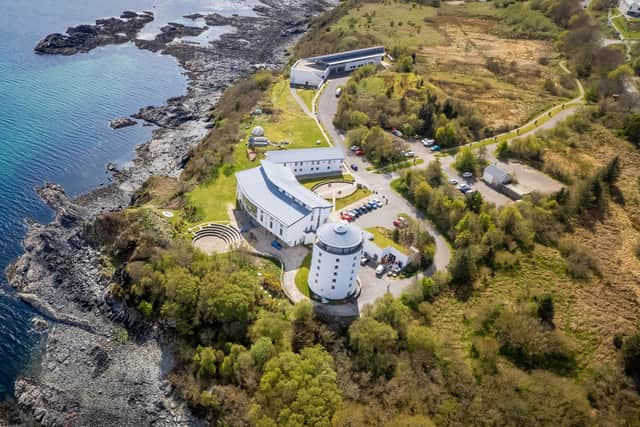

The language also benefits the economy, with our thriving Gaelic broadcasting supporting 340 jobs across Scotland. The success and talent of the sector has been showcased to the world through BBC ALBA’s recent crime thriller series An t-Eilean, or “The Island”.
The programme, which debuted earlier this year, has had tremendous success, attracting a record number of viewers on BBC ALBA. It has also been sold to several European broadcasters and was recently named Europe’s best regional programme at the CIRCOM Awards.
To accelerate Gaelic’s growth, the Scottish Government has introduced the Scottish Languages Bill, which MSPs will consider on Tuesday.
I am honoured to take forward this Bill into its final stage as a Gaelic speaker and Scotland’s first Cabinet secretary for the language. It presents us with a significant opportunity to protect and restore our treasured languages of Gaelic and Scots.
New powers within the Bill would strengthen the rights of parents to ask for a Gaelic school to be set up in their area. Under the plans, local authorities would be required to assess if the request was practical and affordable.
After taking advice, ministers could direct local authorities to proceed with the establishment a new Gaelic school if the authority's assessment considers it to be viable.
We know that Gaelic medium schools offer good value for money as they frequently demonstrate above average performance despite costs being no greater than English medium schools. Research also indicates that children who are bilingual tend to perform better in school and have access to more jobs when they grow up.
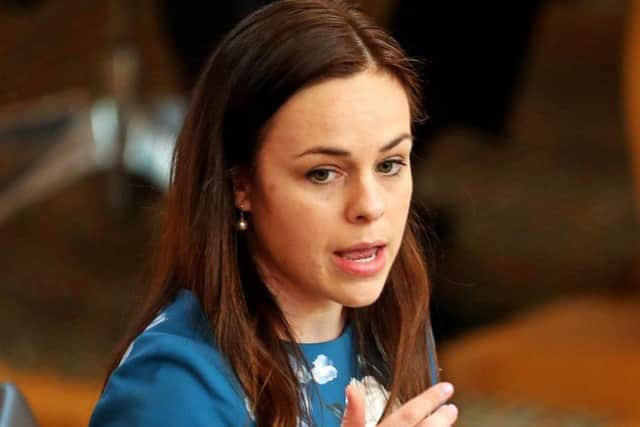
Other measures include introducing educational standards for Gaelic and Scots and bringing forward targets on the number of people speaking and learning Gaelic. This would ensure that ministers are accountable to MSPs on progress made in growing Gaelic throughout Scotland.
The Bill would also establish Scots and Gaelic as official languages and support the creation of areas of linguistic significance in Gaelic communities, so that we can better target policies to support the language’s growth
These provisions aim to build on the encouraging progress made in the most recent census in 2022, which found an increase in Gaelic use for the first time since 1971.
However, I recognise that more needs to be done to grow Gaelic in communities where it is traditionally spoken following a drop in speakers in the Outer Hebrides.
That’s why the Scottish Government is working with partners to support more economic and social opportunities in Gaelic communities so that more people who speak the language continue to live in those areas.
The Scottish Languages Bill would also play a vital role in restoring Gaelic’s place in these communities.
The significance of Gaelic medium education to the language’s resurgence is reflected through my own family. My grandparents, who lived just south of Inverness, spoke the language, but this was not passed on to my parents. But through Gaelic medium education I had the privilege to become fluent in Gaelic.
I am optimistic that, with the passage of this Bill, the privilege of Gaelic medium education will become more widely available to children and young people in all parts of Scotland.
- Kate Forbes is the Deputy First Minister and Cabinet Secretary for Economy and Gaelic.
Comments
Want to join the conversation? Please or to comment on this article.