
Burnham told to unlock 111 North Sea projects and £50bn investment with Budget pivot


UK Labour ministers have been urged to prioritise domestic production of oil and gas over imported fossil fuels in Chancellor John Healey’s autumn Budget next month.
North Sea chiefs have called on Andy Burnham to turn "supportive language into policy decisions" as more than 100 new oil and gas projects could be unlocked if the UK government approves the controversial Rosebank and Jackdaw developments.
Offshore Energies UK (OEUK) has urged the Labour government to use its autumn Budget to chart a new course for the North Sea oil and gas sector - estimating that bringing forward reforms to the energy profits levy could generated an extra £15 billion for the Treasury.
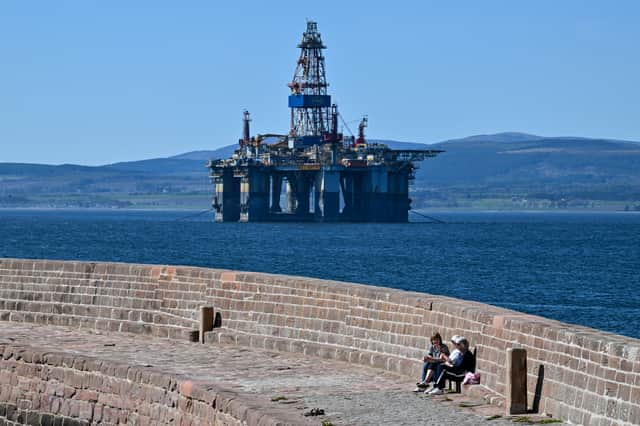
Speculation has mounted that Chancellor John Healey could use his Budget on October 28 to confirm reforms to the profits levy, introduced by the Conservative government in 2022, could be brought forward following a persistent outcry from the North Sea industry.
It comes as Mr Burnham’s government prepares to make a decision on whether to approve the Jackdaw gas and Rosebank oil and gas projects, which do not need exploration licences but have been required to apply for new environmental consent permits following a landmark court case in January 2025.
READ MORE: Why Grangemouth's green fuels blueprint has stalled amid fears of 'irreversible industrial decline'
North Sea chiefs have suggested, in a new economic report, that approving the two developments could open the door to a future 111 projects, the majority of which do not need new exploration licences.
Greenlighting Jackdaw and Rosebank is seen as setting a precedent to opening up the North Sea for fossil fuels investment.
Labour pledged to end the issuing of new licences as a key manifesto commitment ahead of the 2024 general election - backing up climate scientists’ warnings that global efforts to keep temperatures below dangerous levels cannot be met with any new oil and gas projects going ahead.
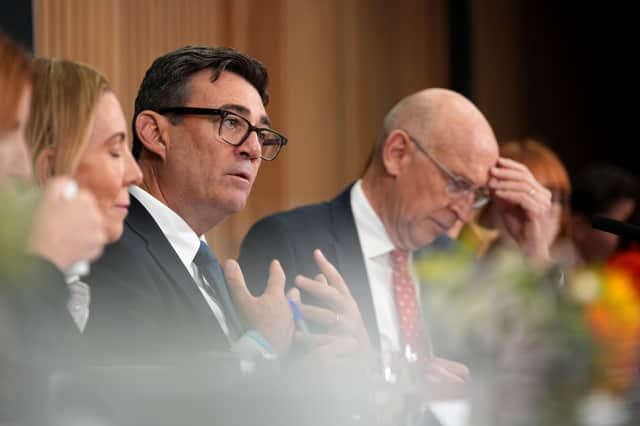
But Mr Burnham has come under intense pressure from fossil fuel giants to relax his party’s stance, while the SNP and Conservatives are also calling for a re-think.
Ben Ward, OEUK’s market intelligence manager, said the industry has drawn up an “alternative view” to the narrative that the North Sea oil and gas sector is facing “terminal decline”.
He added: “In total, 111 additional projects were identified as being considered for investment, should we see suitable reform to the energy profits levy in early 2027 - alongside a regulatory framework that clearly promotes domestic supplies over imports.
“Together, these projects unlock 3.25bn barrels of oil and gas production. It sustains jobs and it generates more than £70bn to the UK economy.”
Mr Ward admitted that “the basin is mature” in the UK North Sea continental shelf, but insisted that “the pace of decline is not fixed”.
He said: “Our investment case scenario pays an additional £15bn to the UK economy by 2035.
“The investment case also sustains tax receipts for a significantly longer period than would be achieved under current trajectories - creating a more durable, long-term source of revenue for the public finances. The longer the UK government delays a decision, the smaller the opportunity becomes.”
Asked by The Scotsman whether unlocking the 111 new projects would require the UK Labour government to rip up its manifesto pledge to ban new licences, formalised in its proposed Energy Independence Bill, OEUK energy policy director, Enrique Cornejo, suggested most were in the same scenario as Rosebank and Jackdaw with no new exploration licences required.
READ MORE: SNP call for UK oil funds to be ringfenced for Scotland's renewables to counter 'immoral job losses'
“Those projects are real”, he said. “The vast majority of the resources within those projects can be unlocked with resources that exist within existing licensed areas.
“We need to ensure that we continue having the option and the possibility to continue exploring, particularly when you see what’s happening across Norway and more broadly across Europe.
“It is the economics that are preventing developers from developing those resources.”
OEUK chief executive, David Whitehouse, was pressed over whether decisions on Rosebank and Jackdaw needed to be made quickly, despite there being no timescale for UK ministers to sign off the project’s environmental permits.

He acknowledged any decisions need to “go through due diligence” but stressed they should be “made in a timely manner”.
“We are looking for a decision from the government to move those forward”, he added.
“It is not just seeing Jackdaw and Rosebank but that wider pipeline of projects coming through and going through the process.”
The North Sea industry has welcomed warmer words from Mr Burnham on the challenges facing the sector than his predecessor, but has called for concrete action in next month’s Budget.
“We’ve heard the language from Andy Burnham”, Mr Whitehouse said.
READ MORE: Flagship North Sea floating wind projects stall as SNP warned not to 'squander' renewables potential
“He’s been very clear that we will use oil and has for decades to come and our choice is where do we get it from. That is helpful language.
“Now we need to see the policy decisions and fundamentally, a very clear statement that the UK is going to back energy of all kinds. Now is the time to shift from more supportive language into policy decisions.”
But he admitted that with energy prices soaring, it could potentially be a hard sell to the public to be calling for a better deal for oil and gas giants in the current economic climate.
Mr Whitehouse said: “From the consumers’ point of view, you can argue that it is a difficult time to make these arguments.
“However, when we poll the public, what’s we’ve consistently seen is support for UK production over imports.
“The case that we need to make loud and clear is this is a long-term windfall tax that ensures oil and gas companies pay high levels of tax when prices are high but encourages investment.”
OEUK’s 2026 economic report said that “fiscal reform and a pragmatic approach to licensing could unlock investment and improve long-term energy security”.
It added: “A more competitive regime from 2027 could unlock 111 additional projects, £50 billion of private capital investment and 3.25 billion boe (barrels of oil equivalent) of production, helping sustain domestic output and reduce future import dependence.”
But campaigners have accused the North Sea industry of ignoring the facts about the declining basin and climate change.
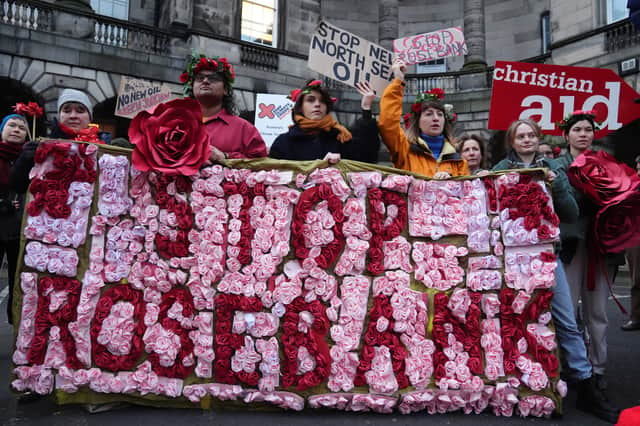
Tessa Khan, executive director of Uplift, said: “This is just fantasy from the OEUK, who are ignoring geology, history and also the very real climate crisis we have all just suffered.
“After 50 years of drilling, the North Sea is a declining, ultra-mature basin. The UK has burned most of its gas and what’s left is mostly oil, the vast majority of which is exported and sold on international markets.
“New drilling will do nothing to bring down bills and little for energy security. Without a rapid shift to the abundant renewable energy we have, and help to households to shift away from their reliance on fossil fuels, the UK will become ever more reliant on imported gas regardless of what the OEUK say.”
Graham Leadbitter, SNP energy spokesperson, said: "The Labour party's tax on Scotland's energy is damaging Treasury takings on top of the 1,000 energy jobs being lost a month - that's before the risk to our renewables future and our energy security. Scotland deserves better.
"There is no moral high ground in ruining jobs in Scotland while sponsoring the same jobs halfway across the world, driving up our reliance on imports from foreign regimes and at a higher carbon cost.
Conservative shadow energy secretary, Andrew Bowie, said: “The warning from OEUK’s report could not be clearer to Andy Burnham —support the extraction of North Sea oil and gas before it’s too late.
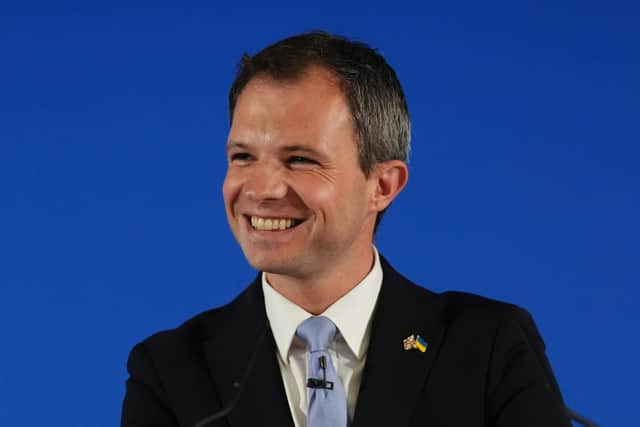
“This should be the easiest and most obvious choice any Prime Minister ever makes, yet his decision to again delay approving Jackdaw and Rosebank highlights he is not fit for the job.
“Ultimately, this report sends a stark message that Labour’s absurd North Sea energy policies risk bringing a premature end to our oil and gas sector as we know it.”
A UK government spokesperson said: “We’re giving the sector and its investors the long-term certainty to plan, invest and support jobs with plans to replace the Energy Profits Levy when it ends by 2030, or earlier if its price floor is triggered.
“We are also making sure the North Sea has a prosperous and sustainable future through record investment that helps deliver the next generation of skilled jobs while growing the clean energy industries of the future.”
Comments
Want to join the conversation? Please or to comment on this article.