
Why Grangemouth's green fuels blueprint has stalled amid fears of 'irreversible industrial decline'


Almost 18 months on from the Grangemouth refinery closing its doors, plans to replace the facility with new and emerging technologies and fuels have stalled.
Huge hopes were pinned on Grangemouth being transformed into a hub for emerging green technologies following Petroineos’ decision to close Scotland’s only oil refinery. But 17 months on, Scotland’s largest brownfield industrial site could become a desolate visual symbol of a failed energy transition - amid a warning politicians are overseeing “ irreversible industrial decline which has permanently scarred other areas across Scotland”.
Grangemouth’s history with heavy industry goes back more than 100 years when the refinery opened in 1924 under Scottish Oils Limited, part of British Petroleum.

Initially, crude oil was imported from the Persian Gulf through Grangemouth’s port before expanding rapidly following the Second World War as the economy ramped up its reliance on fossil fuels and their discovery in the North Sea.
The refinery acted as a magnet for other emerging technologies including chemicals and plastics - sectors still synonymous with the industrial hub today.
The economic contribution of the Grangemouth refinery, along with its supply chains and employee spending, was estimated to be more than £400m, while it was estimated to support 2,822 jobs across Scotland.
But in April 2025, Petorinoes closed the refinery - with the complex making a daily loss of £385,000. It had become unsustainable.
The warnings had been made to politicians long before the controversial decision to close Scotland’s only refinery. Records show that then SNP net zero secretary Michael Matheson was told about the problems facing the plant at least three years before the viability of the refinery was made public.
Work is currently underway to decommission the refinery site, with plans being drawn up to safely demolish the complex spread over 200 acres. It is likely to be one of Scotland’s biggest demolition projects.

But there are real fears that if the so-called Project Willow drawn up to replace the refinery does not materialise, the flattened facility will act as a stark reminder of politicians failing to take warnings seriously and an ultimately failed just transition akin to the Ravenscraig steelworks acting a a symbol of de-industrialisation in the 1990s.
Project Willow set out nine potential technologies to be developed at the refinery site - with most attention given to a potential sustainable aviation fuel (SAF) hub. But with UK government policies effectively banning first generation SAF being produced to a commercially viable grade at home, ironically, all SAF is currently imported from Europe.
The UK government created a so-called SAF mandate - meaning there has to be a certain proportion of bio content in fuel. Under the policy, 2 per cent of total UK jet fuel demand must come from sustainable sources with the proportion to increase over time.
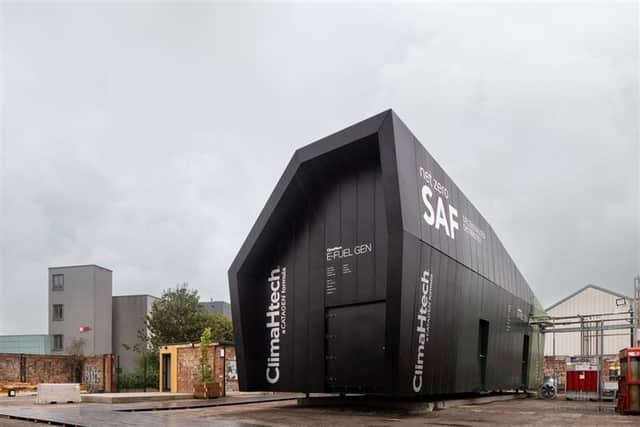
But Westminster has effectively banned crop-derived feed stocks being produced in the UK and taken a view that arable land should be used for food production rather than fuel production. That means that UK-produced SAF isn’t yet commercially viable.
Despite the obvious barrier, that is a UK-wide problem, not one specifically for Grangemouth. One potential reason Grangemouth has, so far, missed out to other projects for SAF funding could be its distance from the UK’s aviation and exports infrastucture, centred around south east England.
The SNP has vented its anger at Westminster for funding being awarded to SAF projects south of the Border, while the £200m allocated from the National Wealth Fund, earmarked for Grangemouth by Keir Starmer in February 2025 has not been touched.
In recent days, Prime Minister Andy Burnham has suggested his new investment arm through No 10 North could be the avenue to get Grangemouth’s SAF project moving.
Speaking in the Commons, Mr Burnham highlighted a need to “reindustrialise Scotland and other parts of the country”.

He added: “It must be done in a pragmatic way so that we can make the transition work rather than being too ideological about it.”
The PM acknowledged that “Grangemouth could be the home of sustainable aviation fuel” and suggested that No 10 North could “support” the development of proposals.
He added: “I know that there is a financial commitment, but if we do reindustrialise, the money that we put forward to support that process can pay us back over many years to come, through a bigger and flourishing economy in all parts of the UK.”
READ MORE: Saving Grangemouth needs eye-watering amount of cash and political will to become a reality
Grangemouth’s firebrand Labour MP, Brian Leishman, has heaped praise on the Prime Minister for saying the right things, but branded his predecessor as “incredibly ineffective” on Grangemouth.
Mr Leishman, the outspoken MP for Alloa and Grangemouth, told Scotland on Sunday that he will be “making representations to the team at No 10 North” to get plans for sustainable aviation fuel at Grangemouth moving.
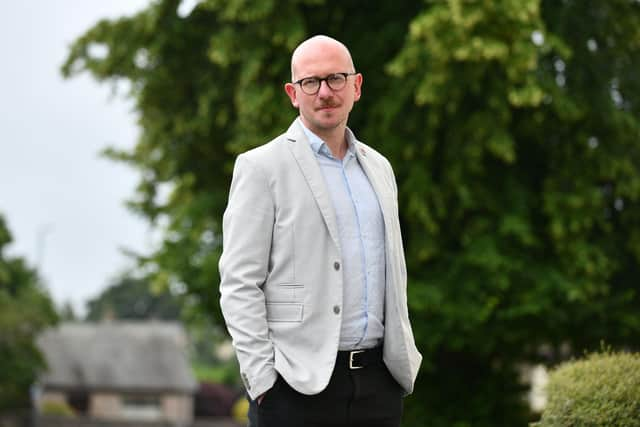
“What comes next at Grangemouth has to be transformative”, he said.
“It’s got to happen, it’s got to happen quickly. This cannot be years and years down the line. We need to see concrete plans and it needs to happen now.
“I have spoken to companies. They want to get going, they have the technology and the will.”
Mr Leishman stressed that “there are really positive noises coming from No 10” .
He added: “Their diagnosis of the social ills as well as the de-industrialisation and the need to reindustrialise seems to be grasping the issue properly.
“We have seen private companies come into Grangemouth for decades and essentially invest and then asset strip and then leave.
“But even in the days under BP, people locally have fond memories, it was a real community. But that’s not Jim Ratcliffe and Ineos at all.”
But Mr Leishman and his Scottish Labour colleges have warned the SNP government needs to also take responsibility for Project Willow, so far, stalling.
“I’m pretty disgusted at the SNP because the Scottish government knew about about this potential closure three years before it happened”, Mr Leishman said.
“Michael Matheson, who was an SNP cabinet secretary and a local MSP knew about it.

“I’ve been pretty open about where a Labour government has failed but the SNP are culpable as well.
“You could say the same about Mossmorran and Ferguson’s Marine which they claimed was necessary workforce changes. I’m not having the SNP using Grangemouth as a political football.”
SNP MSP Martyn Day has reiterated his party’s blame at the hands of Westminster.
He said: “Scotland’s industrial story is one of constant betrayal and destruction at the hands of Westminster.
“Grangemouth is yet more evidence to add to the mounting pile that London control of Scotland’s industrial base is a complete failure.”
Trade unions, who have rallied against the closure of the refinery over the hundreds of jobs lost, have vented their frustration at the lack of progress at Grangemouth.
Susan Fitzgerald, Unite Scottish secretary, said: “Unite members and the wider Grangemouth community are angry over the minimal progress made on the proposals contained in Project Willow, in particular, the lack of development of a sustainable aviation fuel hub.

“Andy Burnham has recently said that Grangemouth could be the 'home' for the development of the industry but our overriding concern is that this is just more hollow words from yet another prime minister."
She added: "It is more than 18 months on but not one penny has been spent from the £200m national wealth fund pledged for Grangemouth. What is the point of this fund if it does not bring forward concrete proposals at scale with targeted timeframes?
“We need boots on the ground to deliver these new jobs and industries which politicians are constantly telling us are being created by the just transition process.
“Talk from ministers at Westminster and Holyrood is cheap - we need action now or Grangemouth could see the irreversible industrial decline which has permanently scarred other areas across Scotland.
“That is the stark choice facing governments and it will be on their heads if they fail to act. Unite will continue to hold them to account at every turn for their ongoing failure to do nothing."
SAF was just one potential industrial investment opportunity out in Project Willow.
READ MORE: Flagship North Sea floating wind projects stall as SNP warned not to 'squander' renewables potential
As well as hopes for the Grangemouth site to become a hub for aviation fuel, Project Willow earmarked eight other potential industries including plastics recycling, bioethanol from timber, fermenting animal waste into biomethane and low-carbon hydrogen.
But some of the other proposed projects also face policy barriers around the need to loosen rules around feedstock.
The most obvious barrier is finance. For all projects in the estimated “base case”, a whopping £3.5bn of private sector investment will be required, with funding unlikely to be unlocked while policy levers do not open the door to make the industries viable in the UK.
Scottish Enterprise, which is co-ordinating bids for any potential projects, has received more than 180 enquiries from companies over potential initiatives with £25 million of the Scottish government’s Grangemouth just transition fund allocated to support projects and take them forward.
It is understood that Scottish Enterprise are working with a number of companies over potential projects at Grangemouth, but the details and any progress to solid bids remain confidential.
A Scottish Enterprise spokesperson said: "Since the Project Willow recommendations were published last year we have triaged more than 180 relevant inbound enquiries and continue to work intensively with our partners to progress the most viable and immediate of these, building a strong pipeline for the site."
SNP business minister, Tom Arthur, argued that “the Scottish government is helping secure a long term and sustainable future for Grangemouth, working with a range of partners to bring forward new, commercial opportunities”.
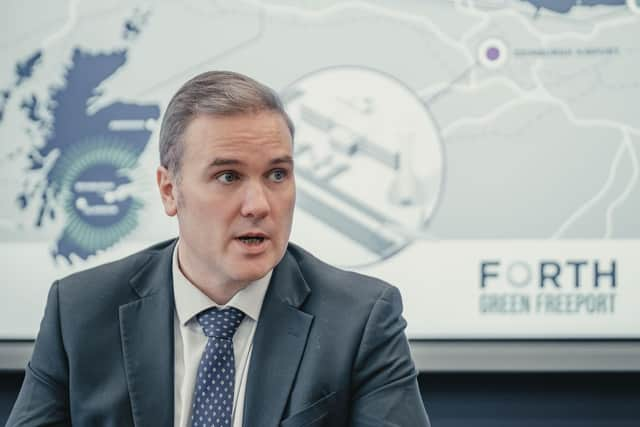
He added: Over £8m of Grangemouth just transition fund funding has already been allocated, including to Celtic Renewables and MiAlgae to establish and grow their businesses.
“The First Minister was clear when announcing the fund that this was a multi-year commitment and money remains available in this year’s budget for suitable projects.
“We continue to call on the UK government to make good on its promise of delivering £200m of national wealth fund investment at Grangemouth, of which none has been spent to date. The UK government made clear promises to the workers and the wider community and it would be utterly unacceptable if they fail to deliver.”
The UK government was contacted for comment.
Comments
Want to join the conversation? Please or to comment on this article.