
Exclusive:SNP call on Andy Burnham to consider Scottish visa plans as blueprint to boost workers revealed
The SNP government is calling on Andy Burnham to consider the Scottish visa plans as Scotland grapples with an impending population decline


SNP ministers have published plans for Scottish visas to attract more workers to Scotland - amid hopes Andy Burnham will have “open ears” to the plans if they can “demonstrate a boost to economic growth”.
John Swinney pledged to engage with the UK government over its plans for a Scottish visa within the first 100 days of reforming his SNP government.

The draft plans, seen by The Scotsman, sets out how a Scottish visa could be delivered - along with a proposed five-year pilot of a rural visa and a Scottish graduate visa.
Westminster has previously ignored calls by the SNP government for immigration powers to be devolved to Holyrood. But The Scotsman understands that Mr Mr Burnham could be persuaded to listen if the plans can contribute to growing the economy.
A UK government source told The Scotsman that “the Prime Minister has open ears to any plans that demonstrate a boost to economic growth”.
They added: “But any proposals that are trying to start another constitutional fight and are not in the interest of the country would be a waste of time.”
SNP business and fair work minister, Tom Arthur, has written a letter to UK minister for migration and citizenship, Jo White, calling for consideration of the Scottish government’s proposals.
A Scottish government source described the proposals as “grown-up plans”.
They added: “If Andy Burnham is as serious about devolution as it claims to be, and wants to focus on economic growth, then the proposals for a Scottish visa should be given proper attention.”
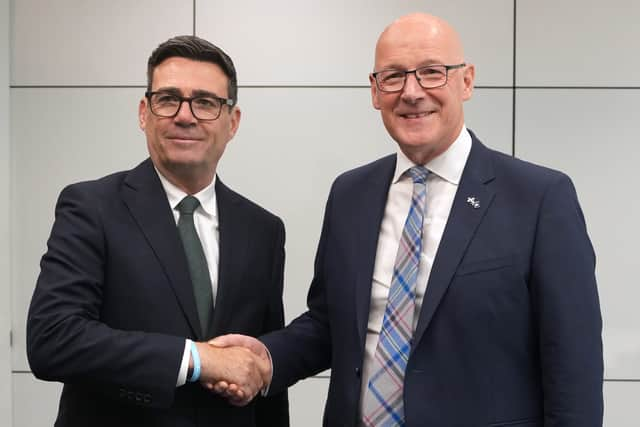
Included in a policy paper, to be considered by Mr Burnham’s government, SNP ministers have proposed a “Scottish visa” that “would allow migrants to enter the UK in order to live and work in Scotland”.
Under the plan there would be “no salary threshold” associated with the vias but earnings could form part of the selection process. Residence in Scotland would be a condition for admittance and SNP ministers want holders to have a route to settlement after five years of residence under the scheme.
Officials have drawn up four potential ways to deliver the scheme including the scheme being created and managed by the Home Office, another method where the Scottish government’s proposals are managed by Westminster. Another possibility would be for Holyrood to assess applicants and nominate those successful to the Home Office for a “second stage” for visas to be issued.
A fourth model would require the UK government to hand Holyrood the “powers to establish additional routes for migration to Scotland”, before the Scottish government would define eligibility and receive applications and refer them to the Home Office which would “verify for identity and security only”, before issuing visas.
SNP ministers have also proposed a five-year pilot of a rural visa to tackle severe recruitment in some sectors in more remote parts of Scotland.
According to the plans, the rural visa would be a “community-driven, employer-based migration route, operating within the UK immigration framework”.

Under the draft scheme, employers could advertise for vacancies and sponsor migrants, with the Home Office approving and carrying out security checks.
It is anticipated that the pilot could establish between three and five communities across rural and island areas of Scotland.
SNP ministers have also offered the scheme could be implemented across all four nations of the UK with a potential shared pilot on the table.
The Scottish government has also formalised plans for a Scottish graduate visa, first tabled by Mr Swinney last year.
Under the scheme, international students in Scotland would be given an extra two years to work and develop their careers following graduation and “act as a bridge” between the existing graduate visa and a skilled worker visa.
Mr Arthur said: “Mirroring a trend in many countries throughout the world, Scotland has an ageing population and areas where the population is falling. This makes immigration ever-more critical in ensuring we have working-age people to fill skills gaps, sustain public services, support communities and grow the economy.
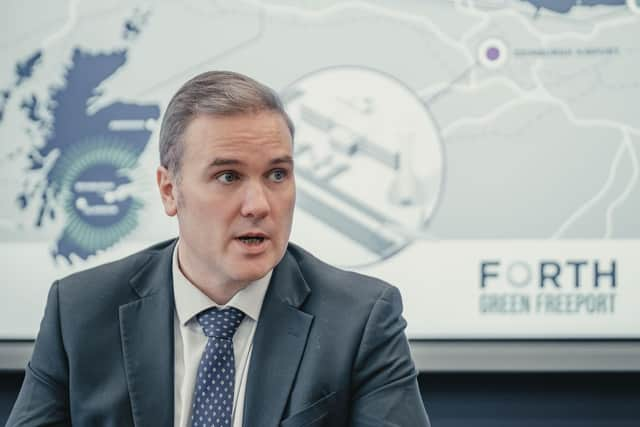
“A migration system designed around UK-wide averages – which is what we have now – cannot adequately respond to Scotland's demographic and geographic circumstances.
“In the spirit of the Prime Minister's public commitment to reset relationships with devolved governments, I have invited the UK migration minister to engage with me in constructive discussions to ensure that the immigration system is tailored to Scotland’s needs.”
Research by the Diffley Partnership and 56 Degrees North found 68 per cent of Scottish businesses believe migration is vital to addressing critical skills shortages while 76 per cent support allowing sectors experiencing shortages to recruit workers from overseas.
Forecasts show that between mid-2024 and mid-2033, Scotland’s population is expected to grow by just 0.3 per cent, reaching approximately 5.56 million. After 2033, it is projected to fall year-on-year, declining to around 5.47 million by mid-2049, a reduction of 1.3 per cent.
Net migration to the UK reached approximately 944,000 in the year ending March 2023, before declining to 431,000 in the year ending December 2024 and falling further to 171,000 in the year ending December 2025 with an overall reduction of around 82 per cent from the 2023 peak.
But Downing Street has officially pushed back at the plans, warning that migration policy is reserved to Westminster.
A Number 10 spokesperson said: “These proposals are not being considered.”
Comments
Want to join the conversation? Please or to comment on this article.