
Football may divide communities in Scotland, but it has nothing on fish


Removal of Brexit red tape should boost Scotland’s salmon industry
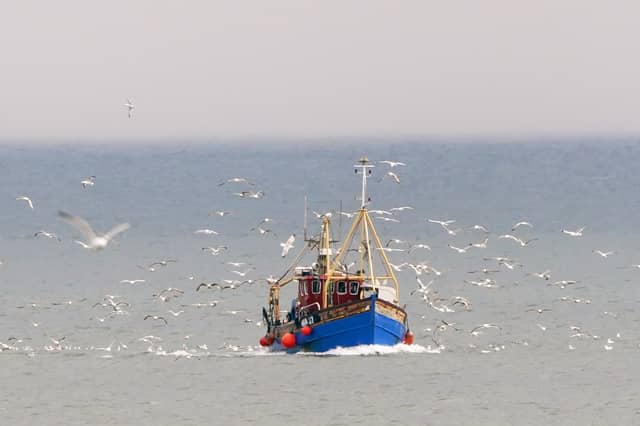
If you are landing cod in a trawler off the Aberdeenshire coast, this week’s news that the UK had struck a trade deal with the European Union was “a horror show”, according to the Scottish Fishermens’ Federation. The granting of 12 years of access to UK waters for EU fishing vessels was seen as a betrayal.
But if you are working on a salmon fish farm off the west coast, it was “breakthrough”, according to Salmon Scotland. The group includes the largest salmon farm businesses in the world, including Bakkafrost, a Faroese company, Cooke Scotland of Canada, as well as Mowi Scotland and Scottish Sea Farms, both of Norway.

For team salmon, removal of Brexit red tape ought to boost French sales. That’s because physical checks of lorries at Boulogne-sur-Mer, a major distribution hub for seafood entering continental Europe, will no longer be needed, shaving precious hours off the time it takes to get fresh salmon to the restaurants of Paris. France is the largest market in the world for Scottish salmon, accounting for 55 per cent of exports and 95 per cent of all product sold in the EU, making the fish the UK's largest food export.
Yet the story of salmon is not only one of export success. The sector remains plagued by battles between Salmon Scotland and campaign groups claiming that the industry’s animal welfare practices mean its product doesn’t deserve to appear on supermarket shelves or restaurant menus.
Among them, WildFish and the Coastal Communities Network (CCN) argue that the use of seaborne “open net” pens to grow salmon results in unacceptably high death rates because of overcrowding, poor animal welfare and disease, chiefly sea lice that cause skin lesions, rendering the salmon unmarketable. Last year, the Canadian government announced a ban on open pen salmon farming in British Columbia by mid-2029.
Polarisation on salmon farming is clear
Salmon Scotland counters that salmon farmers are the only farm sector in the UK to voluntarily publish “farm level” mortality data and that the industry has invested heavily in fish health and welfare - to the tune of £1 billion since 2018. Mowi Scotland and Edinburgh University’s Roslin Institute have just started joint research into improving resistance to disease by studying the fish’s DNA and immune system. The level of polarisation on the issue is clear from the language used. Campaigners and marine scientists talk of “mortality” of up to 25 per cent, while the industry sometimes prefers to talk about “survival” rates, which Salmon Scotland says improved last year by 10 percentage points to 82 per cent.
Holyrood’s latest effort to resolve matters came in January with the results of an inquiry by the Rural Affairs and Islands Committee (RAIC) into progress on improving conditions in salmon farming since a critical Scottish government report in 2018. The committee was “disappointed” that mortality rates had not improved, adding they were “too high”.

Tavish Scott, Salmon Scotland’s chief executive, says he doesn’t believe the report was “particularly thorough”, criticising it for containing “anti-farming language” similar to that from campaign groups. “What the committee seemed to completely fail to understand is that is that we could not sell a single fish to any supermarket or restaurant if we were not complying with the highest regulatory standards,” he says.
The Scottish government’s response to the RAIC’s report reveals the difficulty it appears to be having in navigating between the Scylla of an economically vital industry that employs 12,500 people and the Charybdis of voter sensitivity to animal welfare.
In her response to the RAIC report, cabinet secretary Mairi Gougeon dismissed a recommendation that powers be given to limit or halt production at salmon farms that record persistent, high mortality rates. Instead, analysis would merely be done to “explore thresholds” for such mortality.
The need to display high standards
Ultimately, Scottish salmon’s reputation as a premium product rests on its ability to show consumers that it’s engaged in the highest standard of animal welfare. In France, that reputation is embedded in the “Label Rouge” quality mark awarded by the French government in 1992.
This may matter less in distant markets like China and Taiwan, which are growing at a healthy clip. But reputation must continually be earned, and won’t have been helped by video footage this week allegedly showing what animal rights campaigners at Green Britain Foundation said was “systemic cruelty” to salmon at a fish farm on the Isle of Skye.
Some restaurants are already voting with their menus. A campaign launched in 2022 called “Off the Table” by WildFish to persuade chefs not to offer salmon has so far signed up restaurants in Australia, Iceland, the US and the UK, including The Palmerston in Edinburgh.
“Not enough research has been done so I don’t have confidence in the system,” co-owner and chef Lloyd Morse tells me.
Meantime, climate change may be the industry’s biggest threat. Scientists agree that ocean warming is making it easier for disease and parasites to take hold, with obvious consequences for densely packed salmon pens. “The effect of climate on mortality of farmed salmon is one of the biggest elephants in the room,” says John Aitchison , an aquaculture spokesman at the CCN.
Salmon was recently described by Scotland Office Minister Kirsty McNeill as “the jewel in the crown of Scotland’s world-class produce”. For it to continue that way, there’s no room for complacency.
Comments
Want to join the conversation? Please or to comment on this article.