
Why huge blunder by Labour will put Nigel Farage in Downing Street
Labour is repeating the same mistake made by the Conservatives over immigration, which was largely responsible for the sudden surge in support for Reform UK


Amid Labour’s celebrations of its new deal with the European Union and the chorus of disapproval from Brexit diehards and the SNP, one thing should be clear: Keir Starmer is already plunging headlong down a path to defeat at the next election.
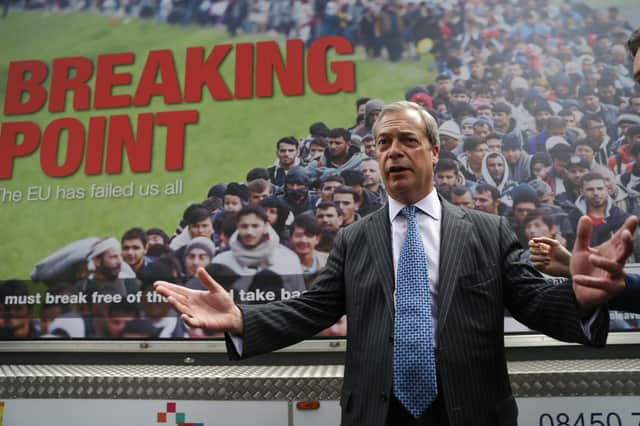
Not because of ‘giving back control’ to Brussels – Conservatives and Reformites hoping to make “dynamic alignment” a big issue on the doorstep have their work cut out for them – but because of the issue that was largely responsible for the UK’s departure from the EU: immigration.
Some may argue other factors were important to the Brexit vote, and that is true. However, the significance of immigration was underlined when, ahead of the 2016 referendum, the British Election Study asked people, “what matters most to you when deciding how to vote in the EU referendum?”
It then produced word-clouds of the most commonly used reasons given by Leave and Remain voters, as well as undecideds. “Immigration” overshadowed almost all other words in the pro-Brexit cloud and “economy” stood out in the pro-EU one, while the undecideds, rather neatly, gave both words equal prominence.
‘Island of strangers’
A decade later and for all the other pressing issues that demand government attention – fixing the economy, tackling climate change and increasing defence spending – immigration is still a major distraction in UK politics.
When Starmer launched his plans for a crackdown by warning “we risk becoming an island of strangers, not a nation that walks forward together”, he echoed the rhetoric of both Reform UK and the Conservatives.
He also, hopefully inadvertently, echoed a line from Enoch Powell’s infamous ‘rivers of blood’ speech in 1968, in which the then Conservative Shadow Defence Secretary spoke of people “made strangers in their own country”.
Nonetheless, Nigel Farage welcomed the Prime Minister’s comments. “We at Reform... very much enjoyed your speech... You seem to be learning a great deal from us,” he told Starmer in the Commons.
And what is he learning? Starmer’s remark that the UK’s recent experiences had “tested the theory” that immigration results in economic growth was an odd turn of phrase that sounds like he disagrees with the idea but doesn’t actually say so.
However, it almost logically follows that increasing the size of the workforce means economic growth and the UK’s anaemic performance in recent years does not help Starmer’s apparent argument. Migrants might not have supercharged the economy, but they may well have saved this country from longer periods of recession.
Benefits of international students
Of course, not all migrants are here to work, many come to study. Research by Universities UK International and others found that overseas students contributed nearly £42 billion to the UK economy in 2021/22.
These are people travelling from countries around the world, bringing with them bucket-loads of cash to give to us, and then, mostly, returning home. Their fees help fund the education of our youngest, brightest and best. What’s not to like?
Amid his dubious language and questionable economics, Starmer did say something that sounded eminently sensible. “We will create a migration system that is controlled, selective, and fair.” What this means in practice is unclear, but if the government is going to be “fair” to businesses crying out for staff, then we can expect large-scale immigration to continue.
The problem is that, for voters heartened by Starmer’s problematic “islands of strangers” line, this is simply not good enough. Even if Labour manages to reduce net migration by 100,000 and cut the number of Channel boat crossings in half, this will still be seen as a betrayal of the position that Starmer has just been laying out.
Same mistake as Tories
In this, the Labour leader is falling into the same trap that cost the Conservatives so dear: talking tough on immigration, but acting more or less pragmatically for the sake of the economy. Reform came out of nowhere to win 4.1 million votes at the 2024 general election because the Tories effectively campaigned against their own policy and for Reform’s. Now Labour is doing much the same and hoping for a different result.
Neither Labour nor the Conservatives are stupid. They have both been responding to the strength of feeling about immigration and the lack of widespread passion on the other side of the argument – few people who recognise the need for immigration are going to make this the deciding factor over which party gets their vote.
Both parties’ mistake stems from treating anti-immigration sentiment as a fixed political reality and underestimating the power of political leadership to change people’s minds. What Labour doesn’t appear to realise is that their political careers and the health of the economy depend on shifting the dial on immigration as dramatically as Farage and the Tories have done but in the opposite direction.
The more Starmer and co agree to requests from businesses to be allowed to recruit staff from overseas, the more they will outrage the anti-immigration voters they are currently attempting to win over. The more they restrict immigration, the more they will damage the economy, hitting support among the rest of the population.
Rational vs irrational, growth vs nationalism
Instead of trying to ride these two horses, immigration and economy, Labour need to pick one and the winner should be obvious. Immigration won the race in the 2016 Brexit referendum, but the experience of life outside the EU will help the economy win future contests.
This would require a campaign, focussed on rational, pro-growth, pro-business policies, that makes clear the benefits of immigration and explains the reasons why it has been and should continue to be relatively high. This would then allow Labour to attack the irrational, anti-business policies and ideological nationalism of Reform and its imitators among the Tories.
Unfortunately for Labour, Starmer has made it clear he isn’t going to do this. Instead, barring a minor economic miracle, he will continue on his journey to hand over the keys of 10 Downing Street, gift-wrapped in ribbons of red and blue, to Nigel Farage.
Comments
Want to join the conversation? Please or to comment on this article.