
Scotland’s weather is telling us something and it’s time we listened
“The weather is the messenger of the climate, and the recent successive heatwaves and downpours are shouting that message clearly” – Iain Clunie
Scotland's food and drink producers don't need academic experts to tell them the climate is changing. The signs are writ large in their fields and on their balance sheets.
The recent heatwaves are only the latest examples of a pattern becoming impossible to ignore. Record rainfall, prolonged dry spells and increasingly unpredictable growing conditions are a sign of how climate change is impacting Scottish food production. From heat-stressed crops to waterlogged fields, Scotland’s farmers are increasingly being forced to contend with extremes at both ends of the weather spectrum.
Scotland's food and drink sector is the country's largest manufacturing industry, employing 123,000 people and generating £19 billion a year. That number reflects thousands of farmers, fishers, growers and producers who are already on the front line of climate change, often with limited time, resources and certainty about what comes next. Far from being viewed as a policy goal, for producers, it should be viewed through the prism of their business’s future viability.
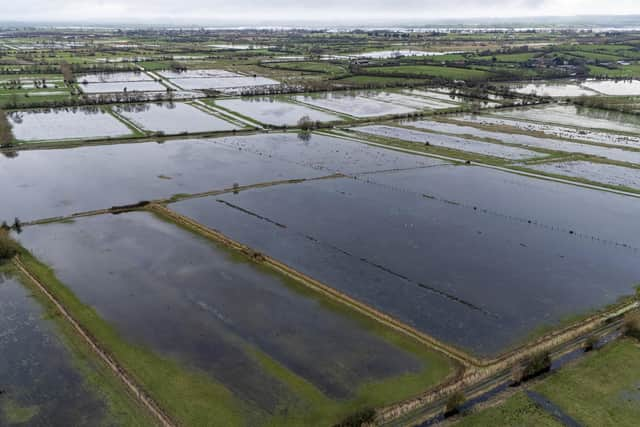

The weather is the messenger of the climate, and the recent successive heatwaves and downpours are shouting that message clearly.
With labour, machinery and patience all stretched to breaking point, Scotland's rural communities face structural, financial and operational crises that are reshaping the economics of food production from the ground up. Reducing emissions remains essential, but so too is helping businesses adapt to the changes that are already locked in. For Scotland's food and drink sector, those two goals increasingly go hand in hand.
Back at COP26 in 2021, Scotland's food and drink industry made a commitment to play its part in delivering the country's net zero ambitions. That commitment still holds five years and three First Ministers later because it is fundamental to the longevity of Scottish food and drink production.
As our new Cabinet Secretary for Climate Action and Rural Affairs Gillian Martin recently noted at the Royal Highland Show, net zero should not be viewed as a burden imposed on industry, but as a route to becoming more efficient, more resilient and more competitive – ultimately boosting the bottom lines for businesses. Consumers are scrutinising the products they buy, and businesses that can evidence credible sustainability action will increasingly find shelf space and commercial opportunities that others will miss out on.

Admittedly, across such a large sector, the transition will not look the same. Farming, aquaculture, fishing, whisky, baking and dairy all face different pressures, different technologies and different investment choices. While there is no magic bullet, what we do have in Scotland is a common framework that aligns action across the supply chain, connects partners around shared goals and turns ambition into investment and policy choices that benefit our producers.
And help is at hand. There are a breadth of organisations across our food and drink sector that have spent years helping businesses tackle challenges ranging from soil health and livestock emissions to packaging, logistics and resource efficiency. The role of organisations such as the Scotland Food & Drink Partnership’s Net Zero programme is not to impose a single solution, but to connect these efforts, share knowledge and help turn individual actions into sector-wide progress.
With more than 96 per cent of Scotland’s producers classed as small and medium-sized enterprises (SMEs), access to finance, practical support and reliable data remains critical to those operating on tight margins. Transitioning to greener methods requires capital investment, and if a new technique fails during a volatile weather year, the financial recovery time can be measured in years. Policy that does not account for that reality risks placing a disproportionate burden on the very producers it depends upon.
NFU Scotland rightly argues that climate action must support food production, not undermine it. It is a legitimate demand for a just transition, one where the financial risk of doing the right thing does not fall entirely on those with the least capacity to absorb it. Government has a role to play through long-term policy certainty, accessible finance, supporting infrastructure and investment in innovation. This autumn, the Scotland Food & Drink Net Zero Programme will publish its Climate Transition Plan – setting out a shortlist of priority actions for both industry and government and providing the practical framework that producers have been asking for.
Scotland's food and drink sector is one of the country's great national strengths, rooted in its land, waters and communities. Its future will depend not only on what it produces, but on how well it adapts to a changing climate.
There is an African proverb worth remembering: if you want to go fast, go alone. If you want to go far, go together. For Scotland's food and drink sector, going far is the only option worth pursuing.
Iain Clunie, programme director, Scotland Food & Drink Net Zero Commitment
Comments
Want to join the conversation? Please or to comment on this article.