
Scotland's food and drink sector is a global success story. So why are investors overlooking it?
“I've long thought that Scotland's food and drink sector shares much with our world-leading life sciences industry” – Iain Baxter
When I speak to investors about Scotland's food and drink industry, I often see a moment of realisation. They know Scotch whisky. They know Scottish salmon. They know the sector’s global reputation.
But when I tell them that this is Scotland's largest manufacturing sector, that it employs 115,000 people, that it is worth £24 billion to our economy and has been growing steadily for 15 years, the scale of what we have built seems to surprise them.
What continues to surprise me is that more of our thriving investment community isn’t already backing it.
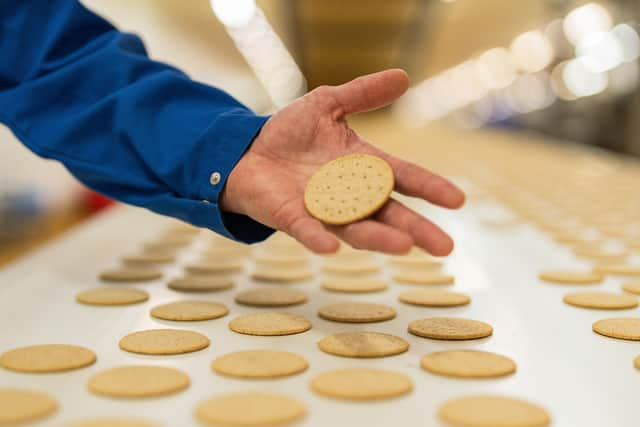

In March, we brought together investors, policymakers and industry leaders at our Food & Drink Investment Roundtable to confront this uncomfortable truth. Our sector is trusted globally, anchored in quality and primed for growth. We have a track record of resilience through economic shocks, a world-class support ecosystem, and consumer demand that spans every continent. Yet when it comes to investment, food and drink ranks tenth out of ten sectors in Scotland.
This isn't a story of decline. On the contrary, our turnover has grown 64 per cent since 2008 to reach £18.9bn. Exports are at £7.5bn, with food exports alone up 200 per cent over the last decade. We are projecting an additional £4bn in sales across all categories over the next five years. The sector is growing under its own steam, but to really catalyse growth and allow the sector to reach its full potential, it needs a better relationship with private investment.
While Scotland’s businesses overall are bucking UK investment trends, with deal values up 108 per cent in the first quarter of this year, food and drink has seen deal numbers contract sharply. Between 2022 and 2024, investment deals in the sector fell by 34 per cent.
If this were a struggling industry, that might make sense. But it isn't. This is a critical strategic sector with something that few others can claim: unshakeable demand. People will always need to eat and drink. And Scotland is positioned at the premium end of that market, with a brand that commands trust and premium pricing from Selkirk to Shanghai and Shetland to San Francisco. “Made in Scotland” means something to consumers around the world.
I've long thought that Scotland's food and drink sector shares much with our world-leading life sciences industry. Both are built on long-term research and development. Both draw on our natural assets and world-class academic institutions. Both serve markets where quality, innovation and trust drive value.
But there is a crucial difference. Life sciences has a mature angel investment culture. Investors understand the timelines, the risks and the returns. They know that backing a biotech start-up might take years to pay off, but the potential upside is enormous.
Food and drink doesn't get the same treatment. Too often, it is seen as a heritage industry to be admired but not invested in. Yet the fundamentals are just as compelling. The research and development might be in fermentation rather than genomics, but the innovation is real. The timelines might be measured in crop cycles rather than clinical trials, but the returns are consistent. And, unlike many life sciences ventures, food and drink businesses generate revenue from day one.
Part of the problem is structural. Our sector is overwhelmingly made up of SMEs (small and medium-sized enterprises), with over 17,000 registered businesses, many of which are family owned. These are not businesses that naturally gravitate towards equity finance. When they need capital, they reach for loans, grants or increasingly crowdfunding.

This isn't a failure of ambition but a reflection of what is perceived as available. When 48 per cent of Scottish business leaders believe capital is scarce or very scarce, they stop asking for what they don't think exists. Only 17 per cent of Scottish SMEs seeking finance even consider equity.
Make sure you keep up to date with breaking news from across Scotland by signing up to our free newsletter here.
What emerged from our roundtable was a validation of the diagnosis. Investors confirmed that food and drink is underserved relative to its economic contribution, and that the barriers exist on both sides of the table. The primary gap, it became clear, is not just capability but a deeper mindset issue: businesses are not thinking about scaling, investment or exit from early enough in their development.
Financial literacy was identified as a critical weakness. Too many businesses struggle to articulate their story in numbers, do not fully understand working capital, and are unclear on the difference between debt and equity. Branding, too, is underinvested. Scottish food businesses are disproportionately focused on processing – often private label – at the expense of brand building, which is essential for investment attractiveness.
Yet there was also cause for optimism. Deal flow is thin but not absent. There are investable businesses in the sector, but they are not being identified, developed, or connected to the right investors at the right time. What is missing is a visible investment identity: no dedicated fund, no specialist network, no obvious front door for investors interested in food and drink.
This is where we need to bridge two worlds. Investors need to see food and drink not as a heritage industry to be preserved, but as a growth sector to be backed. And businesses need to feel confident articulating their investment propositions and actively seek the capital they require to scale.
Because the opportunity is already there. Two-thirds of UK consumers say where their food comes from matters to them. More than half of non-Scottish UK consumers actively want to buy more Scottish products, associating them with premium quality, superior taste and higher welfare standards. That trust is a commercial asset few other regions can match.
Scotland's food and drink sector is ready. We have the products, the brands, the reputation and the demand. We have the support ecosystem and the track record. What we need now are investors who understand that “Made in Scotland” is not just a label but a global asset.
Include the combination of essential demand and premium reputation, and Scottish food and drink represents one of the most stable and compelling investment opportunities there is.
Iain Baxter, chief executive of Scotland Food & Drink
Comments
Want to join the conversation? Please or to comment on this article.