
The xG clue, Pocognoli's tactics and errors: Scotland can't wait for two players to come back
The main learnings from Scotland’s four-game international break

Scotland’s first international break under new head coach Sebastien Pocognoli came to an underwhelming conclusion on Tuesday with a 2-1 home defeat by Slovenia.
The Scots played four matches in total in Nations League Group B1 over a ten-day spell: a goalless draw away to the Slovenians, a 3-0 home reversal by Switzerland, a 2-0 win in North Macedonia and then the defeat by Slovenia at Hampden. Scotland now sit third in the pool on four points and will need to take at least four points from their final two matches to finish second.
There was lots of scrutiny on Scotland due to the new head coach and we sift through some of the talking points from the past two weeks:


Style more than substance
Scotland have changed the way they play under Pocognoli. The fresh-faced Belgian promised that his team would be more attack-minded and aggressive than under predecessor Steve Clarke and anyone who watched the recent matches will have noted greater pressing, a higher line and a desire to chase goals.
Unfortunately for Pocognoli, the results haven’t quite followed. While winning in Skopje was a high point - Scotland dominated the North Macedonians from start to finish - and the second half in Ljubljana was laudable, the defeat at Hampden by the Slovenians was a backwards step.
Asking the defence to play at least ten yards further up the pitch affords them a better chance of winning the ball back in a more threatening area - but if there is no security in midfield, or the press isn’t aligned, it become easier for teams to break through it. Slovenia did this very well in the second half on Tuesday as Scotland became tired and fragmented. The pace they had in attack really damaged Scotland, with the space in behind the defence gleefully exploited.
Scotland may not have been dashing under Clarke, but the experienced coach found a way to navigate such ties. He preferred a low block, and often asked two midfielders to drop deeper and screen. This came with success - he was the manager that elevated the Scots from a Nations League B outfit to the top tier. He found pragmatism when required.
Many of the Scottish public demanded a change in playing philosophy and it would be grossly unfair to wholly judge Pocognoli on this international window. The 39-year-old should be afforded time to instill his methodology on the squad. But he also has to learn from the mistakes of this window.
A six-point haul was a fair expectation of this quartet of matches. World Cup quarter-finalists Switzerland are far superior to anyone else in the group, but Scotland ought to be taking victories from Slovenia and North Macedonia - two teams ranked beneath them.
Scotland were often caught in behind on the counter attack and there where instances when opponents played too easily through the midfield. Nevertheless, Scotland’s xG (expected goals) touched 2.0 in every game bar the clash with the Swiss. That was rarely the case under Clarke, and emphasises the new era’s emphasis on fashioning chances. Greater composure - and we’ll get to that later - may have put a different slant on things. Watching this team under Pocognoli won’t be boring, but tweaks and balance are needed to get the best results.
The strikers
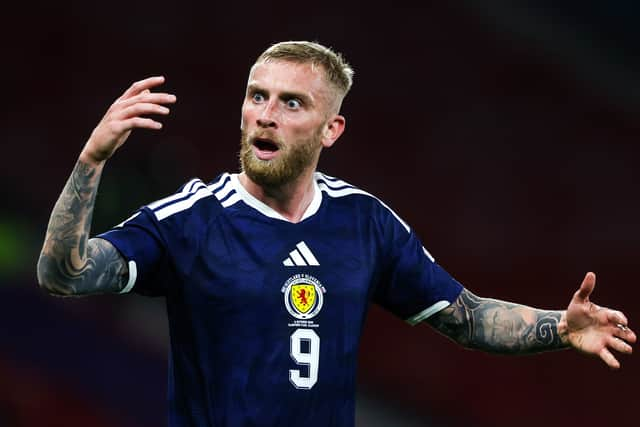
As noted above, Scotland create chances. They are playing with more flair and imagination, and in three of the four matches, Pocognoli deployed two bona fide strikers. It is therefore frustrating that only one of them scored.
Let’s start with the positive: Kieron Bowie is clearly improving in Italy with Sassuolo. The 23-year-old netted a lovely goal from 20 yards against North Macedonia to open his international account. He is physical, has acceleration and has improved his in-game intelligence.
Nevertheless, questions still remain over his composure inside the penalty box. Bowie missed more presentable opportunities in Ljubljana and Skopje and there remains a feeling he is a scorer of good goals, not a good goalscorer. Hopefully, that will come over time.
The situation is grimmer for Oli McBurnie, who started all four matches and remains without a goal for his national team. The stat of zero in 20 caps is slightly unfair given the bulk of those appearances came six/seven years ago, but the Hull City man desperately needs to open his account.
McBurnie did a lot of good link-up work and never stops, but is he the poacher Scotland so desperately crave? On recent evidence, probably not.
Sevilla’s Robbie Ure made his debut during the window but he is now arguably behind Bowie in the pecking order. The 22-year-old’s rise has been stark and hopefully he can continue to thrive in La Liga.
Che Adams should be fit for the next international break and may thrive in the new way of playing under Pocognoli. We won’t see the injured Lawrence Shankland until Christmas. Pocognoli will welcome more options to cure what remains Scotland’s biggest ill.

A case for the defence
Scotland’s defence is put under a lot more pressure in this system. The back three is often left exposed, while under Clarke the team was set up to be far more protective. The centre-halves are also asked to be braver on the ball.
Pocognoli handed out three debuts to defenders: Stephen Welsh, Luis Binks and Luke Graham. The former duo ended up playing most of the matches and come out of them with their reputations enhanced.
Welsh is improving at a rate of knots at Swansea and was arguably Scotland’s best defenders. Binks, a left-sided player, is comfortable in possession and very aggressive in his defending. Both settled in nicely to international football.
Red cards are an issue
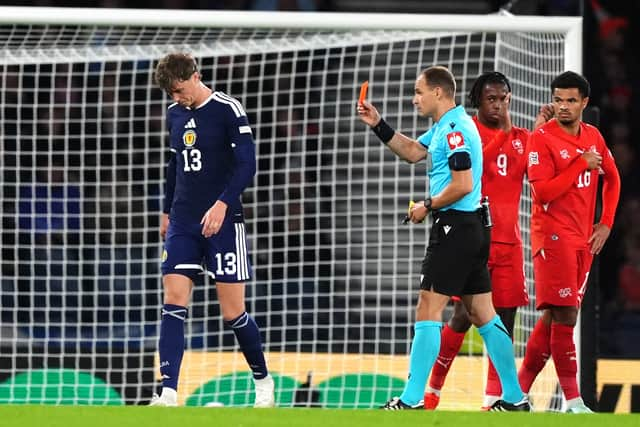
Scotland’s two other centre-halves in Jack Hendry and Scott McKenna also had bright moments - but both received straight red cards for denying goalscoring opportunities. Pocognoli’s team cannot afford to be numerically hampered in matches.
Hendry’s red card in the early stages of the Swiss match torpedoed Scotland against a very good team. The dismissal was borne out of the system, with the Scots caught on the half-way line in a counter attack. Even still, the Al-Ettifaq man’s decision to haul him down so early in the game was deplorable.
At least against North Macedonia, McKenna’s red card was on 83 minutes, when Scotland were 2-0 up. The Dinamo Zagreb player was caught short by an Andy Robertson pass. It might have got slightly more challenging had the hosts not been so abject.
Players will make mistakes when asked to do different things. Yet Scotland cannot afford to be so charitable in big games.
What do to do with wingers
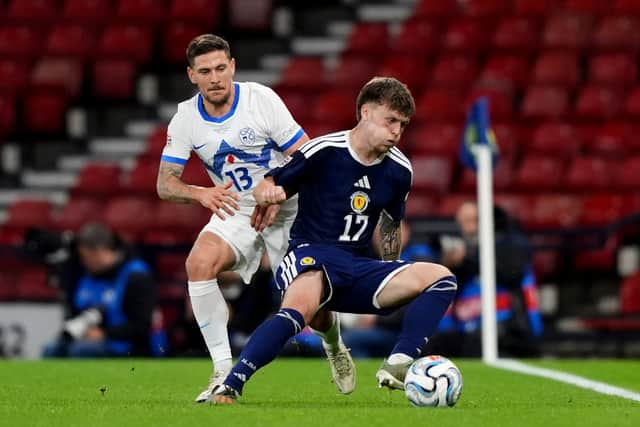
Scotland rarely played with out-and-out wingers in this period of matches. Pocognoli favoured a 3-4-1-2 formation and it meant that our best wide attacking option in Ben Gannon-Doak was shoehorned in as a right wing-back.
The 20-year-old had some nice moments, but his end product still needs refined. A willing worker, the defensive side of the game doesn’t come naturally to the Bournemouth man. Despite the hype, one must remember his tender years. He plays better with a full-back behind him.
In-form Hearts winger Josh McPake was given his first cap on Tuesday and looked lively. Findlay Curtis also came on for his sixth appearance; the 20-year-old looks a player caught in between under-21 football and the senior squad.
With raw pace and trickery, Gannon-Doak remains one of Scotland’s most dangerous players. Pocognoli must work out how to get the best out of him.
A midfield conundrum
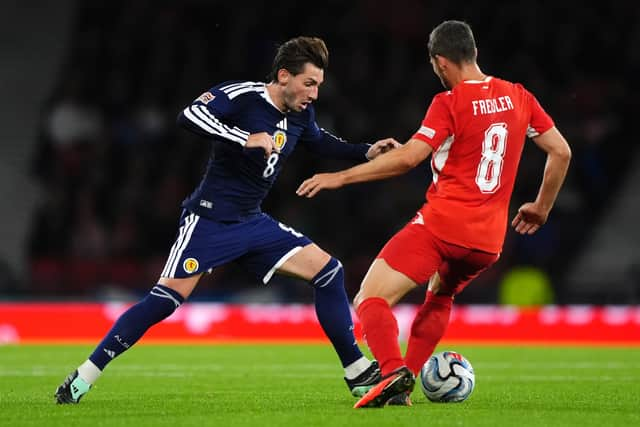
Scotland remain blessed with midfield options. One positive was the prominence of Billy Gilmour, who won his 50th cap against Slovenia at Hampden and was more influential on the ball. He was tasked with playing vertically, piercing the lines and being Scotland’s chief creator.
Lewis Ferguson did a good sentry role alongside him, while John McGinn and Ryan Christie both got on the scoresheet. Lennon Miller didn’t get any minutes at all, while Kenny McLean withdrew injured.
Scott McTominay - so often Scotland’s talisman - should return next month after a minor heart operation and that adds to the mix. Where Pocognoli deploys him will be intriguing.
Scotland’s midfield looked tired against the Slovenians. Pocognoli started Ferguson, Gilmour and McGinn in all the matches - perhaps he asked too much of them?
The manager can afford to rotate, as he has genuine depth in that area - especially with McTominay returning.
Want more stories like this? Subscribe to our newsletter here.
Comments
Want to join the conversation? Please or to comment on this article.