
'Forget the system' - inside Scotland dressing room verdict on Slovenia loss and Pocognoli's first camp

Serie A star calls for perspective and issue plea for patience with new project still in its infancy
Lewis Ferguson has seen enough during Sebastien Pocognoli’s maiden Scotland camp to believe there is something worth building. But the Bologna midfielder also recognises that the foundations are not yet secure.
A 2-1 home defeat to Slovenia in the Nations League at Hampden Park provided an uncomfortable reminder of that reality. Scotland had hoped to round off an elongated international window with another positive result, having strolled to a commanding victory over North Macedonia last weekend.
Instead, they produced a disjointed display, with Ferguson part of a four-man midfield that malfunctioned badly. In truth, Scotland were fortunate not to lose by a wider margin.


“We weren’t at the races to be honest,” Ferguson reflected. “We were a couple of yards off it. We weren’t aggressive enough, we weren’t intense enough. I thought they played really well, but we never got to grips with the game and deserved to lose. We need to do better.”
It was not the ending Scotland wanted to a three-week international break that had otherwise offered signs of encouragement. Pocognoli’s first competitive matches have brought a mixture of adversity, experimentation and genuine promise, culminating in Saturday’s impressive 2-0 win in Skopje.
Ferguson explains Scotland’s shortcomings
The hope was that Scotland could carry that momentum into the rematch with Slovenia. Instead, they looked strangely subdued. Ferguson, however, was keen to resist the idea that the result represented a fundamental failure of Pocognoli’s methods. Scotland had not simply been undone by a superior tactical plan, he argued; their shortcomings were more basic.
“Forget about the system and the way we set up, we lacked the intensity ourselves,” he admitted. “We weren’t on the front foot enough, we were reactive instead of being proactive, we weren’t aggressive, we never worked them out and got to grips with the game.”
Pocognoli had warned his players of the importance of finishing the camp on a high. Ferguson understood the message, recognising that the final impression can often overshadow the memory of what preceded it.
“He spoke before the game about ending on a high because that is what everyone will remember,” Ferguson stated. “We knew if we lost the game then people would probably forget the good stuff they have seen in the last few games. So it is frustrating.”
There’s no doubting that Scotland should have fared better at home against a Slovenia side sitting nine places below them in the FIFA rankings. Yet Ferguson is unwilling to let one defeat define a camp that has given the new head coach precious time to work with his new-look squad. Nor was he prepared to use fatigue as an excuse after a demanding four-game stretch.
“It was the same for everybody, the same for Slovenia,” said the 27-year-old. “It’s not really an excuse. We prepare in the best way possible, we’ve got all the facilities available to us to recover as well as we can. That is not an excuse, we are professionals.
“It is disappointing because the camp has been really enjoyable. There were a lot of new faces and having a longer camp let them come out of their shell and get to know the players. We got a lot of work done on the grass with the new manager and the new system.”
Progress under Pocognoli encounters setback
That process must now continue against the unforgiving backdrop of the qualification campaign. Scotland’s hopes of finishing second in Group B1 behind runaway leaders Switzerland have been significantly dented by their latest defeat. Ferguson had viewed victory over Slovenia as essential to their ambitions and accepts that the task has now become considerably more difficult.
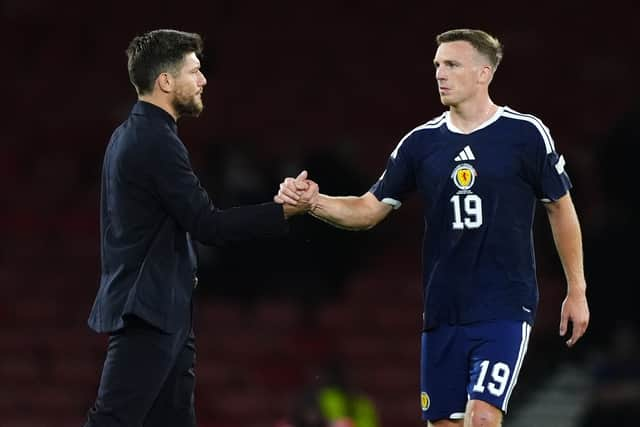
“I thought to finish second we needed to go and win against Slovenia,” he conceded. “But we have still got two games and there are still six points for us to play for. They are difficult games, but ones that we’ve got to go and win. We don’t want to accept that we’re not going to get there. You never know.”
That attitude will be required. The mathematics may now be less favourable, but Scotland cannot afford to approach the remainder of the campaign as though their hopes are already over. Nor, Ferguson believes, should anyone expect Pocognoli to have transformed the team within a matter of weeks.
“It never just clicks right away,” he declared. “You don’t get results and success instantly. It is the start of a process and it’s going to take a bit of time. We’re not going to win every game and it’s never going to be easy. There are going to be tough nights like this along the way. It’s about the longer term and being successful long term.
“There has been a lot to learn, I actually think this camp was good in terms of time on the pitch and time together. There was a lot of information taken on board. It will maybe set us up better for the next camp when we meet up again.”
McPake debut offers positive signs
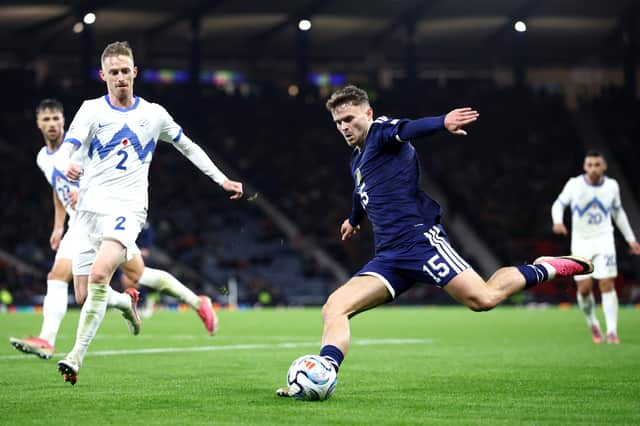
There were glimpses of that positive future in the closing stages, with Josh McPake’s debut particularly encouraging. The Hearts winger was introduced with just over 20 minutes remaining and immediately provided the directness that had been lacking from Scotland’s play. Findlay Curtis offered a similar injection of energy.
Such cameos are significant for a side in transition. Pocognoli needs his established players to embrace his ideas, but he also needs emerging talent to challenge the hierarchy and changing the tempo of games.
“I thought Josh and Findlay made a difference when they came on,” Ferguson said. “They were fresh and showed a lot of energy, so it’s nice to see the young lads being so positive. They are two young wingers who want to get at their opponents. Josh deserves his moment because he has been excellent for Hearts. I thought he showed the qualities he has got.”
Comments
Want to join the conversation? Please or to comment on this article.