
Donald Trump defends threat to wipe out Iranian civilisation amid US blockade on Strait of Hormuz

US president says the blockade will begin ‘immediately’ and compares Starmer to Chamberlain
Donald Trump defended his threat to “wipe out” Iranian civilisation as he announced a blockade of the Strait of Hormuz following the failure of peace talks between the US and Iran.
Repeating his criticism of Nato allies including the UK, the US president said the blockade would begin “immediately” as he strove to exert more strategic control over the waterway.
He said his goal was to ensure all ships could transit the strait. “It’s going to be all or none, and that’s the way it is,” he said.


Speaking to US media, the president was asked about comments he made last week, when he threated "a whole civilisation will die tonight" if Iran did not meet a deadline for the Strait of Hormuz to be reopened. He subsequently agreed a two-week ceasefire for talks to take place.
“I’m fine with it,” he said of his threat in an interview with Fox News. “It brought them to the table.”
He compared his social media post to threats he said are made by some Iranians - and would not rule out more strikes on civilian infrastructure.
“They’re allowed to say ‘death to America, death to this,’” Mr Trump said. “Let me tell you that statement got them to the bargaining table and they haven’t left.”
The US president continued to pour scorn over Nato allies for their refusal to support offensive operations against Iran , calling the defensive alliance “shameful”.
He again compared Prime Minister Sir Keir Starmer to Neville Chamberlain, whose premiership was defined by his 1930s appeasement of Nazi Germany .
Mr Trump said: “He made a public statement that ‘we will send equipment after the war is over’, that’s a Neville Chamberlain statement.”
Meanwhile, Sir Keir urged the US and Iran “to find a way through” after the failure of the talks, brokered by Pakistan.
The Prime Minister also called for the fragile ceasefire to continue and warned against any further escalation.
But the US president cast fresh uncertainty over any hope of a fast resolution to the conflict as he lambasted Iran for failing to release its grip on the vital oil and gas shipping lane and commit to giving up its nuclear ambitions.
The closure of the strait has already impacted fuel prices at the pump in the UK - and caused some airlines to hike prices and cut back on routes due to the soaring cost of jet fuel.
Travel expert Simon Calder said the president’s “vow to blockade the Strait of Hormuz makes imminent restoration of normal Gulf tanker traffic unlikely”, warning that the move could have a knock-on effect on summer holiday plans.
However, fuel experts told The Scotsman the full potential impact of the blockade on prices would not be clear until markets open on Monday morning.
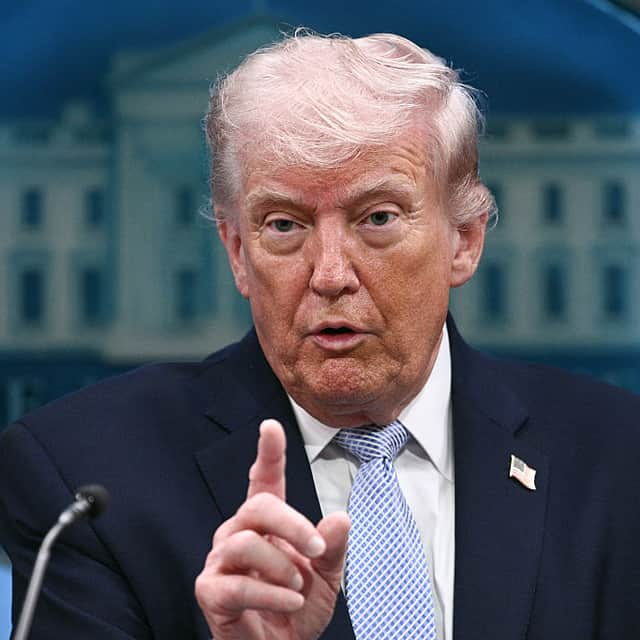
In a post on Truth Social, Mr Trump said the blockade of the strait, which carried around a fifth of the world’s global oil supplies before the war, would start “immediately”.
“Effective immediately, the United States Navy, the Finest in the World, will begin the process of BLOCKADING any and all Ships trying to enter, or leave, the Strait of Hormuz,” he said.
“The Blockade will begin shortly. Other Countries will be involved with this Blockade. Iran will not be allowed to profit off this Illegal Act of EXTORTION.”
He said he had “instructed our Navy to seek and interdict every vessel in International Waters that has paid a toll to Iran. No one who pays an illegal toll will have safe passage on the high seas.”
He also claimed that NATO countries, including the UK, would help demine the strait. Westminster has not publicly said it will do so.
He said the US was "very disappointed with Nato", but that "now they want to come and they want to help with the strait".
"It won't take long to clean it out, so we're gonna clean out the strait", he said, adding that he thinks it will be free to use again "in not too long a distance".
"I understand the UK and a couple of other countries are sending minesweepers", he added.
However, experts claimed the blockade would only affect a small number of ships.
Shipping expert Lars Jensen, chief executive of Vespucci Maritime, said Mr Trump’s threat to stop any ships paying a toll to Iran would affect few vessels as companies are already subject to US sanctions for paying the Iranian regime.
“If this is actually done by the Americans, it will halt a very tiny trickle of vessels. In the greater scheme of things, it doesn't really change anything,” he told the BBC.
Meanwhile, US politician Mark Warner, a Democrat on the Senate Intelligence Committee, also questioned the logic of the decision.
“I don’t understand how blockading the strait is somehow going to push the Iranians into opening it,” he said. “I don’t see the connection there.”
The talks were the highest level discussions that have taken place between the US and Iran since the Islamic Revolution in 1979.
The US delegation is believed to have entirely left Islamabad, however, Prime Minister Shehbaz Sharif of Pakistan, who hosted the talks, claimed they are “not dead”.
“There’s a stalemate,” he said.

US vice president JD Vance addressed the media in Pakistan before leaving the negotiations.
“They have chosen not to accept our terms,” he said. “The simple fact is that we need to see an affirmative commitment that they will not seek a nuclear weapon and they will not seek the tools that would enable them to quickly achieve a nuclear weapon.”
Mr Trump said of the talks that "the meeting went well, most points were agreed to, but the only point that really mattered, NUCLEAR, was not".
In a second post, he added: "Iran promised to open the Strait of Hormuz, and they knowingly failed to do so".
"This caused anxiety, dislocation, and pain to many people and Countries throughout the World.
"As they promised, they better begin the process of getting this INTERNATIONAL WATERWAY OPEN AND FAST!"
An Iranian diplomatic official denied that negotiations had failed over Iran’s nuclear ambitions. “Iran is not seeking to acquire nuclear weapons, but it has the right to nuclear energy for peaceful purposes,” the official said.
Sir Keir discussed Washington and Tehran’s negotiations with the Sultan of Oman after the two sides’ 21-hour session ended without an agreement in the early hours of Sunday.
In a readout of Sir Keir’s call with His Majesty Sultan Haitham bin Tarik al Said, a Downing Street spokeswoman said: “They discussed the peace talks held in Pakistan over the weekend and urged both sides to find a way through.
“It was vital there was a continuation of the ceasefire, and that all parties avoided any further escalation, the leaders agreed.”
They also discussed efforts to reopen the Strait of Hormuz, which has been throttled by Iran, sending energy prices soaring.
Britain will host further talks on reopening the maritime pinch-point with a coalition of countries.
“His majesty updated on the situation in the Strait of Hormuz, and the Prime Minister thanked him for Oman’s efforts to rescue sailors from vessels in distress in the region.
“Reflecting on international efforts to co-ordinate safe passage for shipping in the region, the Prime Minister said that following meetings convened by the Foreign Secretary and British military planners, partners continued to work towards restoring freedom of navigation for the long term.”
Israel has said the ceasefire deal between the US and Iran did not apply in Lebanon, but Iran and Pakistan said otherwise.
Negotiations between Israel and Lebanon are expected to begin in Washington on Tuesday.
The day the Iran ceasefire deal was announced, Israel pounded Beirut with airstrikes, killing more than 300 people in the deadliest day in Lebanon since the war began, according to the country’s health ministry.
Comments
Want to join the conversation? Please or to comment on this article.