
North Coast 500 impact: £100m economic boost but also damage, litter and dangerous driving

Independent assessment of driving route says its marketeers must address negative sentiment among residents
The North Coast 500 generated nearly £100 million of economic benefit last year but also led to environmental damage, dangerous driving and litter, according to a highly-anticipated impact assessment of the tourist route.
The report lays bare the positive and negative effects of the 516-mile driving loop round the northern Highlands which has boomed in popularity since first being marketed in 2015.


It comes two months after marketing company North Coast 500 Ltd’s new executive chair Clare Winskill told The Scotsman: “I will be leaning in to honesty - I am not going to be disagreeing with the challenges that some communities have faced along the route.”
The report recommended that NC500 Ltd should consult local people regularly on how the route was managed and they should be represented on its board.
It also called on the company to survey residents annually and evaluate progress towards improvements, which should also be tracked by a new working group involving public bodies such as Highland Council.
As part of an “environmental, social and governance framework”, it said the NC500 should aim to become recognised as a “premier global driving route” that was a leader in sustainable tourism, with visitors having a “world-class experience”.
Facilities and services on the NC500 should cope effectively with demand, while local people should feel tourism was improving their lives and were proud of the route and their influence on how it was managed.
The study found a third of residents agreed tourism provided local job opportunities and nearly one in ten earned income from renting accommodation to visitors.
In addition, 41 per cent of businesses said North Coast 500 visitors enabled them to open for longer hours, extend their season and offer a wider range of goods and services.
The report said the NC500 contributed £98.8m to the economy and supported some 1,335 jobs.
The findings were based on surveys of 828 residents, 617 visitors and 99 businesses.
However, the report by Biggar Economics also found that 90 per cent of residents had seen environmental damage along the route, such as trees cut down, muddy verges and campfire scars on beaches.
A total of 85 per cent of residents had seen litter often or daily on the route and just over half had spotted human waste.
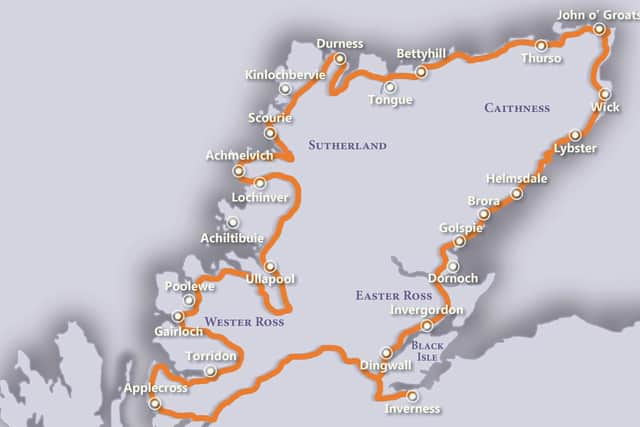
More than half observed dangerous or irresponsible driving very often, and nearly four in five reported detrimental traffic congestion often or daily.
The report said traffic on the route had increased by 83 per cent since 2014.
A majority of residents - 61 per cent - strongly disagreed that North Coast 500 Ltd, which commissioned the study, acted in the best interests of the local area.
The report said: “It is critical to address this. If local people do not support the NC500, it could damage public perceptions of the route and discourage people from visiting in the future.
“There is some evidence this is already starting to happen.”
However, the report said public sentiment to the route had shifted substantially to the negative since it was launched and last year it was added to Fodor’s annual “no list” of destinations to avoid because of over tourism.
The report said: “If this is not addressed it could undermine the substantial benefits realised to date and reduce the benefits the route generates for the region in the future.”
But it also said the route was likely to continue to attract more visitors because research showed that many of those who had toured Scotland in a motorhome or campervan were likely to repeat the experience within five years.
It stated: “This will create both challenges and opportunities for communities along the route.
“While the potential value of visitor expenditure is likely to increase, so too will pressure on local infrastructure.”
Margaret Meek, co-founder of the NC500 The Land Weeps campaign group, said: “The most important finding is the lack of support from residents. This is a huge red flag. Successful tourism needs the support of its local residents.
“Although the report acknowledges the route has caused massive problems, there is no discussion of what NC500 Ltd will do to mitigate the problems other than promise an annual survey.
“Since the popularity of the route has caused many of the problems, surely NC500 Ltd has a responsibility to address these problems seriously. Increasing tourist numbers is not enough.”
But Gordon Quinn, managing director of Badachro Distillery, said: “The route has played such an important role in supporting local businesses like ours and encouraging visitors to spend more time exploring this area of the Highlands.”
NC500 executive chair Clare Winskill said: “The report shows that the route is a vital driver of economic activity for Highland communities, generating £36 of economic impact in 2025 for every £1 invested since 2015.
“As well as all the brilliant businesses that have been able to thrive as a result of the NC500, it has clearly come with big challenges for residents, and we recognise that over 60 per cent of residents feel NC500 Ltd does not act in the best interests of the local area, which is something we need to work hard to change.
“Given that so many people are dependent upon the route for income, what matters now is how we work together on the next stage, listening properly to communities, collaborating closely with stakeholders and using the findings - both positive and negative - to deliver meaningful, long-term benefits for everyone across the North Highlands.
Comments
Want to join the conversation? Please or to comment on this article.