
'Bumpy' start to ScotRail's new multi-billion pound train fleet expected

Pledge to avoid past mistakes which dogged ScotRail’s last five new fleet launches
The multi-billion pound replacement of most of ScotRail’s trains will be “bumpy” because of the complexity of the overhaul but could give Scotland "one of the most forward-looking railways in Europe", the country’s rail chiefs have predicted.
The admission came as the Scottish Government-owned operator prepares to introduce new fleets from 2027 which follow the botched launch of all five of its previous ones over the last 25 years.


Refurbished diesel trains are due to begin replacing ScotRail’s ageing Inter7City “High Speed Trains” (HSTs) from mid-2027, followed by 70 new electric and battery-powered trains in 2031.
However, plans for hydrogen or battery trains for rural lines, such as the Glasgow-Mallaig route made famous by the Harry Potter films, have been shelved and passengers face travelling in older trains “cascaded” from other lines.

Hannah Ross, chief executive of Scottish Rail Holdings, which oversees ScotRail, said getting it right next time would be demanding.
She told the Rail in Scotland conference in Edinburgh, organised by Modern Railways magazine: “We don’t underestimate the challenge of introducing these [new fleets].
“What we have to do is pull together all the capability we can.”
Ms Ross, who led the Edinburgh tram extension to Newhaven scheme, said: “In my experience, major projects done well are when everyone works together across the supply chain and into delivery and operational service.
“It will be bumpy. I hope it won’t be so bumpy that you ever know anything about it.”
Ms Ross later told The Scotsman: “We are going to have to programme in a very detailed way who is doing what, when.
“The problem is if you have a delay, that starts to concertina and you find you have to do two things at a time rather than one.
“So building resilience into the programme will be really important, but that then comes against cost pressure, so it’s a case of how can we be efficient.”
The brand new fleets were announced by the Scottish Government three years ago, when it said the first would be in service in 2027, but this has now been put back four years.
ScotRail and its train suppliers have a poor past record with new fleets, which have repeatedly not worked “out of the box”.
Its class 170 “Turbostar” diesel trains were problematic when introduced on the main Edinburgh-Glasgow line in 1999, as was the class 334 “Juniper” electric fleet in 2001 and the electric class 380s in 2010 - both on routes around Glasgow.

They were followed by multiple problems with the 40-year-old HSTs from 2018 onwards, the same year as new Edinburgh-Glasgow class 385 electric trains were finally introduced after being delayed by ten months by production problems at manufacturer Hitachi and a windscreen fault.
However, ScotRail’s newest fleet went on to become Britain’s most reliable trains.
ScotRail managing director Joanne Maguire told the conference it would take a different approach to the replacement programme, which will involve 70 per cent of its trains - some 243 of 348.
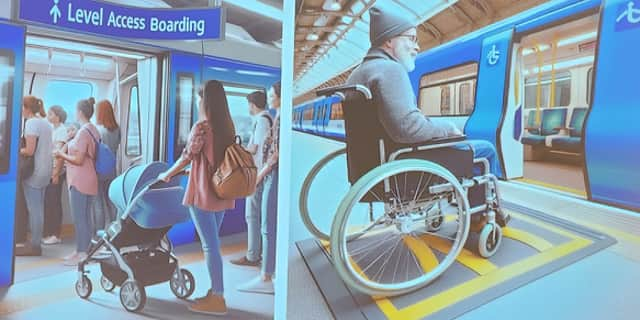
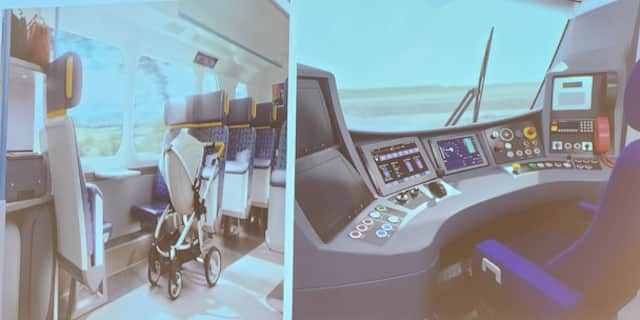
Her presentation included images of a battery train, which she stressed were “not a mock-up”.
ScotRail later said they were “to provide a broad visual for the topic being discussed” and “don’t represent what any final designs may look like”.
Ms Maguire said: “We now know that new fleet doesn’t work unless it’s a ‘whole railway’ approach to plan the introduction.”

She said publicly-owned ScotRail was no longer a private-sector franchise “with a rush to make commitments then rush off, for someone else to deliver”.
The managing director also underlined again the urgency of the project since much of the fleet was nearing the end of its life and getting spare parts was “really hard”.
She said the new trains would “transform” ScotRail, “enhancing accessibility, improving the passenger offering, opening up opportunities for performance and reliability growth, and expanding decarbonisation”.

The ScotRail chief said they would have level access boarding, such as for passengers in wheelchairs, at stations with platforms at the same height, which “takes barriers away from people using the railway”.
She said the new carriages would also feature “more welcoming passenger environments including family-friendly interiors and more cycle and wheelchair spaces”.
Ms Maguire said: “There’s a huge opportunity here for Scotland’s railway to be one of the most forward-looking in Europe.”
Comments
Want to join the conversation? Please or to comment on this article.