
'Incalculable' pain of families as inquiry into fatal Carmont rail crash due to open
Replacements for ageing trains involved won’t be in service until mid-2027

The pain of the families of those killed in the Carmont derailment is "incalculable", train drivers' union Aslef said on Monday as a fatal accident inquiry (FAI) into their deaths was due to open in Aberdeen.
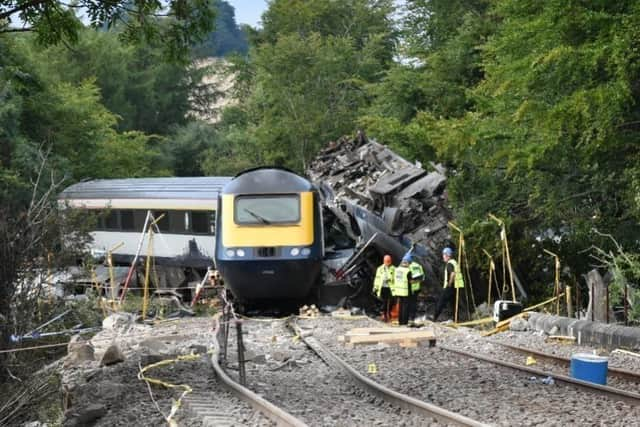
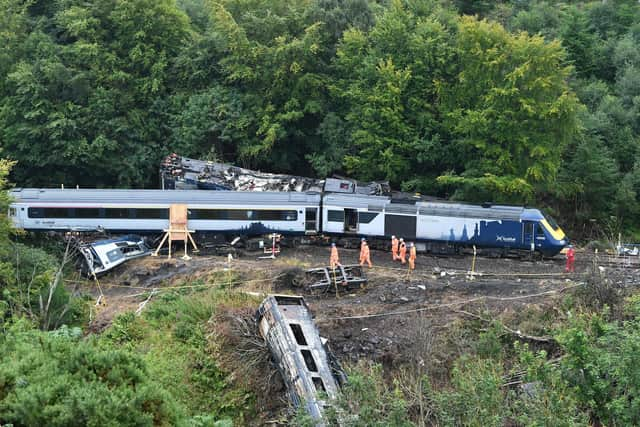
Four weeks of hearings will be held to determine the cause and circumstances of the deaths of passenger Christopher Stuchbury, conductor Donald Dinnie and driver Brett McCullough after a ScotRail train hit debris then a bridge south of Stonehaven in August 2020.


The FAI follows track body Network Rail being fined £6.7 million in 2023 after admitting health and safety failings over the worst British train crash for 13 years.
The previous year, a UK Department for Transport Rail Accident Investigation Branch (RAIB) investigation concluded the incident had been caused by a wrongly-built drainage trench which led to debris being washed onto the track after intense rainfall.
All six other people on the early morning Aberdeen-Glasgow train were injured.
The Rail, Maritime and Transport union highlighted last August that nearly half of the RAIB’s safety recommendations had still to be fully implemented, but Network Rail said “meaningful progress” had been made.
Aslef Scottish organiser Kevin Lindsay said ahead of the FAI: “Today is a day where our foremost thoughts are with the families of the deceased.
“Their pain is incalculable and we know that days like today add to their torment.
“We have said before that Carmont represents endemic and tragic corporate failure. If it was a busy train it is likely many more fatalities would have occurred.”
Mr Lindsay also referred to the union’s long-standing call for the nearly 50-year-old train type involved in the crash to be replaced because of its poor protection for drivers.
Aslef originally demanded withdrawal of ScotRail’s Inter7City “High Speed Train” (HST) fleet by the third anniversary of the crash in 2023 but lifted this after safety improvements were made.
However, Mr Lindsay said: “Never again should our drivers be on trains where crashworthiness is not fit for purpose.
“Neither can we have trains on track and infrastructure that are not designed to withstand the consequences of climate change and where repeated warnings were not acted upon.”
Transport Scotland said a replacement, second hand fleet was not expected to start entering service until the middle of next year following refurbishment, with all the trains running by mid 2028.
Under a contract expected to be agreed by March, they are likely to be class 222 diesel trains similar to those being used by Lumo on its new Stirling-London service, which is anticipated will start in May.
Transport Scotland said they would be “fully compliant with modern crashworthiness requirements” unlike the HSTs.
But it said the older trains were being withdrawn on “commercial” grounds - understood to be their high operating costs.

It said their withdrawal on health and safety grounds was “not justifiable” as any benefits “would be significantly outweighed by the costs of implementation”, so it would be “grossly disproportionate”.
READ MORE: Why replacing ageing ScotRail trains is sounding like the SNP’s pledges on dualling the A9
A Network Rail spokesperson said: “The RAIB report made clear there were fundamental lessons to be learnt by Network Rail and we've been working hard to make our railway safer for our passengers and colleagues.
“We’ve made significant changes to how we manage the risk of severe weather since the accident and our work to make our network more resilient will continue.”
Comments
Want to join the conversation? Please or to comment on this article.