
Exclusive:Scotland's Maternity Crisis: Husband condemns regulator inaction after death of wife following overdose
Jacqui Hunter, who died during childbirth, was given eight times the recommended amount of a drug used to bring on labour

The husband of a woman who died in childbirth has condemned a decision to take no further action against a midwife who administered a drug overdose during the delivery.
Lori-Mark Quate’s wife, Jacqui Hunter, died while giving birth to their stillborn daughter, Olivia, at Dundee’s Ninewells Hospital. The 39 year old suffered a cardiac arrest and died from an amniotic fluid embolism.
Ms Hunter was not told she had been given eight times the recommended amount of Misoprostol, a drug used to bring on labour, with Mr Quate only later learning of the treatment. A fatal accident inquiry heard from an expert that it was possible, but not probable, that her death could have been prevented if she had been given the correct dose.


In June 2021, 13 months after Ms Hunter’s death, Mr Quate made a referral to the Nursing and Midwifery Council (NMC) concerning the midwife who administered the Misoprostol.
Now, the NMC, the independent statutory regulator, has said there is no case for her to answer. It said that while there is a “realistic possibility” its fitness to practise committee would decide the alleged facts “can be found proved,” there is “no realistic possibility” the midwife’s fitness to practice would be found “currently impaired.”
Addressing regulatory concerns that had been raised, its case examiners said poor medication practice, poor record keeping, and failing to escalate a drug error constituted a “serious departure” from the code of professional standards.
The examiners added that they were satisfied that, if proven, the alleged conduct of the midwife “exposed patients to a serious and unwarranted risk of harm,” adding: “We consider that if this is not addressed, then it has the potential to put future patients at further risk of harm.”
However, they said the event was an “isolated incident that happened more than six years ago,” and had no information to suggest any other concerns about the midwife’s practice.
The NMC also said there was no case to answer against another midwife who Mr Quate alleges failed to appropriately assess Ms Hunter or escalate her care following concerns of reduced fetal movements before she entered hospital.

Mr Quate has asked the NMC to review both decisions following the “protracted” process, describing them as “materially flawed.”
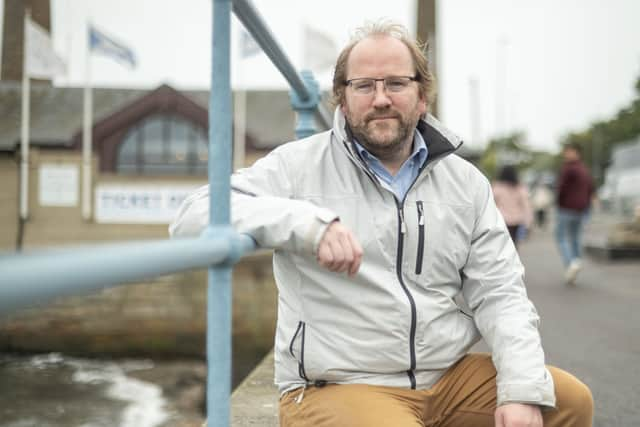
He said he was increasingly appalled at the lack of accountability surrounding the death of his wife and daughter.
In an interview with The Scotsman as part of its week-long Scotland’s Maternity Crisis series, Mr Quate said: “If you make a drug error, you shouldn’t get to decide if the person you’ve administered it to rides it out completely blind and unaware,” he said. “We have regulators and professional bodies who proclaim to uphold these golden standards, but actually, it all just goes out the window.
“The sheer volume of failure, their dereliction of duty, that quiet ‘institutional shrug’ that treats life as disposable - it doesn’t just exhaust you, it hollows you out. Trying to hold every detail, contradiction, or evasion in your head while the people who should answer for it simply get to move on is a special kind of cruelty.
He added: “All I want is the most basic thing - some genuine recognition that what was done was wrong. Real accountability. Enough so that when I stand at Jacqui and Olivia's grave I can finally grieve without the constant, grinding knowledge that the injustice that put them there is still being managed, minimised, and buried alongside them.”
He added; “In recent years the public has watched repeated institutional failures across numerous maternity services, and the systems meant to scrutinise them. Trust has been eroded precisely because serious departures from expected standards have too often been met with process, explanation, and closure rather than accountability.”
The decision by the NMC comes nearly five years after the General Medical Council (GMC) declined to take any action against a consultant obstetrician involved in Ms Hunter’s care.
A provisional enquiry heard that an independent expert in obstetrics and gynaecology who had reviewed the relevant medical records raised "significant concerns” about the care provided by the doctor.
The GMC’s provisional enquiry report stated that in the expert’s opinion, the standard of care “fell seriously below the standard expected” since the doctor noticed a serious drug error had occurred, but did not apparently take any direct steps to mitigate potential harm to the patient.
An NMC spokesperson said: “We offer our sincere condolences and deepest sympathies to Mr Quate, his family and friends over the tragic death of his wife Jacqui and baby Olivia.
“We recognise that fitness to practise proceedings are difficult, emotionally demanding and distressing for those involved - particularly those who have already been through a highly traumatic experience. We know this can be made worse when those proceedings take a significant period of time.
“We take all concerns raised with us about professionals on our register seriously. This includes fully and fairly considering all relevant information, including from other organisations. This often involves waiting for the outcome of a relevant third-party inquiry or investigation that we need to consider, which can inevitably impact the timeliness of our decision-making. However, we regularly review our cases to identify when we have sufficient information to make a suitably informed decision.
“In line with our regulatory responsibilities, we will always take appropriate and proportionate action to protect the public and maintain confidence in the nursing and midwifery professions.”
A GMC spokesperson said it was saddened by the tragic deaths of Ms Hunter and Olivia, and extended its “deepest sympathies” to Mr Quate, adding: “We examine all relevant information, including independent expert opinion, before making a decision about whether the criteria for investigation and further action is met.
“We do not take this responsibility lightly, and realise that our decisions will sometimes cause additional distress, especially for grieving families. A decision to close an investigation does not mean that the matter was not serious.
“We will always act where there remains a risk to the public or public confidence in doctors. We would need to be satisfied that a doctor is fit to practise and does not pose a future risk to patient safety.”
Comments
Want to join the conversation? Please or to comment on this article.