
Exclusive:UK minister demands Holyrood nuclear power talks amid fears SNP 'deindustrialising over ideological obsession'

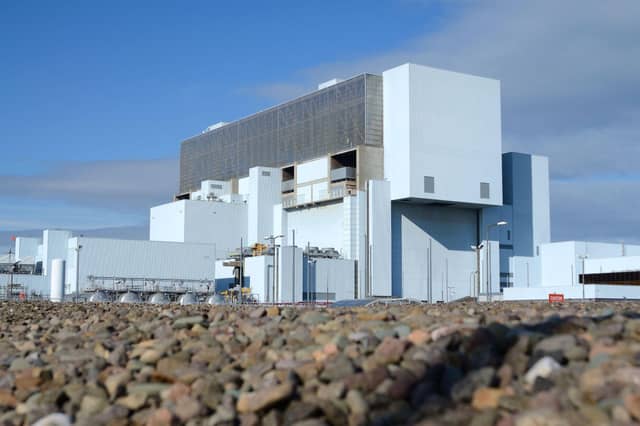

Torness nuclear power station is due to cease generation in 2030 - amid fears Scotland will lose skilled workers, investment and be more reliant on gas to keep the lights on.
A UK energy minister has called for talks with John Swinney’s government to break the stalemate over nuclear power amid fears the SNP is actively "deindustrialising parts of Scotland because of an ideological obsession” against the low-carbon technology.
The olive branch from Labour energy minister, Martin McCluskey, follows persistent appeals from successive UK governments for the SNP to rethink its opposition to nuclear power, particularly as part of the energy transition away from oil and gas.
His intervention also comes after Torness nuclear power station in East Lothian, which is due to power down in 2030, was identified as a potential site for a new small reactor.
Power generation is mostly reserved to Westminster, but Holyrood ministers have an effective block on new facilities being constructed due to devolved planning regulations.
The scheduled closure of Torness nuclear power station, which is run by EDF, follows the closure of Hunterston in 2022, Chapelcross in 2004 and Dounreay in 1994.
READ MORE: Why Grangemouth's green fuels blueprint has stalled amid fears of 'irreversible industrial decline'
Warnings have now been issued that without a change of heart from Mr Swinney’s government, Scotland will miss out on investment, see highly-skilled energy workers go overseas or to England to find work - and could lead to the country become reliant on nuclear power south of the border or the UK’s remaining gas facilities to keep the lights on after 2030.
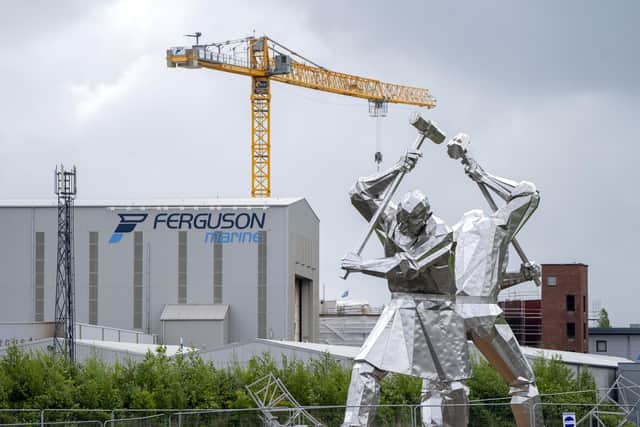
Speaking to The Scotsman at the Torness power station, Mr McCluskey warned that the facility was “as important as when we talk about shipbuilding on the Clyde or steelworks in Lanarkshire”.
Mr Swinney’s government have repeatedly warned against a repeat of the de-industrialisation of large parts of Scotland in the 1980s in terms of shipbuilding and steel, but nuclear power is never mentioned.
“Nuclear has been part of Scotland’s story for decades”, Mr McCluskey stressed.
“We were here in the 60s and 70s with Torness and in the 50s with Dounraey, we were leading it.
“Now the Scottish government seems set to turn its face against those opportunities for what I think are misplaced ideological reasons.”
The Scottish government has a long-standing opposition to nuclear energy, but it has not published a full energy strategy since 2017. A new document is long-delayed, but officials have been unable to put a timescale on the strategy other than before the 2031 Holyrood election.
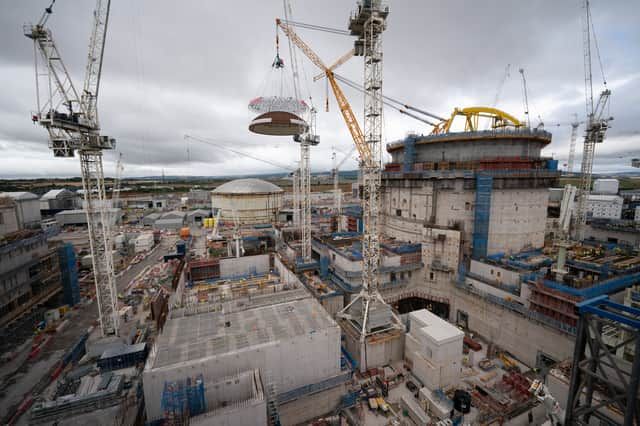
Concerns have been raised by SNP ministers over the costs of big nuclear projects south of the Border such as Hinkley, which has been delayed by years and is billions of pounds over budget.
But there is potential scope for small modular reactors (SMR) to be used in some future projects, including in Scotland. However, the Scottish government has argued that the SMRs “use the same method of electricity generation as traditional nuclear fission”.
“I’ll continue to make the case, as other ministers have, that there are opportunities for nuclear in Scotland”, Mr McCluskey said.
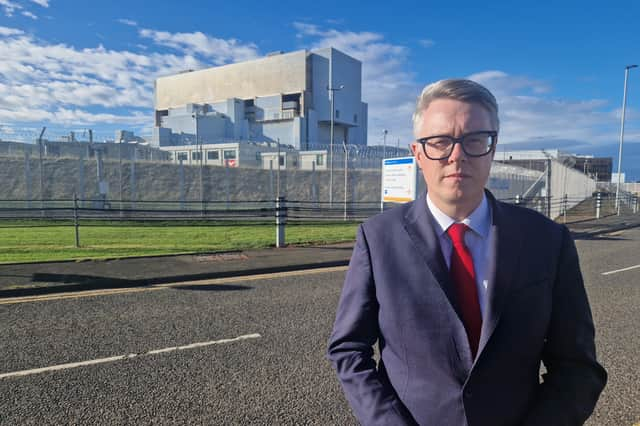
“The site here at Torness, GB Nuclear has already said would be an appropriate site for a new reactor. We’re willing to work with the Scottish government on it.
“I worry about what this might mean for Scotland’s contribution to nuclear industries more generally.”
He added: “You look at the number of Scots who are at Hinkley at the moment, I think it’s 10 per cent of the workforce there are Scots of a workforce of just over 10,000 - who are going down south every single week to use their skills to build a new nuclear power station. They could be working here.
“There are opportunities and jobs on the table, significant amounts of investment in communities across the country that would be unlocked by this, but we just can’t get past this ideological opposition.”
Mr McCluskey told The Scotsman that he would like to hold talks with the SNP government about resolving the stalemate.
“On this, I am more than happy to work with any Scottish government minister on bringing a new generation of nuclear jobs to Scotland in civil nuclear”, he said.
“That’s the opportunity that’s on the table. We are perfectly open to working with them. I would welcome a meeting with the Scottish government to discuss the opportunities on the table in terms of nuclear energy.”
He added: “We’ve identified the sites in Scotland that could be appropriate for investment in nuclear - here, in Dounraey and Hunterston.
“At Torness, there is actually the site that was prepared 30 years ago for a second station that is still there, that is empty. There is a very clear direction that you could go here.
“You could have a significant amount of employment in the construction phase. There’s over 500 workers here, over 180 contractors as well - they are significant employers in areas that frankly, need employment.
"The Scottish government is essentially de-industrialising parts of Scotland because of an ideological obsession against nuclear. That's what we're heading for if they don’t change their tack on nuclear power.”
READ MORE: Flagship North Sea floating wind projects stall as SNP warned not to 'squander' renewables potential
Asked about the high costs of nuclear construction, Mr McCluskey stressed “it’s about having the mix” of energy sources.
He added: “These things become cheaper the more often you build.
“Yes, you need to pay for the construction of these stations, but then you’ve got clean power for 30,40, 50 years.”
Asked what might happen if Scotland’s last generating nuclear power station does close in 2030 as expected, given up to 20 per cent of Scotland’s energy is produced by the facility, Mr McCluskey said: “In Scotland, they may end up relying on nuclear power from south of the border.
“They may end up relying on the limited amount of gas generation that is also still there. When nuclear goes, that gap isn’t just going to be filled by renewables.”
New figures show the nuclear power sector in England has created 47,492 jobs since 2014 – a doubling of the workforce, while just 661 jobs in the sector have been created in Scotland over the same period.
A Scottish government spokesperson said: “New renewable energy projects are faster to deliver and we have seen elsewhere in the UK how the costs of major nuclear projects can spiral.
“Scottish ministers remain focused on developing Scotland’s renewable energy potential, which is already securing jobs, investment and economic growth across the country.
“Recent research by CBI found that in 2025, net zero-related industries supported more than 105,000 jobs in Scotland and contributed £10.2 billion to the economy.”
Comments
Want to join the conversation? Please or to comment on this article.