
Thousands of business leaders call on chancellor to fast-track North Sea oil and gas support

The letter says the ‘crippling’ windfall tax must be scrapped immediately if further job losses are to be avoided
More than 7,000 business leaders have signed a letter urging the UK Government to fast-track its proposals for North Sea oil and gas.
Aberdeen and Grampian Chamber of Commerce says Chancellor Rachel Reeves’s decision to extend the windfall tax to 2030 threatens tens of thousands of jobs in the energy sector, and places the just transition at risk.
It says the “crippling” 78 per cent tax on energy profits are already to blame for 700 job losses at Harbour Energy and 800 at Grangemouth and Mossmorran.


The letter, which is being supported by First Minister John Swinney, says the UK Government’s new oil and gas mechanism should be introduced four years early in 2026. This policy would only apply when prices are elevated to between $90 and $97 from 2030 onwards.
Aberdeen and Grampian Chamber of Commerce’s chief executive Russell Borthwick has handed the letter into HM Treasury in London. It has been signed by Sir Ian Wood and other industry leaders from Aberdeen FC, Scottish Financial Enterprise, Scottish Renewables, Flotation Energy, Wood plc, Subsea7, Boskalis and a number of port chiefs.
Mr Borthwick said: “The North Sea is being taxed into decline, and it is workers and energy communities who are bearing the brunt.
“We now need swift, decisive action to prevent major job losses and the deindustrialisation of Scotland’s critical energy infrastructure.
“Even the UK Government accepts it is taxing windfalls that do not exist. There is simply no credible justification for persisting with the current regime.
“If we can slow the decline in domestic oil and gas production and rely less on imports, the UK’s public finances will improve - and the world-class workforce and supply chain needed for a genuinely managed and just transition will be protected.
“Ministers face a stark choice - keep the energy profits levy in place until 2030 and trigger thousands more avoidable job losses, or work with industry to safeguard employment and unlock investment by moving to a new tax regime in 2026.”
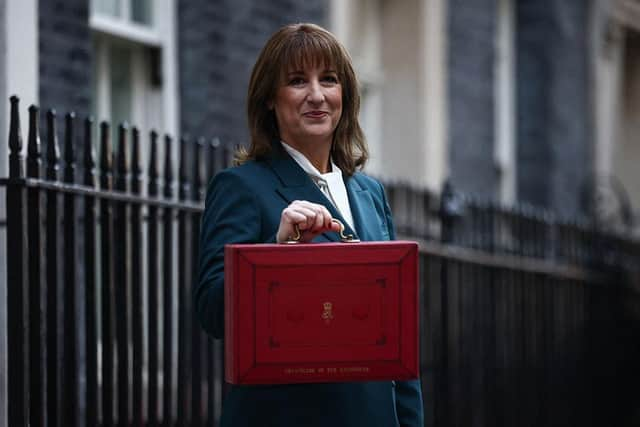
The letter says that economic forecasts from the Office for Budget Responsibility, which were published alongside the chancellor’s budget last month, show North Sea revenues will fall by 93 per cent between now and 2030 (from £4.5 billion to £300 million).
It said: “The Office for Budget Responsibility makes clear that a decline in domestic oil and gas production, driven by the continued application of the energy profits levy, is to blame.
“That same decline in production is increasing reliance on imported energy, which cost the UK more than £60bn last year.
“By producing more, and importing less, public finances would be significantly improved and the world-class workforce and supply chain we require to deliver a managed and just transition, repeatedly promised by your government, would be protected.”
The chamber added the UK Government now faces a “clear choice” between keeping the windfall tax in place, which they say will “precipitate thousands of further and avoidable North Sea job losses”, or bring forward the new oil and gas price mechanism to 2026.
It added windfall only happens when profits are around $95, a price not seen since October 2022.
The letter added: “By accelerating the implementation of the new oil and gas price mechanism, you would protect jobs, stimulate investment and deliver much needed energy and job security.”
Comments
Want to join the conversation? Please or to comment on this article.