
Failure to scrap windfall tax will 'sound death knell' for North Sea oil, Rachel Reeves told
The Chancellor has also been warned to make ‘hard choices” and avoid “death by a thousand taxes” by one of Britain’s biggest business leaders ahead of Wednesday’s announcement.
Rachel Reeves will “sound the death knell” for North Sea oil and gas unless she removes the energy profits levy (EPL) in the Budget, opposition politicians have warned.
The Chancellor has also been warned to make “hard choices” and avoid “death by a thousand taxes” by one of Britain’s biggest business leaders ahead of Wednesday’s announcement.
The EPL was brought in by the Tories as a temporary measure in May 2022 after companies recorded large profits due to a sharp rise in energy prices.


It was increased in last year’s budget and means oil and gas producers are paying a headline tax rate of 78 per cent.
Ms Reeves had announced it had been extended until at least 2030.
Scottish Conservative finance spokesman Craig Hoy said the end of the EPL is the “one non-negotiable” in this week’s Budget.
He said: “The EPL, along with Labour’s ban on new oil and gas projects, is costing an estimated 1,000 job losses every month.
“Unless the Chancellor removes it, she will sound the death knell for a sector that’s on its knees and devastation for communities across the north east.”
A UK Government spokesperson said: “We are taking a responsible approach that recognises the long-term role of the sector while exploring what follows the end of the Energy Profits Levy, so firms continue to invest and pay their fair share of tax.
“The oil and gas sector will be with us for decades to come, as we deliver a fair and orderly transition in the North Sea to drive growth and secure tens of thousands of skilled jobs, with the biggest ever investment in offshore wind and three first of a kind carbon capture and storage clusters.”
It comes as the boss of the UK’s largest business group warned that the UK Government must avoiding inflicting more cost pressure on firms at the Budget.
CBI boss Rain Newton-Smith will tell ministers and business leaders that firms are concerned the UK could “risk getting locked in a stop-start economy”.
Ms Newton-Smith, chief executive officer of the group, will spread the message in her speech at the CBI’s annual conference in central London on Monday, which will also see speeches from Business Secretary Peter Kyle and Conservative leader Kemi Badenoch.

On Monday, the trade body boss will specifically call for action on business energy costs and the Employment Rights Bill.
Initial measures linked to the Bill, such as day one paternity leave and changes to statutory sick leave, are due to come into force in April next year.
Further measures, such as banning unfair zero hours contracts, are expected to be introduced in 2027.
However, the Bill has faced criticism from employers over increases in business costs and complexity.
Ms Newton-Smith said the legislation is “damaging” and called for a change in direction from the Government.
In the speech, she will also say: “Right now, we have a government who say they want growth. Well business wants growth too.
“And the truth is – only business can deliver it. But to do that, we need one thing from this government and we need it now – stability.”
The conference comes amid a backdrop of caution among businesses and consumers ahead of the Budget.
Fresh economic data on Friday showed that UK private sector activity slowed earlier in November as firms held off spending ahead of the Budget.
Scottish Labour leader Anas Sarwar urged Ms Reeves to use the Budget to end the two-child benefit cap ease the cost of living by providing support with energy bills.
Speaking on BBC Scotland’s Sunday Show, he said the UK Government Budget has been a “drawn out process” surrounded by “far too much speculation”.
Mr Sarwar said: “It has to be a Labour Budget with Labour values running right through it.
“But what does that mean in practice?
“This has to be a Budget that reduces poverty, in particular, child poverty. That’s why we have to see the end of the two-child benefit cap, which would lift tens of thousands of children out of poverty.
“It has to be a Budget that confronts the cost-of-living crisis and improves living standards. That’s why we need a package to bring down energy bills.
“It also has to be a Budget that if it does contain tough decisions, it doesn’t go to the Tory playbook of austerity.
“There has to be a rejection of austerity and demonstrate that we have to invest in our public services, invest in our people and invest in our economy.”
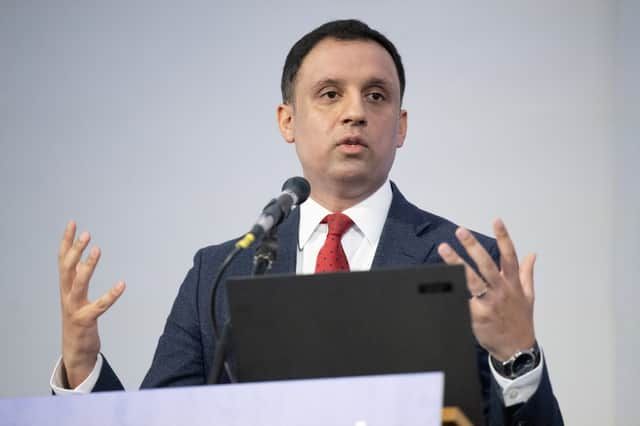
When asked what he would like to see happen to help with the cost of living in the Budget, he said energy bills come up “time and time again” and there are calls for a “significant energy package in this Budget”.
Mr Sarwar continued: “I think there has to be a holistic approach to this, we have to reform the energy market. That’s going to take a bit more time.
“We do have to invest in the renewables opportunity that exists in our country, disproportionately in Scotland. That’s why I welcome the significant investment in that green energy of the future. That’s why having public ownership as part of that is really important. That’s why we’ve set up GB energy, headquartered in Aberdeen.”
However, when asked about any removal of the energy profits levy, he said it is important to have a “sensible approach” around licensing.
He said: “The oil and gas sector has got an important role to play for decades to come. That’s why we have to have a sensible approach around licensing and consenting. It’s why we have to have a sensible approach that exists around allowances to make it investable propositions for companies.
“But we also have to recognise that many oil and gas companies, I recognise there will be some smaller and medium-sized oil and gas companies that don’t fit in this frame, but many of the larger oil and gas companies are still making billions of pounds in profits at the same time as people’s energy bills are going up.”
A UK Government spokesperson said: “The Chancellor will deliver a Budget that builds stronger foundations to secure Scotland and the whole United Kingdom’s future, focusing on the priorities of working people: cutting waiting lists further, cutting the national debt and cutting the cost of living.”
Comments
Want to join the conversation? Please or to comment on this article.