
Families hopeful over 'no body no parole' for killers as Suzanne's law to counter 'mental torture'

Grieving relatives have spoken out about the “mental torture” of never finding their loved one’s bodies.
The families of murder victims whose remains were never found have been given hope over a future “no body no parole” rule as a new law is poised to compel probation hearings to consider non-disclosure of information before releasing perpetrators.
The families of Suzanne Pilley and Arlene Fraser have spoken out after a “positive” meeting with SNP Justice Secretary Angela Constance.
The talks were held after it was confirmed the Scottish Government would accept a version of an amendment to the Victims, Witnesses and Justice Reform (Scotland) Bill that would require parole boards to take into account whether a prisoner has refused to reveal the location of their victims’ remains.


The relatives of Suzanne and Arlene have spoken out about the “mental torture” caused by the perpetrators refusing to hand over the vital information.
The amendment, tabled by Lib Dem MSP Jamie Greene, the so-called Suzanne’s law, is named after Suzanne, who was murdered by her colleague, David Gilroy, in 2010.
Gilroy, who was given a life sentence and ordered to serve a minimum of 18 years in prison, has never revealed the location of Ms Pilley’s body.
Nat Fraser was jailed for killing his wife Arlene, who disappeared 27 years ago and was last seen waving their two children off to school in 1998. Her remains have never been found.
‘Mental torture’
Under existing legislation, Fraser will be eligible for parole in October 2028, and Gilroy will be eligible in March 2030.
Arlene’s sister, Carol Gillies, has described Fraser refusing to reveal the remains as “a form of mental torture”.
She said: “He disposed of Arlene in a very ruthless, efficient way and to just have Nat Fraser in front of the parole board and all they are considering is the risk on how he behaved in jail is just not enough.
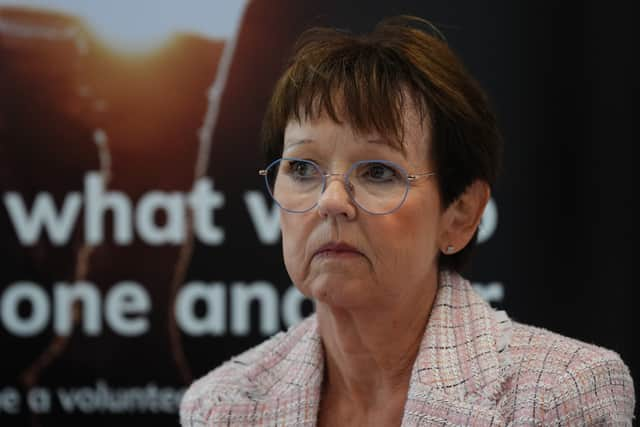
“If he was to get out, then he would be gone forever.”
Ms Gillies added: “If Arlene had been left on the kitchen floor, that would be one thing. We would have her and we would be able to have a proper burial”.
But she stressed that “to know that she was removed, taken away” means “we’re at the stage where we don’t even know if she’s in one piece”.
READ MORE: 'Rapists are walking free': SNP told to investigate rape myths infiltrating jury deliberations
Suzanne’s sister, Gail Fairgrieve, insisted Gilroy’s “crime is still continuing” by refusing to reveal the location of his victim’s body.
‘Bring Suzanne home’
She said: “He’s perpetrating a crime against us and we’re still dealing with this every day. He has information that could put us at ease and bring Suzanne home.
“This information is a full part of his crime.”
Ms Fairgrieve said the amendment requiring parole boards to consider non-disclosure of a victim’s remains was “a step in the right direction”.
Asked about what should happen if Gilroy refuses to give up the location of Suzanne’s body, even with the new parole rules, Ms Fairgrieve said: “Life imprisonment should mean life imprisonment.”
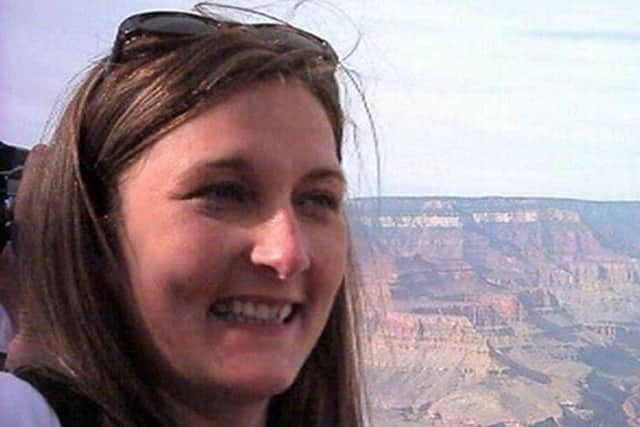
She said: “I feel that they’re still perpetrating a crime. Part of the crime was to put Suzanna in the boot of a car and take her to Argyle and dispose of her - wherever, we don’t know.
“I think he’ll never disclose where she is.
“Parole regulations are something that will affect the perpetrators in these cases. But we would like to see the law change so that when they come to trial, they are well aware that if they never disclose where the remains or a body is then there’s no chance of parole.
Appeal for Australian model
“That’s where the law needs to stand. We need to move that.”
Ms Fairgrieve suggested the justice secretary was “open to hearing anything that we have to say” on how the law could be tightened in future.
Suzanne’s sister pointed to rules in Australia, which she believed should be mirrored in Scotland.
She said: “They have a crime that’s ‘no body, no parole’ so they are instantly told at sentencing that’s the situation they’re in and it’s their choice at their point.
“There’s no reason why Scotland can’t be doing the same.”
Kate Wallace, chief executive of Victim Support Scotland, told journalists “both murderers will be eligible for parole in the coming years” and said the developments would “provide a level of safeguarding and comfort to the families”.

She said the changes set to be agreed in the coming legislation would “bring Scotland in line with England”.
Ms Wallace added: “The current wording around parole rules is that they may take into account the non-disclosure of information around the remains of a deceased person. The change that has been put forward and accepted in an amendment says that they must take that into consideration.
Changes ‘a step forward’
“Whilst it’s acknowledged that that doesn't go as far as perhaps we would have liked, it is mirroring what is happening in England and Wales and is regarded as a step forward.
“The parole board in these situations must consider that information as part of their decision - it compels them to do that. “
Regarding the ‘no body no parole’ proposals, Ms Wallace said: “There is a commitment to listen and there is a plan the Government have to release a public consultation around parole.
“That’s the place for some of these proposals around further changes to be considered.”
The Justice Secretary, Ms Constance, said: “I am grateful to the families of Suzanne Pilley and Arlene Fraser for meeting with me today.

“They have suffered heart-breaking losses, compounded by not knowing the final resting place of their loved ones. My deepest sympathies remain with them.
“In March, I supported an amendment to the Victims, Witnesses, and Justice Reform Bill that will mean the parole board, when making decisions about release, must take account of whether a prisoner has information about the disposal of a victim’s remains, but has not disclosed it.
“At today’s meeting, I reiterated my firm commitment to this change, which will become law if the Bill is passed in Parliament.”