
Lord Advocate Dorothy Bain defends 'out of kilter' presumption against children being prosecuted for rape
Concerns have been raised about the impact a presumption against under-18s being prosecuted for rape could have on victims.

Lord Advocate Dorothy Bain has defended a presumption against prosecuting children accused of committing rape amid fears the policy is “out of kilter with public opinion”.
Ms Bain appeared before Holyrood's public petitions committee on Wednesday in relation to a campaign calling for SNP ministers to “ensure that under-16s charged with rape are treated as adults in the criminal justice system”.


Guidance published by the Crown Office and Procurator Fiscal Service in April states that a child that has been reported to prosecutors “for rape or other solemn level sexual offending” should either be “offered diversion” as an “alternative to prosecution where the reported individual is referred to a local authority or other partner agency” or be referred to the children’s reporter administration.
Speaking to MSPs, Ms Bain stressed “there is a need to strike a balance between supporting children who come into contact with the law and ensuring victims are supported and that communities are safe”.
She said: “All reports involving violent or sexual offending are treated seriously. Where such offending merits prosecution, action will be taken, even when the offender is a child. The prosecutorial response to adults and children needs to be different. Fundamentally, a child is treated as such because of the impact of their age and maturity.
“The presumption is for all children not to be prosecuted. However, that is not to say that a child cannot and should never be prosecuted. The presumption against prosecution is a rebuttable presumption and should be rebuffed when it is in the public interest to prosecute.
“The more serious the offence, the more likely it is that the offence is prosecuted in court.”
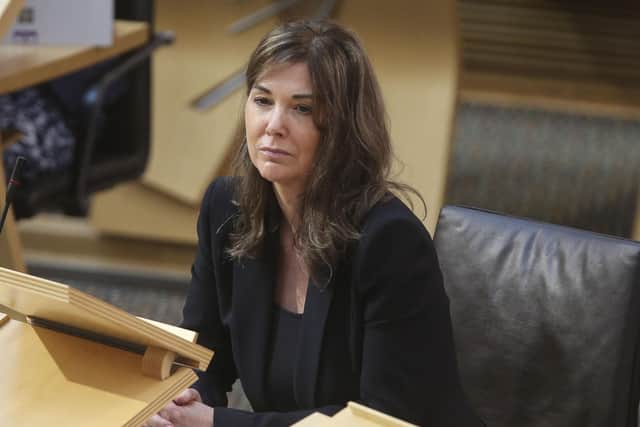
Ms Bain added: “In particular, given the seriousness of rape and other sexual offending and the impact of such offending on victims, referral to the reporter or diversion from prosecution for such offences will only be appropriate in certain circumstances.
“Fundamentally in relation to children, the justice system must be responsive to vulnerability, trauma and need, but it also must be clear that serious offending has serious consequences.”
‘Out of kilter’
Scottish Conservative MSP Maurice Golden questioned whether the policy was supported or understood by the public.
He said: “It strikes me that the presumption against prosecution in these cases is perhaps out of kilter with public opinion - the scope of which we are discussing is serious violence or sexual offences.
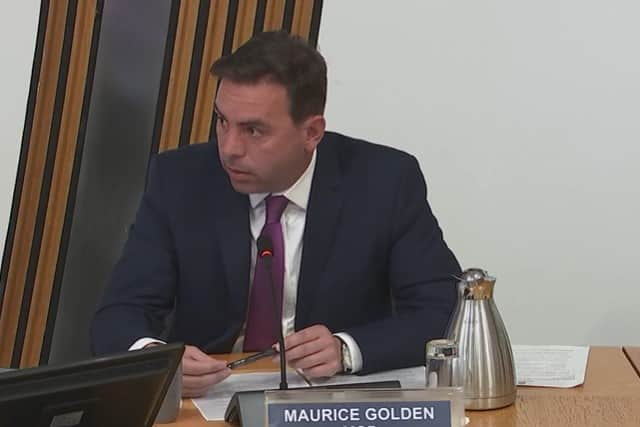
“I understand the whole-system approaches around early interventions at the first sign of difficulty and I think there’s a logic to that. But I just wonder when we’re dealing with the most serious cases of violence and sexual offences that the crisis point has perhaps already been reached and therefore there consideration of that should be viewed in that context.”
In response, Ms Bain stressed it “is a rebuttable presumption”. She said: “The more serious the offence, the more likelihood of a prosecution.”
The Lord Advocate insisted “serious sexual offending” was “treated with the upmost seriousness by the Crown Office and Procurator Fiscal Service”.
“It is the case that children are prosecuted for these offences and they have been,” she said. “Each case is analysed with great care on its particular facts.”
Figures from the Scottish Government released earlier this month show the proportion of under-16s committing violent crime has surged from 8 per cent in 2021/22 to 31 per cent in 2023/24.
Independent MSP Fergus Ewing said: “The feeling is, I think, that this is still something where those people charged with the most serious offence of rape end up being treated not in the criminal justice system, but in a more lenient way.
“From the victim’s point of view, one can readily understand how much anguish that must cause, especially in the most serious cases.”