
Exclusive:SNP to use sexual offences court to clear backlog and let survivors tell offenders about impact
Rape survivors could be able to tell offenders in person about the impact their crime has had on them under a pilot backed by SNP ministers.

Justice Secretary Angela Constance has said new sexual offences courts could clear a case backlog as she confirmed a pilot project allowing rape survivors to tell perpetrators in person the impact their crime has had on them.
Next week, MSPs will consider amendments and a final vote on the Victims, Witnesses and Justice Reform Bill after the contentious non-jury rape trials were removed from the legislation following a backlash from MSPs.


Deputy First Minister Kate Forbes and five other SNP MSPs abstained against the Bill at stage one in April 2024 over the juryless rape trial proposal, which has now been dropped by the Scottish Government.
The wide-ranging proposals will contain the establishment of a standalone sexual offences court system, despite concerns previously raised by Scottish Labour and the Conservatives about the proposal.
In a letter to Holyrood’s Justice and Home Affairs Committee, Ms Constance has stressed that setting up a sexual offences court can provide “significant benefits” to the “efficiency of the court system”, which she admits is under "significant pressure”.
READ MORE: 'Rapists are walking free': SNP told to investigate rape myths infiltrating jury deliberations
The majority of evidence-led High Court cases in Scotland relate to sexual offences and are often very complex. As of July, Scotland had a trials backlog of 17,873.
Ms Constance said: “This pressure will only become more pronounced as the volume continues to grow, and an effective means of managing sexual offence cases is vital if we are to deal with this in a sustainable way.”
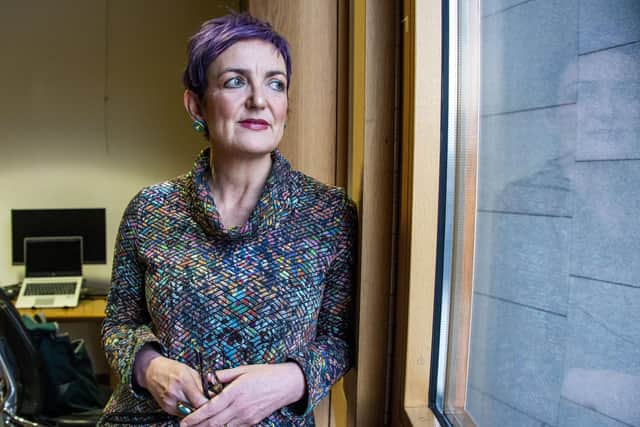
In her letter to MSPs, Ms Constance stressed that a standalone court system “will help to streamline the management of sexual offence cases” which she hopes will “reduce the number and frequency of unnecessary adjournments and ensure that cases reach trial more quickly”.
She added that the proposal means “court and judicial resources can be deployed more effectively and efficiently by enabling trials to be scheduled in a way that better responds to demand”
Ms Constance added: “The High Court currently sits in nine locations and the sheriff courts at 39. The SOC will have access to all these locations across Scotland.
“Better use of the court estate will enable more capacity for trials to be scheduled while also doing so in a way that supports the delivery of local justice. Neither of these benefits could be achieved by establishing specialist divisions of existing courts.”
Scottish Labour, which abstained on the first vote on the legislation, was previously called for “the High Court and the sheriff court having a specific division” for sexual offences.
But Ms Constance has claimed that doing so “would only serve to add bureaucracy and complexity”, warning “the effects of which will be borne by victims”.
The Justice Secretary has also confirmed that she will commit to a pilot project widening the number of rape survivors able to issue victim statements in court, which could involve “victims reading their statement in court or pre-recording it so it can be played in court” for perpetrators to hear.
The move comes after what Ms Constance branded “constructive discussions” with Conservative victims and community safety spokesperson Sharon Dowey.
Ms Constance said that “given the significant and enduring impact of this type of offending”, giving survivors “a choice to reflect the impact of that offence - not just in their own words but also in their own voice – will, for some, be a meaningful opportunity to assert their agency and convey to both the court and the perpetrator the full extent of the impact of the offending”.
READ MORE: Families hopeful over 'no body no parole' for killers as Suzanne's law to counter 'mental torture'
She added: “This could involve, for example, victims reading their statement in court or pre-recording it so it can be played in court.”
Ms Dowey said: “We’re focused on trying to improve the bill for victims but have raised concerns about a separate court, with potentially huge costs attached.
“We argued that the money might be better devoted to improved trauma-informed practice, and resources for existing courts, where some victims have been waiting three years for justice.
“I’m delighted that my constructive talks with the cabinet secretary have resulted in this pilot, and the Scottish Conservatives remain dedicated to ensuring the bill delivers for victims.”
Scottish Labour justice spokesperson Pauline McNeill said: “From the outset I have argued that the SNP government’s proposals risk creating more bureaucracy and I have not yet been convinced this significant organisational change will in fact reduce delays.
“Scottish Labour put forward alternative proposals for specialist arrangements within existing structures which would have delivered the same outcomes in a simpler and more effective way.
“We will consider all proposals carefully, but changes must deliver meaningful improvement and not simply more bureaucracy.
“There is no silver bullet to these challenges - any changes must be backed up with a comprehensive plan to deal with the chaos in the courts system, build a justice system that women can trust, and tackle misogyny and violence across society.”