
SNP warned over 'bleak reality' that 'no shortcuts' exist to cut NHS waits as stuttering progress revealed


Warnings have been issued that some NHS waiting times have stuttered amid calls for a “comprehensive plan for the future of the NHS” to be drawn up.
SNP ministers have been told to face the “bleak reality” that there are “no shortcuts” to permanently cut NHS waiting lists after inpatient waits started to rise again with hundreds of Scots left more than three years for treatment to begin.
The Scottish government has now been warned that “it will take time and sustained efforts to make meaningful progress” to permanently improve waiting times across all measures.

It comes after analysis by Scotland on Sunday of latest figures published by Public Health Scotland found that some longer waits have increased, while others appear to have flatlined.
The SNP government had pledged to end waits of more than a year for treatment by March of this year, but that flagship target was missed - with thousands of patients still waiting more than 12 months.
The latest data, up to the end of May, shows there were 17,267 ongoing waits longer than one year for inpatient and day cases - an increase from 17,212 at the end of the previous month.
READ MORE: Scotland's hospitals 'cannot cope' as 30,000 cancelled operations due to capacity issues revealed
Public Health Scotland confirmed “this brings to an end month on month reductions of waits over 52 weeks for a sustained period”.
The figures show that of those ongoing waits, there were 616 waits of more than three years, as of the end of May - with a negligible change compared to April.
The SNP government has made some progress on waiting times. The latest figures show that waits of more than one year were on a downward trajectory up until April, before the increase as of May.
Public Health Scotland further estimated that 579,814 people were on an NHS waiting list either for an outpatient appointment, inpatient or day case treatment – with this said to be equivalent to about one in 10 of the population.

Waiting lists for new outpatients have reduced by 12.9 per cent compared to last year, with the number of outpatient waits of more than a year dropping for 12 months in a row.
The statistics show that more people are being treated for cancer on time, within both 62 and 31 day standards, compared to pre-pandemic and to 10 years ago. The median wait for treatment after a decision to treat is just two days – the joint lowest on record.
But treatment times for cancer are not consistent. In the first three months of this year 72.2 per cent of patients referred to medics with an urgent suspicion of cancer started treatment within 62 days – down from 72.6 per cent in the previous three months and below the Scottish Government target of 95 per cent.
No health board in Scotland achieved the goal of having 95 per cent of patients urgently referred start their treatment within two months, with this target not being met since the end of 2012.
The figures showed while 86.3 per cent of patients referred after breast screening started treatment in 62 days, this happened for less than three-fifths of those referred after bowel cancer screening.
SNP ministers are facing pressure to bring forward a strategy to ensure sustained progress across all metrics in the coming months.
BMA Scotland has called on John Swinney’s government to draw up a “comprehensive plan for the future of the NHS” as an immediate priority when MSPs return to Holyrood from summer recess.
Dr Iain Kennedy, chair of BMA Scotland, said: “Any progress which is being made on waiting times is of course welcome, but the bleak reality is that it will take time and sustained efforts to make meaningful progress on tackling waiting lists to ensure every patient is able to access the care they need, when they need it.

“The continuation of challenges for NHS Scotland in delivering timely treatments will be of no surprise to the many patients who are languishing on waiting lists or being forced to pay for private care, and it is simply unacceptable thousands are having to wait longer than one year – or in the worst cases even longer.”
The BMA has also repeated its calls for the Scottish government to get serious about workforce shortages in the NHS and the impact it is having on staff and patients.
Dr Kennedy added: “The Scottish government must urgently set out in this new parliamentary session a comprehensive plan for the future of the NHS.
“The change which is required to tackle long waiting lists can only be delivered by looking at the whole system and ensuring services are properly staffed and properly resourced.
“At the heart of this must be a proper workforce plan, which outlines how the NHS in Scotland will recruit and retain staff at all levels and safely staff the services patients need.
“Let’s be finally clear and honest, waiting lists will only improve when we have the right staff in place which means the right measures to recruit and retain the doctors we need. There are no short cuts, and the government must act urgently on this across all facets of making working as a doctor in Scotland attractive.”
Scottish Labour deputy leader and health spokesperson, Jackie Baillie, said that the stuttering inpatient waiting times is a red flag that progress had potentially peaked.

She said: “These alarming figures suggest progress ending long waits is starting to stall.
“The SNP has already been too slow to tackle long waits, repeatedly missing their own targets and leaving thousands of Scots waiting years on end – we cannot let things go backwards.
“Scottish Labour will continue to press the SNP government to deliver a real NHS catch-up plan – supporting staff with a long-term workforce plan, easing pressure on hospitals by tackling delayed discharge, and making sure capacity is being used wherever it exists.”
The Scottish Tories have argued that the statistics show that the Scottish government’s claim of having made sustained progress should be questioned.
Scottish Conservative health spokesperson, Miles Briggs, said: “After two decades of chronic SNP mismanagement, the backlog in our NHS has spiralled out of control.
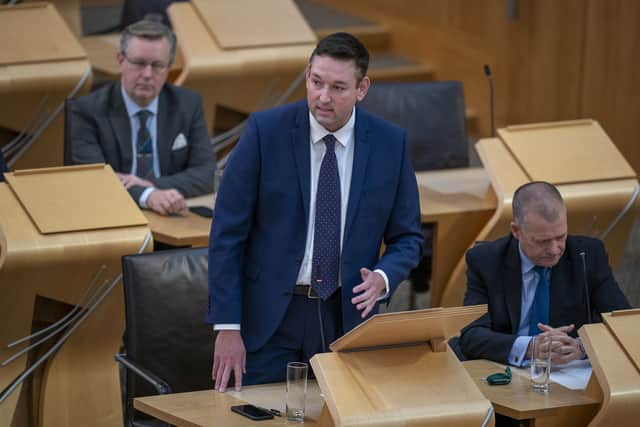
“The shocking rise in the number of Scots waiting over a year for treatment pours cold water on the SNP’s claim that they’re making progress in this area.”
He added: “Frontline staff are working flat out to clear the backlog, but years of dire SNP workforce planning has pushed them beyond breaking point and unable to reach demand.
“The Scottish Conservatives have a plan to tackle the permanent crisis in our NHS by cutting bureaucracy and ensuring resources get to frontline services.”
Scottish Liberal Democrat health spokesperson, Adam Harley, said: “These figures show a stark failure to make any real dent in reducing waiting times across our NHS.
“Being stuck on a waiting list makes it more difficult to get on in life, to return to work, and it only increases the chances of your condition deteriorating.”
He added: “I want to see the government listening to my party’s plan for a rolling 10-year NHS workforce plan. That’s how we can identify gaps in staff and resolve them early on.
“We also need to see a much greater focus on fixing our broken care system, which is at the root of so many dreadful waits across our NHS.
“By tackling shortages of care workers and care packages, we can let people leave hospital on time and free up bed space for new patients.”
SNP Health Secretary, Angela Constance, has acknowledged that NHS services, particularly at A&E, are still facing significant pressure.

The Scottish government is pressing ahead with a strategy to focus on shifting the balance of care into communities in an attempt to alleviate pressures on hospitals.
SNP ministers have boasted over GP walk-in clinics and Hospital at Home services as helping to boost the shift out of hospitals.
Ms Constance said: “These latest official figures illustrate that our exceptional NHS workforce is treating more people across Scotland and dealing with significant pressures in doing so.
“Hospital activity is up and as a result we are seeing long waits for operations coming down.”
She added: “Thanks to our hard-working staff and targeted Scottish government investment, we are building more capacity.
“This is surpassing our target to provide 150,000 additional appointments last year and an additional 30,000 procedures in our network of national treatment centres.”
Ms Constance admitted that “delivering better care cannot be achieved simply by increasing activity”.
She said: “Real long-term progress will mean improving access to care on our doorstep and in communities.
“It requires change in how we deliver social care and address delayed discharges from hospitals.
“In our first 100 days of government we will introduce a new national plan for the flow of patients through hospital.
“We are investing in more community care, including opening more GP walk-in centres across the country and introducing heart and lung MOTs. Prevention is better than cure and catching problems early saves lives.”
Comments
Want to join the conversation? Please or to comment on this article.