
Exclusive:How Scotland's sexual offences court will work - opening the door for survivors to watch trial via video

Complainants could be able to watch the remainder of their trial through a video link to hand survivors closure on their trauma, as plans to establish Scotland’s specialist sexual offences court are drawn up.
A specialist sexual offences court has risked becoming a political football before its even been established - but has the potential to restore women’s confidence in Scotland’s justice system that is poised to undergo transformational change in the coming years.
MSPs approved the Scottish Government’s Victims, Witnesses and Justice Reform Bill last week - but a row erupted over a sexual offences court being set up.


The new sexual offences court, a key recommendation following a review by Lady Dorrian, will allow all complainers to give evidence in advance, while survivors and witnesses will, in theory at least, face less waits for cases to be heard, which can be a “huge source of distress”.
There is also the potential, yet to be agreed, for the sexual offences court to allow complainers to watch the remainder of the proceedings through a video link.
The specialist offences court will take place in the court buildings that make up Scotland’s sheriff and high courts, but will have its own judges, procedures and tailored experience for survivors and witnesses.
When will the criminal justice reforms be rolled out?
No timescales have been given for introducing the measures in the legislation, including establishing the sexual offences court. It is understood the Scottish Government is keen to abolish the not proven verdict for new cases “as soon as is practicable”, which could be as early as next year.
READ MORE: 'Rapists are walking free': SNP told to investigate rape myths infiltrating jury deliberations
Sandy Brindley, chief executive of Rape Crisis Scotland, told The Scotsman that the sexual offences court “gives us the chance to do things differently and to imagine what a proper trauma-informed response might look like rather than trying to fit it within the existing court structure”, which she warned “really is not built to provide trauma-informed justice for survivors in these most difficult and sensitive of cases”.

She added: “Rape can be an extremely difficult crime to report and the resulting justice process is one that many survivors have described to us as feeling like a violation in its own right.
“In this context, a new approach is necessary if women are going to have confidence in the Scottish criminal justice system.”
Kate Wallace, chief executive of Victim Support Scotland, adding that victims and survivors “frequently tell us they often feel like they are the ones on trial, as the burden of proof is on them”.
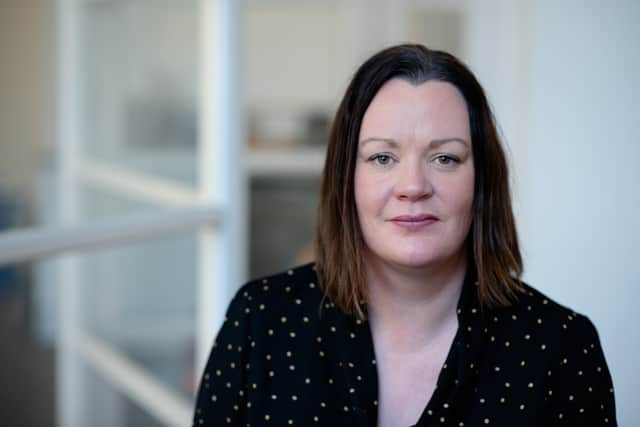
She added: “The level and scale of changes required to improve the experience of victims and witnesses can only be achieved through the establishment of this specialist court.”
Sexual offences court could cut delays and backlog
SNP ministers believe the court will allow them to use available resources more flexibly to reduce delays.
It is understood some of the practice used in a domestic abuse court pilot in Glasgow could be harnessed for the sexual offences court, including the early disclosure of evidence, early engagement between the Crown and the defence and early judicial case management - with a focus on reducing the number of cases set down for trial unnecessarily and the number of late guilty pleas.
Ms Brindley stressed that “delays are a huge source of distress for complainers in cases of this nature”, adding that it is “not uncommon for survivors to be waiting two years or longer”.
Trauma training for court participants and pre-recording of evidence
Alongside evidence being given by witnesses and complainers in advance of live proceedings, all participants must go through specialist trauma-informed training, known as being ‘ticketed’. This will apply from the judges right down to the clerks, defence lawyers and prosecutors.
Ms Brindley said: “Often what complainers say to us makes a difference is being treated like a human being with some appreciation of how traumatised they are - but also about explaining things properly, making sure they know what’s happening.”
READ MORE: SNP to use sexual offences court to clear backlog and let survivors tell offenders about impact
Ms Wallace added this approach “will mean victims and witnesses are better supported, able to give higher quality evidence, and help avoid re-traumatisation”.
She added: "The use of evidence by commission will also be vital, meaning vulnerable witnesses can supply their evidence from outside a court room.
“Over the last few years, Victim Support Scotland has opened remote evidence suites in Glasgow and Edinburgh to help with this development and provide a safe, supported space for people to provide evidence.”
Potential for survivors to view proceedings on video
One key measure, yet to be agreed, Ms Brindley hopes the sexual offences court could open the door for, is complainers being able to see the remainder of the proceedings.
She warned many survivors “find it really really difficult not being able to watch the rest of the court case and see what happens”.
Ms Brindley added: “Often that is because they cannot bear to sit and watch behind the accused or being even in the same room as the accused to watch the rest of the case - or they’re told that it wouldn’t look good for a jury to be sitting watching the rest of the case.
“But what that means for survivors, particularly when there’s an acquittal, it can be incredibly difficult to understand what’s happened.
“What we think would make a huge difference is if they set up online secure online access for complainers in these cases, at the specialist court, to be able to watch if they wish, with support, the rest of the proceedings.”

Speaking to The Scotsman, justice secretary Angela Constance said: “The sexual offences court is necessary to improve the experiences of victims of sexual offences in the court system and reduce the risk of re-traumatisation.
“By embedding specialist trauma-informed approaches in culture, processes and practice, victims will be supported to give their best evidence.
“The court will use resources more flexibly to reduce delays and increase efficiency. The High Court currently sits in nine locations and the sheriff courts in 39. The sexual offences court will have access to all these locations across Scotland, enabling more capacity for trials to be scheduled and in a way that supports the delivery of local justice. These improvements can only be delivered by establishing a standalone court.”
Comments
Want to join the conversation? Please or to comment on this article.