
Poll: SNP on track for historic Holyrood majority thanks to tactical voting

The first MRP poll predicts the SNP will win 67 seats, and Scottish Labour support is collapsing.
A collapse in Labour support and tactical voting is set to hand the SNP a Holyrood majority, according to a new “mega-poll”.
The first MRP poll for the Holyrood election suggests the nationalists are on track for a historic landslide, winning 67 seats. First Minister John Swinney has previously said he wanted to win 65 seats, which is the threshold needed to secure a majority.
Most polls have indicated the SNP will remain the largest party in Scotland at the election in May, but the Stonehaven poll for The Times is the first to suggest they will win a majority.
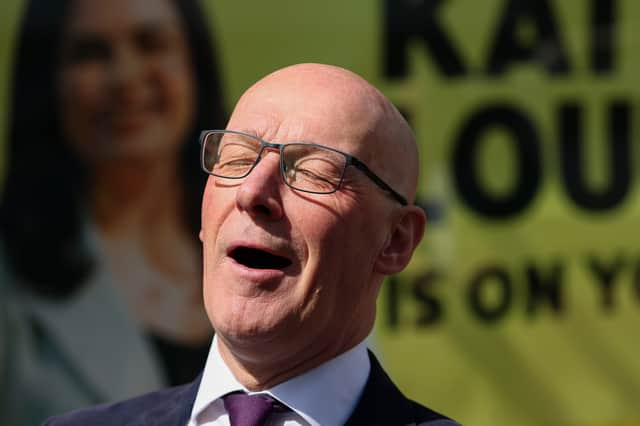

This has only ever happened once before in 2011 under Alex Salmond.
Stonehaven managed to predict the results of the UK general election in 2024 within a margin of just 38 seats.
The poll suggests the SNP will be rewarded by Scots’ contempt for Reform UK, despite Nigel Farage’s being tipped to do well in this election.
This is because around one in four Scottish Labour voters are willing to vote SNP to block Reform UK, which could see the nationalists winning all but six of the constituency seats which use the first-past-the-post system.

If this poll plays out at the ballot box, Scottish Labour would only win the Western Isles. It also suggests Anas Sarwar’s party would win no more than two regional MSPs in each region, meaning many of the party’s most prominent politicians in Scotland would lose their seats.
Scottish Labour is however within touching distance of the SNP in Edinburgh Southern.
The Scottish Lib Dems are set to win Shetland, Orkney, Caithness, Sutherland and Ross, Fife North East and Edinburgh North Western. All other constituency seats are on track to be won by the SNP.
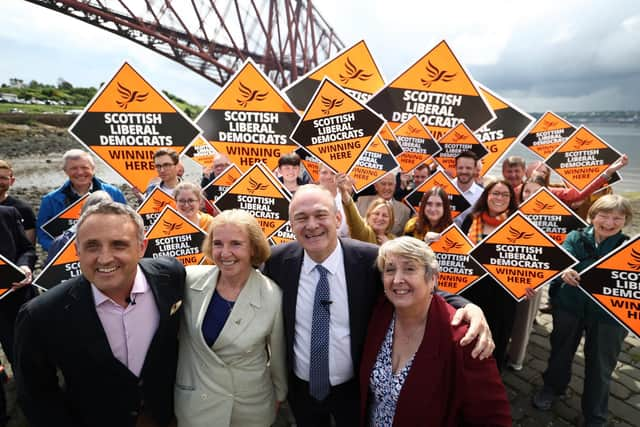
Several polls have predicted Reform UK will finish second in this election. The Stonehaven poll suggests the party will be compensated for not winning any constituency seats by picking up 25 regional seats.
Scottish Labour would slump to just 15 MSPs, which would be its worst result in the history of devolution. The Scottish Lib Dems would have eight, and the Scottish Conservatives and Scottish Greens would be on seven each.
If this plays out at the ballot box, the Scottish Conservatives would fall from being the official opposition party to becoming the joint smallest in parliament. This would also be their worst result since devolution.
The “blue wall” in the south of Scotland would be demolished, according to this poll. It suggests the three seats the party currently holds (Ettrick, Roxburgh and Berwickshire, Dumfriesshire, and Galloway and West Dumfries) are now two-way marginals between the SNP and Reform UK.
Reform UK would be within five points of the SNP in three constituencies - Banffshire and Buchan Coast (currently held by the SNP), Dumfriesshire, and Galloway and West Dumfries.

Reform UK is predicted to pick up four list MSPs in the Highlands and Islands and in South Scotland, two in Edinburgh and Lothians East, and at least three in every other region.
Luke Betham, head of data science at Stonehaven, said: “Tactical voting is likely to play a significant role this May, with a handful of closely fought constituency contests set to decide whether or not the SNP secures an overall majority for the first time since 2011.
“At the same time, our modelling points to Reform becoming the main opposition force in Holyrood, ahead of the Conservatives and Labour. That kind of generational realignment would cause an almighty headache for both Sir Keir Starmer and Kemi Badenoch.
“John Swinney has already said winning an outright majority would be a mandate for a second independence referendum, based on the precedent set in 2011.
“Labour has indicated it would reject calls for a rerun of 2014, which would likely lead to a souring of relations between Edinburgh and Westminster.”
Comments
Want to join the conversation? Please or to comment on this article.