
People being 'put off' coming to Scotland by high taxes, as SNP accused of overseeing 'economic-free zone'
Anas Sarwar has vowed to devolve power away from Holyrood to boost regional economic growth if he forms the next Scottish government.

A leading economic expert has called on whoever forms the next Scottish government to place growth and productivity at the heart of their policy vision as Scotland was accused of becoming an “economic-free zone” under the SNP.
The warning from Professor Sir Anton Muscatelli comes as Scottish Labour leader Anas Sarwar vows to devolve power out of Holyrood in a bid to usher in a new age of regional economic growth if he becomes the next first minister.


A key report to be published by Prof Muscatelli this morning, commissioned by Scottish Labour, will examine opportunities to boost regional economic growth in Scotland.
Ahead of the publication, Prof Muscatelli has warned there is a “risk” higher income tax rates will dissuade people from coming to Scotland, stressing “difficult choices” lie ahead on tax.
His intervention comes amid speculation SNP Finance Secretary Shona Robison is poised to hike income tax in Scotland if Chancellor Rachel Reeves does likewise south of the Border in her Budget later this month, or be faced with an additional £1 billion in spending cuts ahead of May’s election.
Speaking to the BBC, Professor Muscatelli warned “we can’t just focus on tax rates, we have to focus on growth”.
“The danger is – and this is what I’ve heard from people who I discussed elements of the report with – they’re worried that people are perhaps being put off”, he said.
READ MORE: Anas Sarwar opens door to ending Scotland-England tax divergence in dig at SNP 'performance'
He said he wanted to highlight a “risk” of people being put off from coming to Scotland as a result of higher taxes, saying there is not “fantastic evidence” on the impact of the Scottish income tax rates.
The academic added: “Ideally it has to be front of mind of government that you can’t deviate too much from UK-wide rates because otherwise you could be less competitive. All I’m saying to future Scottish governments is - think about it.”
Ahead of his report being released today, Prof Muscatelli stressed his work had been conducted “entirely independently, drawing on evidence, consultation and international best practice to offer recommendations”.
He said: “Scotland’s long-term prosperity depends on placing economic growth and productivity at the centre of public policy.
“This report highlights the need for greater coherence in policy design, stronger collaboration between Scotland’s governments and a renewed call for the levers that lie in Holyrood to be used to foster the distinctive strengths and mitigate challenges of our regional economies.
“Economic growth is not an end, but the essential means by which we can raise living standards, sustain high-quality public services, and tackle persistent inequalities.
“My hope is that the findings set out here will help stimulate the focused, long-term approach to economic development that Scotland now urgently requires."
Ahead of the publication, Mr Sarwar has claimed that “for two decades, Scottish politics has been an economics-free zone”. He he vowed to “push power out and into our communities to empower entrepreneurs and kick start growth".
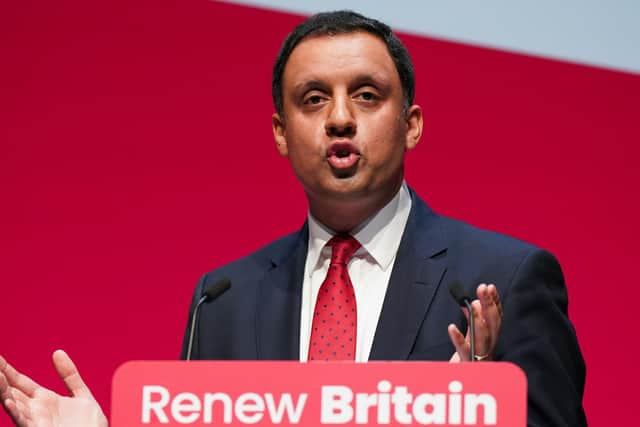
“We all want to see social change driven by proper policymaking, but the truth is that we cannot have the social policies we need if we do not have a thriving and growing economy,” he said.
"Under the SNP, economic growth has been ignored and the unique potential of communities across Scotland has been held back by an Edinburgh-centric view of the economy.”
Comments
Want to join the conversation? Please or to comment on this article.