
Economists warn SNP 'something will have to give' as capital projects set for axe over £1bn gap

Economists have warned the Scottish Government will have to set out cuts to capital projects when it publishes its draft Budget on Tuesday
Shona Robison faces axing up to £1 billion from the Scottish Government’s capital and infrastructure spending plans after economists warned “something will have to give” in next week’s draft Budget.
The SNP Finance Secretary, who will deliver her last Budget on Tuesday before stepping down from Holyrood at May’s election, will be under pressure to explain which projects will be cancelled due to a lack of funding.


Ms Robison’s draft Budget is poised to be passed by MSPs, before it has even been published, after Scottish Labour leader Anas Sarwar confirmed on Thursday that his party will not oppose the SNP’s spending plans, insisting tweaks and changes could be made if he becomes first minister following the Holyrood election.
Ahead of Tuesday’s Budget, economists at the Fraser of Allander Institute at Strathclyde University have warned that - despite extra funding from the UK government helping to bridge a funding gap for day-to-day revenue spending - Ms Robison’s capital spending plans will need to be prioritised because of a blackhole of around £1bn.
Alongside her Budget, Ms Robison will also publish the Scottish Government’s spending review and its infrastructure pipeline, with experts calling for clarity from SNP ministers over which projects will need to be cancelled due to a lack of funding.
Projects that could be under threat include road and rail proposals, such as the dualling of the A9 and A96, hospitals and treatment centres and prisons.
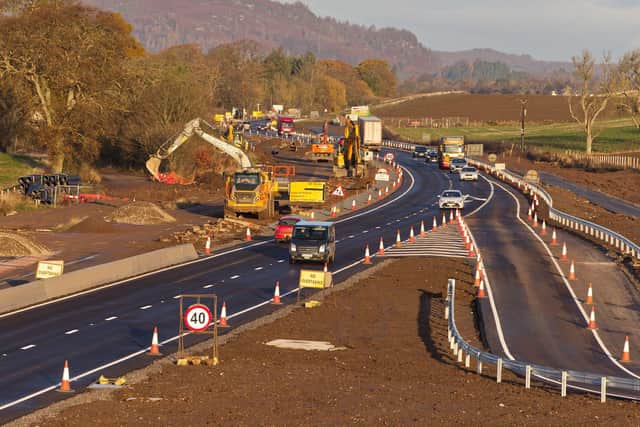
Instead of being forced to completely cancel certain projects, the Scottish Government could instead delay funding for some projects - but with a £1bn deficit, it is almost certain some proposals will need to be cancelled.
READ MORE: John Swinney opens door for Welsh private funds model as infrastructure projects face axe
SNP ministers could also look to the private sector for help completing some projects, despite political challenges in doing so. The Mutual Investment Model (MIM), used by the devolved administration in Wales, could be used to pay for essential roads and other infrastructure projects in coming years.
Dr João Sousa, deputy director of the Fraser of Allander Institute, said: “The Scottish Government’s job has been made easier on the resource side this year, mostly due to Barnett consequentials and some unexpected additional funding.

“But this boost masks the fact it will still be in underlying deficit, which means this approach cannot be relied on indefinitely.”
He added: “There is no such news on capital, and there something will have to give.
“We hope the long-awaited Infrastructure Investment Plan will explain to the public how projects have been prioritised – and crucially, which ones will no longer be going ahead and why.”
READ MORE: Anas Sarwar criticises 'idiotic' Scottish Labour MPs for secret briefing against Keir Starmer
Scottish Labour finance spokesperson Michael Marra, said: “The SNP’s total mismanagement of public finances and failure to grow Scotland’s economy has created a black hole in Scotland’s finances.
“Since coming to power, the UK Labour government has delivered an additional £10.3bn for Scotland’s budget, but Scots will rightly be asking where all that money has gone.

“The SNP must finally come clean about the mess they have made of Scotland’s finances.
“Having engaged with SNP ministers in good faith, I do not believe that they understand the challenges, let alone have a plan to fix them.
“Only Scottish Labour can put Scotland’s finances on a sustainable footing, cut SNP waste and deliver value for money.”
Scottish Conservative finance spokesperson Craig Hoy said: “This report is a damning indictment of the SNP’s financial incompetence.
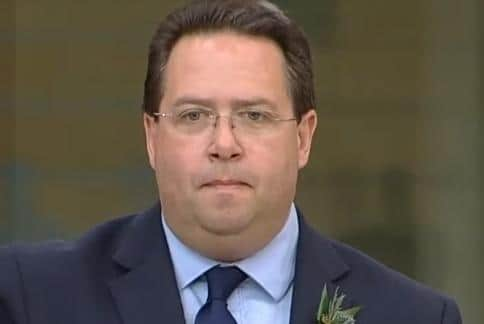
“It beggars belief that there’s a £1 billion shortfall in the spending plans Shona Robison announced just six months ago, on top of the existing £1.3b gap in her welfare spending plans.
“If John Swinney were serious about tackling this huge black hole, he would abandon his failed left-wing agenda and instead adopt the Scottish Conservatives’ plans for lower taxes and reduced welfare spending.
READ MORE: Revealed: How Scottish Labour hopes it can turn tables on SNP and snatch power in Holyrood election
“But hard-pressed Scots workers will fear that, once again, they will be made to pick up the tab for SNP mismanagement.”
A spokesperson for the Scottish Government said a “balanced budged” had been delivered every year, “despite facing a challenging financial environment, and remains committed to delivering sustainable public finances.”
A statement added: “The Infrastructure Delivery Pipeline, which will be published alongside the draft Budget on 13 January, will set out an affordable, deliverable portfolio of infrastructure investments over the next four years.”
The concerns come after John Swinney rejected calls from the Scottish Conservatives for benefits support in Scotland to be reduced so that taxes can be cut in next week’s Budget.
Scottish Conservative leader Russell Findlay had urged the First Minister to reduce the “crippling financial burden” on families by cutting income tax.

Adding that Scotland’s benefits bill is forecast to grow from £7bn a year to £10bn, the Scottish Tory leader said: “John Swinney could cut people’s taxes in this budget by tackling the out of control benefits bill, but does he have the bravery to do so?”
He challenged the SNP leader on the issue at First Minister’s Questions, with Mr Findlay telling MSPs that while social security provides “a vital safety net for those in need”, the level of payments “is unaffordable, it’s unfair and it’s unsustainable”.
The “only way” the Scottish Government can afford the rising cost of benefits is by “hiking taxes more”, the Scottish Conservative leader added.
Mr Findlay added: “John Swinney thinks he can take more and more from workers and businesses. And at the same time spend more and more on benefits.”
But the Tory leader argued that workers should be able to “keep more of their hard-earned money”.
Mr Findlay said that “taxes are too high in Scotland”.
He added: “Scots are forced – not asked – to pay £1.7 billion extra a year through SNP income tax rises, yet they see a wasteful government, utterly incapable of fixing public services that only get worse.”
Calling for cuts, he argued that “struggling workers, families and businesses, they all deserve a break”.
In response, Mr Swinney, said the “implications of Mr Findlay’s policies are to reduce support for vulnerable people in our society”, adding that “as a consequence more children will be subjected to poverty by the callous actions of the Conservative Party”.
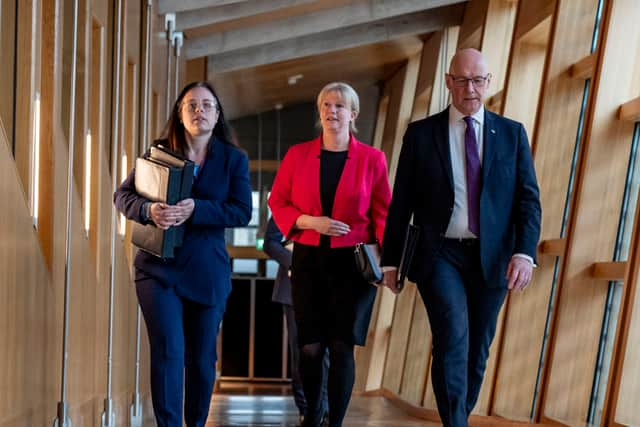
Rejecting that suggestion, the SNP leader made clear: “We will have none of that on these benches. We will stand beside the families in Scotland, reducing poverty and making sure there is opportunity for all.”
The First Minister told MSPs that implementing Tory proposals for tax cuts would “also involve cutting public spending by £1 billion”.
He went on to highlight his government’s record on tackling poverty, as he claimed his Tory rival “doesn’t care about child poverty”.
Mr Swinney said: “When it comes to social security investment, what this Government has done has invested in measures such as the Scottish Child Payment, which means child poverty is falling in Scotland when it is rising in other parts of the United Kingdom, and we have child poverty levels that are at 30 year lows in Scotland as a consequence of our intervention.”
Comments
Want to join the conversation? Please or to comment on this article.