
Police Scotland urged to ditch live facial scanning proposals by equalities groups
Concerns over privacy impact on millions of Scots

Human rights and equalities groups have warned of “racial injustice, creeping surveillance and democratic erosion” if controversial live facial recognition technology is adopted by Police Scotland, and have called on the force to rule out its future use.
In a stark warning against the potential introduction of the artificial intelligence-powered tech, a coalition of organisations claimed that if live facial recognition (LFR) is used by police, it would have a detrimental impact on minority communities and jeopardise the privacy rights of millions of Scots.
The force has been engaged in what it described as a “national conversation” around the technology. It uses AI to identify people in digital videos and photographs, including live camera feeds, comparing the images against a bank of photographs held by the police so as to identify potential matches with a ‘watchlist’ of individuals.
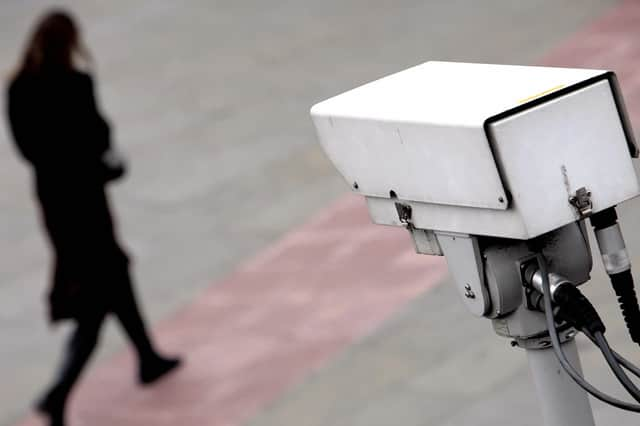

Police Scotland said it is continuing to “gather evidence and views” before developing future options that can be consulted on and “progressed through to implementation as required.” But a host of organisations, including Amnesty International UK and the Coalition for Racial Equality and Rights (CRER) have urged it to reconsider.
‘Huge human rights risks’ in existing technology
Liz Thomson, advocacy manager at Amnesty International UK said there was worldwide evidence of facial recognition technologies being used to “stifle protest” and “harass minority communities,” and cautioned against the rollout of technology that violated privacy rights and threatened the freedom of peaceful assembly and expression.
She said: “Police Scotland already utilises a retrospective version of facial recognition that carries huge human rights risks. Earlier this year a regulator found that the force doesn’t even monitor the effectiveness of this technology. The Scottish Police Authority (SPA) and Police Scotland should be addressing those concerns, not progressing with a conversation around whether an even more controversial technology can be introduced to operational policing.”
CRER said it too was “deeply concerned” about Police Scotland’s decision to explore the use of LFR.
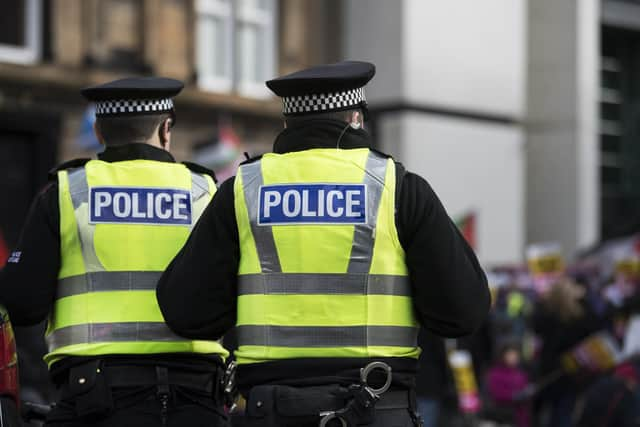
“This technology may offer the illusion of security, but its real-world application consistently tells a different story - one of racial injustice, creeping surveillance and democratic erosion,” said Jatin Haria, its executive director.
“We believe that introducing this harmful and biased technology would significantly undermine the principle of policing by consent in Scotland, negatively impact community-police relations and contradict Police Scotland's ‘absolute commitment to championing equality and becoming an anti-racist service’.”
Force vows to ‘reflect’ on feedback so far
It comes after a meeting of the SPAs policing performance committee heard that the force plans to “reflect” on the “national conversation” it has instigated around LFR, and would hold internal discussions to assess “what might we want to do” and “how might we want to do it.”
Police Scotland’s Assistant Chief Constable Steve Johnson told the meeting that any definitive proposal for the use of LFR would require formal consultation prior to implementation, adding: “Police Scotland is absolutely committed to having listened as part of the conversation and participating as part of the conversation. I think it’s now for us to take it back into the organisation to have a discussion, taking into account all of that feedback and all those views, and see what it is that we want to do with the technology that is out there.”
A report prepared for that meeting noted that a survey hosted on the websites of both Police Scotland and the SPA found that people are generally divided over the force’s potential use of LFR.
The poll of nearly 2,700 people, conducted earlier this year, showed that while 49 per cent of respondents were ‘very’ or ‘somewhat comfortable’ with the incorporation of the tech in the delivery of policing in Scotland, some 48 per cent were ‘somewhat’ or ‘very uncomfortable’ with the idea.
‘A step backwards for rights and freedoms’
Madeleine Stone, senior advocacy officer at Big Brother Watch, also expressed misgivings about the use of LFR in Scottish policing, stating: “At a time when liberal democracies around the world are banning and scaling back the use of this Orwellian technology, exploring intrusive AI-powered surveillance would be a step backwards for rights and freedoms in Scotland and would put the privacy of millions of Scots at risk. Police Scotland should abandon any plans to invest taxpayers' money in live facial recognition technology.
“In London, police are already facing a legal challenge after live facial recognition technology led to an anti-knife crime volunteer being falsely flagged as a criminal and wrongly held by officers. Police Scotland should learn from the multi-million pound mistake made by the Metropolitan Police in experimenting with this technology, and keep it out of Scotland.”
Christopher Clannachan, policy and campaigns officer at the Equality Network, which has also expressed its opposition to LFR, said: “We are deeply concerned about the disproportionate impact that LFR will have on LGBTQIA+ people and our human rights. Despite ongoing work within Police Scotland to rebuild trust and confidence with the LGBTQIA+ community, we fear that progressing this work would be counterproductive and would create more problems than it would solve. We did not ask for this.”
Responding to the group’s concerns, Ass Ch Const Johnson said the force was discussing the potential use of LFR with a wide range of individuals and organisations because it was a “polarising issue in its use in a policing context.”
He described the force’s discussions and engagement to date as “open and frank,” adding: “LFR would enhance our capability to keep people safe, prevent and detect crime. As a technology it is already well established in our daily lives, in shops, supermarkets and at airports.
“However, we understand that people need assurances about how Police Scotland would use LFR, in what circumstances, and with what checks and balances. People also need reassurance around the legal framework. Our use of other technologies is governed by whether it is appropriate, proportionate and necessary, by high levels of governance and scrutiny.
“Police Scotland will continue to gather evidence and views before developing any future options that can be consulted on and progressed through to implementation.”