
Opinion split over Police Scotland's use of contentious live facial recognition tech

Survey reveals split in public support for AI-powered strategy
People are divided over Police Scotland’s potential introduction of contentious live facial recognition technology, with wider concerns around the lack of primary legislation and a legal basis for its use.
The force is holding what it described as a national conversation as part of its considerations to use the tech, which utilises artificial intelligence to identify people in digital videos and photographs, including live camera feeds.
The live facial recognition (LFR) software automatically compares the images of people against a bank of images held by police to identify potential matches against an approved “watchlist” of people of interest.
According to the force, if a person passes the camera and they are not on the watchlist, then the technology pixilates their face from the operator and deletes their image in a “fraction of a second”. Conversely, if the person is of interest, then the systems alert officers.
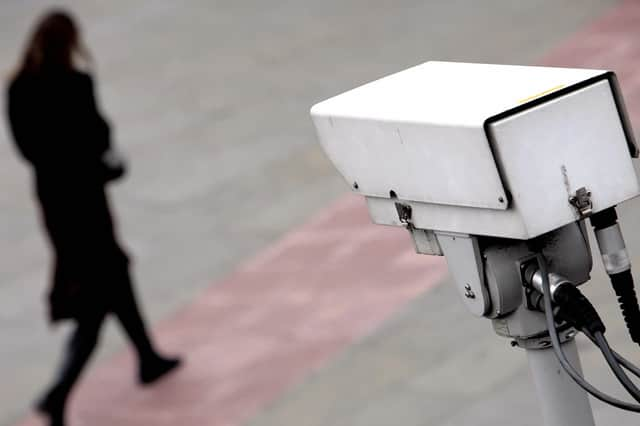

Amid concerns from experts about whether the tech is fit for purpose, and wider political questions over its use, it has now emerged that opinions around Police Scotland’s possible deployment of LFR are sharply divided.
A survey of nearly 2,700 people, carried out on the force’s website and that of the Scottish Police Authority (SPA) found that while 49 per cent of respondents were ‘very’ or ‘somewhat comfortable’ with the force’s potential use of LFR, some 48 per cent were ‘somewhat’ or ‘very uncomfortable’ with the incorporation of the tech in the delivery of policing in Scotland.
Lack of legal basis a concern
The operational deployment of LFR, for certain operations or as part of routine policing, did not affect levels of comfort significantly, with respondents most likely to have “no change in comfort” if Police Scotland only used LFR in specific circumstances.
The findings of the survey were detailed at a meeting of the SPA’s policing performance committee, which also heard that across several focus groups, the lack of primary legislation and a current lack of legal basis governing the use of LFR was raised as a concern by participants, with the suggestion that no move to introduce LFR is considered prior to the introduction of primary legislation.

A clear majority of respondents to the survey (64 per cent) felt Police Scotland should continue the conversation on the potential use of LFR in Scotland.
Addressing the meeting, Assistant Chief Constable Steve Johnson said the force planned to “reflect” and have its own internal discussions following such responses so as to assess “what might we want to do” and “how might we want to do it,” as well as issues such as cost.
He said any concrete proposal for the use of LFR would require formal consultation before any implementation, adding: “Police Scotland is absolutely committed to having listened as part of the conversation and participating as part of the conversation. I think it’s now for us to take it back into the organisation to have a discussion, taking into account all of that feedback and all those views, and see what it is that we want to do with the technology that is out there.”
Biases reduced to ‘tolerable level’
Mr Johnson added that the engagement the force had undertaken so far also highlighted concerns around bias in LFR algorithms, but noted that “more latterly, as the algorithm has learnt, and the technology has evolved, those biases seem to have been reduced for other forces and other agencies to a tolerable level.”
The committee chair, Alasdair Hay, praised the force’s engagement exercise as a “very successful, open, and transparent” process, adding that the ultimate decision about whether to proceed with LFR would be a matter for chief constable Jo Farrell.
Asked by another committee member, Tom Halpin, if there was a timeline the force was working to, Mr Johnson said there were formal governance processes to follow within the force, adding: “Clearly if we were to go back to the public with a consultation, my sense would be that there’d have to a be business case with the proportionate, legal and absolutely necessary framework for us to operate.”
Elsewhere, the meeting heard that recorded sexual crimes had increased by 3.9 per cent in 2024/25 compared to the previous 12 month period, with the number of rapes still at the highest level on record.
There were 2,739 rapes reported to the police in 2024/25, up 15.8 per cent on the previous 12 months. That spike was driven by increases in both non-recent rapes - up from 985 to 1,087 - and recent crimes, which rose by nearly a fifth from 1,381 to 1,652.
Over half rape crimes had domestic element
A report prepared by the force for the committee stated that the rise in reported incidents of rape and sexual offences was indicative of “a constructive change in society’s approach to addressing these key issues,” noting that awareness campaigns, improved support services, and multiagency collaboration have “fostered supportive environments where victims may feel safer to report sexual crimes.”
A separate report by Ms Farrell noted that noted that over half of rape crimes had a domestic element, with Greater Glasgow, the Lothians and the Scottish Borders showing the highest volume of rapes across the force.
Greater Glasgow had recorded 399 crimes and the Lothians and Scottish Borders 241 crimes, which were also the largest increase compared to the previous year - up 41.5 per cent and 47.9 per cent respectively.
Domestic abuse crimes also increased by 11.2 per cent - a jump of 3,963 crimes - compared to last year, with the latest figure also up 3.8 per cent against the five-year mean.
Comments
Want to join the conversation? Please or to comment on this article.