
Why the Lib Dems and the Greens could be Scottish Parliament kingmakers in 2026
Keep an eye on the Scottish Lib Dems and the Scottish Greens - their success in 2026 could be more influential than you think.

This weekend has seen not one, but two, Scottish party conferences.
Unlike most of the other mainstream parties in Holyrood, the Lib Dems and the Greens are on the up. Both are feeling confident of making gains at the election and are polling pretty well.
The most recent polling suggests both parties will win ten seats a piece, putting them within touching distance of the official opposition, the Scottish Conservatives, who are predicted to fall to just 11 seats.
Let’s take a look at the Scottish Lib Dems first. They won four seats at the 2021 election and boosted their number to five when MSP Jamie Greene defected from the Conservatives earlier this year.
They had a great night at last year’s general election and they have strong pockets of support in places like north-east Fife, west Edinburgh and the northern isles.
However, they are confident of sweeping through the Highlands at this election, boasting they will take three Highland seats off of the SNP - Inverness and Nairn, Skye, Lochaber and Badenoch, and Caithness, Sutherland and Ross.
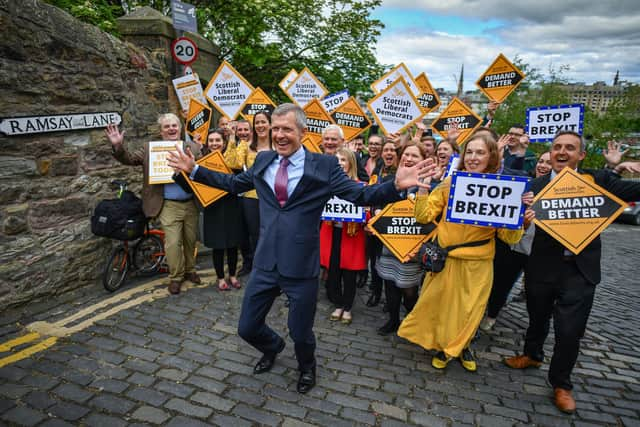

The Lib Dems won the three equivalent Westminster seats last year, so victory here is not a completely wild suggestion.
Moving onto the Greens - in 2021 they won eight seats, dropping to seven when MSP Alison Johnstone became the Parliament’s Presiding Officer.
Unlike the Lib Dems who all won constituency seats in 2021, the Greens are entirely made up of regional list MSPs. Earlier this week they announced party membership had hit its highest level for a decade.
What the party has gone through in recent years would be enough to see other parties collapse in on themselves. But changing leaders, the fall out of the Bute House Agreement and internal coups have not dented their popularity.

But here is where both parties may be more influential next year than their predicted ten seats first suggest.
The SNP, Scottish Labour and the Scottish Conservatives are all losing support, and the rise of Reform UK is splitting the unionist vote.
While recent polling suggests the SNP is still comfortably ahead of the rest of the pack, John Swinney’s ambition of an outright SNP majority is a lofty one. There is a good chance he will need to rely on the support of someone else in the chamber here.
That is where the Scottish Greens come in. As a fellow pro-independence party, co-leader Ross Greer has suggested he is more than open to doing a deal.
Mr Greer previously said he would be against such a move because of ideological differences with Deputy First Minister Kate Forbes. But with her standing aside at next year’s election, there is no obstacle in the way now.
However, if Scottish Labour do better than expected - like they did in the Hamilton, Larkhall and Stonehouse by-election - they could look to their friends on the Orange benches to try and lock the SNP out of power.
The Lib Dems have previously said they would not support the nationalists if it meant spending precious taxpayers’ money on independence planning. That is not guaranteeing a deal between them and the Labour Party, but it is still something to consider.
Whatever these two parties do between now and the May election, it is worth keeping an eye on it. They could after all become kingmakers within the corridors of power.
Comments
Want to join the conversation? Please or to comment on this article.