
Love him or loathe him, Nigel Farage is coming to Scotland


No one has time for big ideas any more - and Scottish exceptionalism is collapsing
For 20 years, Scottish exceptionalism has been the cornerstone of our foreign policy.
You may wonder what policy that is precisely, given that Scotland is still very much within the United Kingdom and foreign affairs are strictly reserved for Westminster.
Since 2007, successive SNP governments under Alex Salmond, Nicola Sturgeon, and Humza Yousaf have based the argument for independence on the idea that Scotland is inherently better than Westminster and would be a "good global citizen" if given the chance.
However, the long-held myth of Scottish exceptionalism is collapsing, and so is the SNP's long-declining argument for Scottish independence.
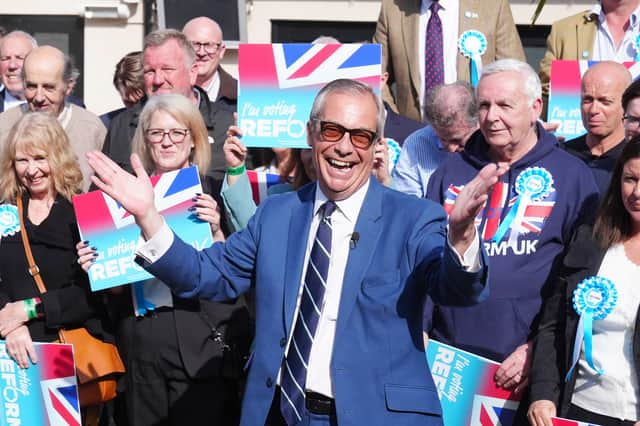
Survation's polling of 1,000 people shows Reform UK would move into second place as the main opposition party with 21 seats at next year’s Holyrood elections, with the Lib Dems and Greens on 10 and 8 seats, respectively. The SNP would take 58 seats, Labour on 18, and the Conservatives on 13.
The SNP always argue that Scotland's values are wholly at odds with Westminster's inhumanity. With independence, we could remove nuclear weapons, prioritise human rights, avoid military engagements, and prioritise internationalism. Scotland would play a 'good guy' role with no enemies and be rewarded with tolerance, kindness, and reciprocal goodwill.
Reform poll rating in Scotland hits 20 per cent
However, with Reform's poll rating in Scotland rising to 20 per cent for the first time, the party is now a serious contender for the position of the principal opposition party at Holyrood. The question is, how has it gotten this bad?
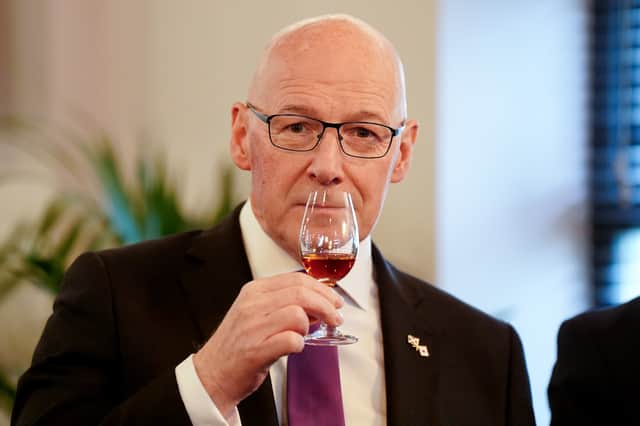
Voters, at their core, are hypocritical. Understanding that wins elections. Politicians all indulge in the big-picture worldview rhetorically. Scottish exceptionalism is no different. Whatever the circumstances, but especially during elections, all politicians must present a worldview and talk of solving global problems multilaterally. But no more, not as populism advances across the Western world. Even First Minister John Swinney has quietly shelved the rhetorical flourish about green and pleasant independent lands.
In between the gulf of ideational nonsense and the practical realities on the ground for normal people, the populist right keeps winning and hoovering up votes.
The pound in your pocket argument is where principles die. The cost-of-living crisis, the cost of food, the decimation and failure of the public sector, education, the cost of housing, the lack of affordable homes—no amount of rhetorical exceptionalism can rebalance a finance sheet if the money isn't there.
Brexit is a case in point. Pro-Remain groups failed to argue why voting 'No' would benefit the pound in your pocket. As grim as it is, the interest in the war in Ukraine, the situation in Gaza, environmental collapse, and any other calamity you choose will gain support and votes if a tangible link can be made between ideas, policy, and the impact on your daily life. That is why populism wins and is on its way to Scotland.
For Scots, this is a curious thing. Devolution can leave you squint-eyed at the triangulation between local government, Holyrood, and Westminster competencies and budgets. We have spent decades arguing about independence or tinkering with our place in the United Kingdom while public services crumbled to the point of general misanthropy.
To state an obvious point, policy is now very much back to being about money in your pockets. No one has time for big ideas any more, and there certainly were none at the 2024 general election. Scotland is even worse because so much time was wasted on independence and other grand ideas better suited to student debate halls.
Holyrood time spent virtue-signalling
Holyrood has spent too much time virtue-signalling on issues which voters peripherally care about or on which the devolved body has zero influence. Only the assisted dying debate of late showed, or certainly reminded us, that devolution can be a magnificent opportunity to do things differently: debates on foreign affairs, I'm sorry to say, are not the same pressing business as the price of milk, getting a doctor's appointment or policing communities.
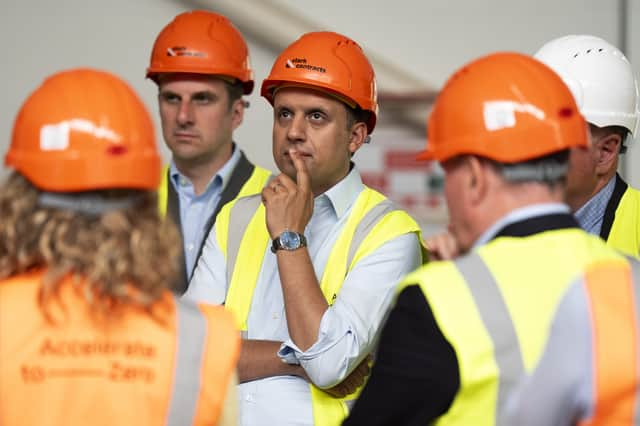
Reform UK has ugly policies. Its weakness is that it has a campaign-savvy leader but is immature for actual governance. Its attack ads against Scottish Labour leader Anas Sarwar in the Hamilton, Larkhall and Stonehouse by-election have been vile and rightly prompted cross-party condemnation. They will, nevertheless, be a forgotten incident by this time next year.
But condemning something and fixing the problem are two different things. Swinney means well when he calls for and holds summits to combat a 'threat from the far right'. But it was the wrong approach and has come and gone as quickly as it was announced.
The real strategy for the SNP, Labour, and all other Scottish parties to defeat populism is to produce tallied manifestos ahead of next year, down to the penny.
Every party leader should be on TV with a portfolio and a calculator. It's time to account for spending, present plans, and treat it like a business. C-suite directors explaining proposals to their boards and electing shareholders. Enough waffle and scripted, meaningless performances are only fuelling the perception of incompetent elites.
2026 will not be the election of ideas. No one is interested in global issues any more unless they impact day-to-day living. Voters are anxious and disillusioned about their own lives. People are interested in saving their world, putting food on their tables, accessing doctors and dentists, and keeping the heating on.
In last year's general election, Reform took 7 per cent of the vote in Scotland—not enough to win any seats, but a serious chunk of the vote for a newly formed political vehicle. Farage's Reform UK, unlike the Brexit Party and UKIP before it, is no longer chiefly an English phenomenon.
The major Scottish parties forget this at their absolute peril because Farage and Reform have not. And they have their eyes set on Scotland.
Comments
Want to join the conversation? Please or to comment on this article.