
Why warnings UK may need IMF bailout no longer look like doom-mongering
The UK’s soaring national debt and the threat of even higher taxes raise the prospect of a Labour government having to go cap in hand to the International Monetary Fund for a second time


As many people either start or prepare for their annual summer holidays – or simply enjoy the glorious weather the UK has been basking in – it is easy to forget the hard economic realities our country is experiencing.
Sadly, the difficult challenges are not going away; by the time we put away our buckets and spades and swap our sunglasses for woolly jumpers, the symptoms will more likely have become worse. The repetitious evidence of the dire direction of travel Labour has taken us remains unrelenting.
The latest piece of bad news comes from the Recruitment and Employment Confederation and accountants KPMG, whose June survey shows the fallout from Labour's increase in employers’ national insurance contributions continues to cost jobs. The number of people available for work jumped at the fastest pace since the Covid pandemic, while permanent staff appointments fell by the largest amount for 22 months.
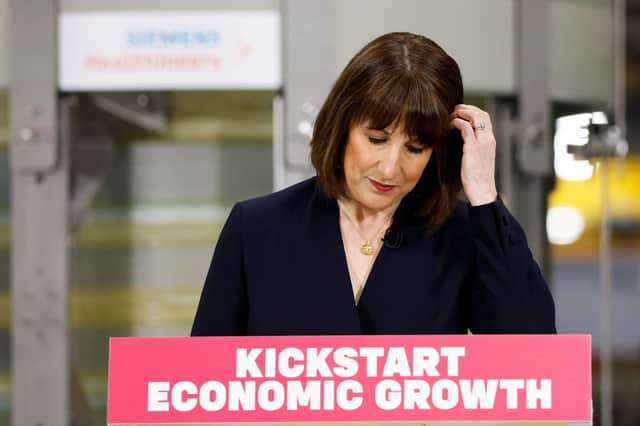
Laughing at Liz Truss?
We also have the British Beer and Pub Association predicting that 378 pubs will shut across Britain before the end of the year due to Labour's business tax hikes, with a loss of 6,000 jobs. It argues that for every £3 spent on pints and food in a pub, £1 now goes straight to the taxman, leaving landlords and punters crying into their beer.
Oh, how Labour (and many snide Tories) laughed when they accused Liz Truss of crashing the economy, despite the evidence of the Bank of England being asleep at the wheel for its responsibilities, if not wilfully encouraging the charge from politicians and those with vested financial interests.
READ MORE: Scotland's economic growth 'weaker' than rest of UK as business 'falters' from Donald Trump tariffs
She and her Chancellor, Kwasi Kwarteng, had intentionally announced their policies without consulting the Office for Budget Responsibility (OBR) in a push for economic growth through various tax cuts and expensive subsidies to hold down rocketing gas prices after Putin’s invasion of Ukraine. The market response saw the price of UK gilts (government debt) spike, resulting in an increase in interest rates that put many mortgages higher.
Yet the price of UK gilts has now often been higher under Rachel Reeves than it was when Truss was ousted. Once Labour won the general election and Reeves became Chancellor, she was quick to announce a legal requirement to consult the OBR would be introduced to avoid politicians making poor judgments. Now, ten months later and the talk in Labour circles, and being briefed from the Reeves team, is that the OBR’s powers to report independently need to be curtailed.
READ MORE: How ‘single stupidest thing any country has ever done' is behind benefit cuts and high taxes
Inflation stuck above 3%
Could it be because the OBR reports have now begun to make uncomfortable reading and reveal Reeves is constantly being warned her decisions are difficult to justify? One only needs to read the OBR documents to see her embarrassment.
“Has the Bank of England gone rogue?” is not a question one would normally expect to hear, but after its shabby handling of Truss’s brief reign it is entirely legitimate. Now its governor, Andrew Bailey, is saying he is inclined to ignore the UK’s rate of inflation – when he has a statutory duty to meet a target ceiling of no higher than two per cent – yet it remains stuck at over three per cent.
Inflation is a government tax by another name and must be tamed, yet Bailey argues he must cut interest rates to encourage economic activity that will offset growing unemployment. That is not his responsibility – that’s the job of Keir Starmer, his Chancellor and fellow Cabinet members.
It’s easy enough to blame Reeves and her Labour colleagues, for the October Budget tipped us over an economic precipice, but there can be no doubt the Conservatives before them had taken us too close to the edge in the first place.
Wealth tax danger
It was Rishi Sunak and his Chancellor Jeremy Hunt that encouraged capital flight when they adopted Labour’s policy of ending non-dom tax status, resulting in thousands of millionaires and billionaires leaving the UK for more welcoming lands. Labour has only doubled down and presided over Tory ineptness.
As if that’s not bad enough, some Labour backbenchers think the answer is to encourage even more successful people to abandon Britain by introducing an additional wealth tax. Each time high taxes are introduced, the wealthiest leave and ordinary folk end up paying extra tax to make up the difference.
John Swinney and the SNP are no better; they follow the same policy by encouraging high earners to have their residence in England – even when working in Scotland.
The result is the public finances are in a dire state; our national debt is about £3 trillion, our annual deficits continue to add to it – borrowing more than planned this year will be very difficult and come at huge cost, while additional higher taxes will just slow down the economy further and drive more people away.
No easy way out
The prospect of Britain having to seek help from the International Monetary Fund by the end of this Labour administration no longer appears pessimistic Cassandra-like doom mongering.
Yet even that would not come without cost. Could a Labour government survive such a loss of face for a second time after the debacle of 1976? Would Reeves not have to be replaced, would Starmer himself hold on? The replacements could be worse.
An IMF bailout would most certainly contain onerous conditions imposed by foreign institutions – just as Greece experienced back in 2010 through 2015. I have also been reminded the IMF’s chief executive is Kristalina Georgieva, a former EU Commission Vice President for its budget. Expect any rescue package to come with mandated terms to bind ourselves more to the EU even though it has its own growing debt problem that makes Britain look blessed.
There is no easy way out. A holiday is welcome, but come September economic reality will play out in Britain and the reckoning is likely to have political casualties.
Brian Monteith is a former member of the Scottish and European parliaments and senior advisor to the Tax Reform Council
Comments
Want to join the conversation? Please or to comment on this article.