
Why the SNP’s ideological ban on nuclear energy is not in Scotland’s interests – Melanie Ward
Scotland helped build the UK’s nuclear industry. We cannot afford to be left out of its future, writes UK government minister Melanie Ward
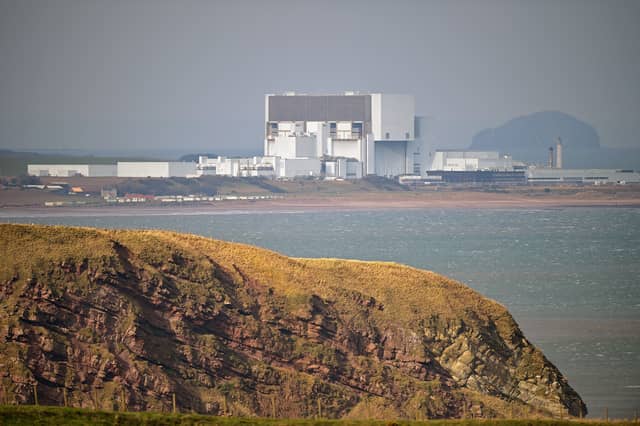

In recent weeks I've stood on both the banks of the Clyde near Govan and the East Lothian coast at Torness. What hits you is the sheer scale of Scotland's engineering heritage.
The Prime Minister has spoken of the UK government’s mission to reindustrialise our country: a mission focussed on our future. So many parts of Scotland can benefit from this – if the Scottish government gets on board.
Today Torness generates up to a quarter of Scotland's electricity. For decades, communities like Torness, Hunterston, and Dounreay have been at the beating heart of Britain's energy security.
Thousands of highly skilled Scottish workers have built lifelong careers there, delivering reliable, low-carbon power to millions of homes. These are not jobs that can be conjured up overnight. They are built on decades of specialist training, inherited knowledge passed from one generation of engineers to the next, and a culture of safety and precision that takes years to establish.
Lose that, and you do not just lose jobs. You lose world-class capabilities and a deep-seated pride that lives in communities sustained by long-term work that is of national significance.
Bitter past experience
Yet as I toured the facility at Torness ahead of yesterday’s Westminster Hall debate on the future of Scottish nuclear energy, one stark reality hung over the visit: Torness is due to stop generating power by 2030. The reason there is no future for nuclear power at the site is the SNP’s ideological ban on civil nuclear energy.
I met some of the Torness workforce and they told me what this will mean: communities let down and families uprooted as they will likely have to leave Scotland to take their substantial skills to England or Wales. That’s not in Scotland’s interests. And we have seen this story before, too many Scottish communities, including mine in Fife, know from bitter experience what happens when our industries are deliberately run down.
Without a plan for replacement, Scotland faces losing hundreds of world-class, well-paid nuclear generation jobs and a cornerstone of our clean energy capacity. But the Scottish government should heed the lessons of history – for this does not need to be our story.
Across England and Wales, the UK government is driving forward the most ambitious civil nuclear building programme in half a century. Meanwhile, in Scotland, the UK government’s industrial investment instead focuses on modernising high-value manufacturing, boosting investment in the £2.53 billion defence electronics and shipbuilding sectors, and funding regional growth deals to secure homegrown energy supply chains.
As the Prime Minister has said, a massive expansion of homegrown renewables and nuclear is how we take back control of our electricity prices.
A long-term project
From the delivery of large-scale projects like Sizewell C in Suffolk to a £2.6bn commitment to enable one of Europe's first small modular reactor fleets (SMRs), the UK's nuclear programme is helping cut energy bills, strengthen energy independence, and create tens of thousands of skilled jobs across the economy for decades to come.
This is a UK-wide endeavour, and it is one built to last. Nuclear projects are a long-term investment, which means the jobs and investment created now will still be sustaining communities long after today's apprentices have retired.
Scotland should be at the vanguard of this clean energy revolution. A recent study by Great British Energy – Nuclear reinforced what many of us have long believed: Scotland possesses high-potential areas for future nuclear development. Historic hubs like Torness, Hunterston, and Dounreay as well as areas around the Firth of Forth and our eastern coastline all merit further consideration.
We have the land, the expertise, and a world-class supply chain – with over 150 Scottish companies already supplying the construction of Hinkley Point C in Somerset.
Instead, Scotland is being left behind due to the Scottish government's rigid, de facto ban on new nuclear projects. Its continuation will leave us an outlier in progress across Europe
The cost of this stance is no longer theoretical; it is measured in lost economic opportunity. The Nuclear Industry Association estimates that Scotland has missed out on roughly 5,000 nuclear jobs since 2014, leaving over 1,200 Scots forced to travel to Somerset to work at Hinkley Point C because similar opportunities are blocked at home.
To lower bills for families permanently, meet our net-zero targets, and protect our energy independence, we need a balanced energy mix – and that should include nuclear alongside our booming renewables sector.
Respecting devolution
Nuclear provides the steady, weather-independent, clean baseline power that a modern economy requires. Scotland's success in offshore wind should be a source of real pride, but no energy system can rely on a single technology alone. Nuclear and renewables working together as part of our energy mix gives us true resilience.
There were calls recently from the Tories to rip up the Scotland Act and override Holyrood's planning powers to force nuclear projects through. As a UK government minister, I say clearly: that is not our path.
We believe in the decentralisation of power. Respecting the devolution settlement means respecting the Scottish government's right to make planning decisions, just as we seek to persuade them to choose a path that is truly in the interests of the Scottish people.
We remain ready to work with the Scottish government so Scotland does not miss out on the jobs, investment and energy security that new nuclear energy can bring as part of our industrial future. The door from the UK government remains wide open to work cooperatively with Holyrood to deploy next-generation technologies like SMRs on Scottish soil.
Scotland helped write the first chapter of Britain's nuclear history. We have the talent, the geography, and the industrial ambition to write the next chapter too. It is time to lift the ban.
Melanie Ward MP is a UK government minister for Scotland
Comments
Want to join the conversation? Please or to comment on this article.