
Why Scottish Labour should learn from Tories' mistakes and stop disowning Keir Starmer and co
Ruth Davidson’s Scottish Conservatives tried to distance themselves from Westminster, but voters didn’t like the disloyalty or the insincerity of ‘the Tories but not really’
Nothing riles Scottish Labour more than the accusation they are a mere “branch office” of the UK party. This self-inflicted moniker was coined by former leader Johann Lamont upon her resignation in 2014, and they have bristled about it ever since.
It’s the one of the reasons the party north of the Border try so hard to distance themselves from their UK counterparts, an approach which has gathered pace in recent weeks.
Some naughty politicking in London earlier this month – involving unscrupulous briefing against Health Secretary and touted future leader Wes Streeting – was described by a Scottish Labour source as “a stupid thing done by stupid people”.
READ MORE: Wounded Keir Starmer needs a miracle as Labour infighting inflicts further blow to his credibility

Storing up trouble
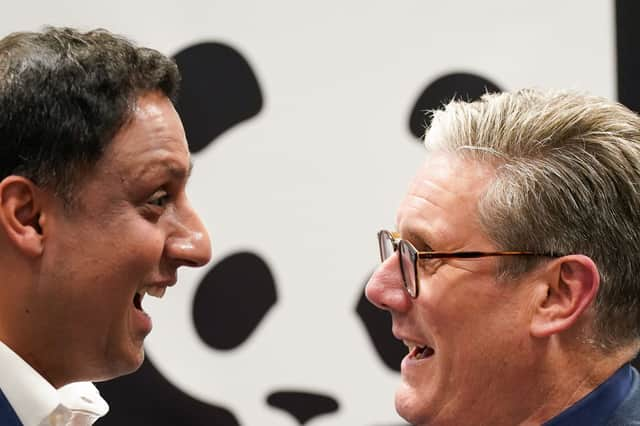
Leading figures, including leader Anas Sarwar, have publicly been at pains to distance themselves from unpopular government policies like the two-child benefits cap. Expect all this to ramp up further as a controversial Budget approaches.
But while, with a Holyrood election looming, these efforts to paint themselves as a totally separate entity from UK Labour must seem tempting, they only store up trouble for the future.
When I worked for the Scottish Conservatives in the Ruth Davidson era, we took a similar approach. Despite sharing a name with the UK party (and enjoying their generous funding), we behaved like we didn’t know them.
Unpopular policies such as the so-called bedroom tax, aggressive immigration rhetoric and shambolic Brexit negotiations had nothing to do with us, mate. Scotland was different, we mused, and – stroking our chins in the Scottish Parliament’s second floor – we would design policies and make commitments almost just for the sake of setting us apart from the UK headquarters.
It felt great. We believed we had complete autonomy, and would be spared blame for anything that went wrong down south. But over time we realised there was a problem.
READ MORE: YouGov poll: Fewer than one in five Labour voters in Scotland happy with UK government record

The problem with disloyalty
Party members and core voters became annoyed at our seeming disloyalty to the brand and the establishment. Visiting UK figures would shuffle uncomfortably when confronted by the Scottish hack-pack with the latest off-message barb.
And eventually, people on the doorstep looking down at our blue campaigning rosettes just found the position of being ‘the Tories but not really’ a touch insincere.
We also forgot that, while some austerity-related policies from David Cameron and George Osborne were distasteful to Scotland’s civic and media bubble, many voters quietly approved of them.
On the doorsteps, we suddenly we looked soft and vacuous. I now watch Labour making the same mistakes. In Scotland, they risk behaving like the errant family member who presents with a few too many piercings and tattoos and whose disapproving relatives no longer take them seriously.
Voters don’t change their minds so quickly
I can understand the approach in some respects; Anas Sarwar thinks he cannot become First Minister without winning a significant chunk of votes back from the SNP. Therefore, throwing up a barrier between Scottish and UK Labour seems to make sense.
Yet they forget what happened less than 18 months ago, when more than 850,000 Scots voted not for Mr Sarwar, but for Sir Keir Starmer.
Sure, the Prime Minister has had a tricky year-and-a-half in Downing Street, and seems constantly under threat of revolt or blunder. But hundreds of thousands of voters will not change their minds that quickly.
And for every noisy activist who protests in favour of Waspi women, hates the cuts to winter fuel benefits, or thinks the party was too lenient on Israel, there are many more who sit at home, lips pursed and nodding along to what they see from the Prime Minister.
Be the ‘branch office’
Instead of fighting it, Scottish Labour should accept they are indeed a branch office. And surely that’s fine – how else could you describe a segment of the party which fights for 5.6 million people within an organisation seeking to represent nearly 70 million?
A branch office in the Scottish Parliament, playing from the same score as the head office in Westminster, would in fact work quite nicely. After all, since 2007 the SNP Scottish Government and various UK governments have worked bitterly against each other.
The result has been a nosedive in living standards, declining quality of life and a miserable demise in every public service.
If Mr Sarwar and senior Scottish Labour figures continue to thunder against the UK Government, and pretend they are complete political strangers, the public will soon get the measure of them.
It will also be seized upon by the SNP leader John Swinney, who will look for any excuse to take the focus away from his party’s own dismal record in government. Labour MSPs may not like what a centrist Labour government is doing in London, but they can’t do anything about it.
Labour’s record vs the SNP’s
So they should make peace with the Union and, rather than repudiating it, work out ways of defending it to the hilt. Of course that will turn off some voters, but it will be met with a knowing wink from the expanding swathe of middle-class Scots who are tired of childish politics and artificial outrage.
It can also help Mr Sarwar go head-to-head with Mr Swinney. Our record in government versus yours. That’s where Labour will win this fight, not by hoping voters won’t notice they are the same party running the show in Westminster.
Labour’s opponents have used the insult “branch office” on 34 occasions in Holyrood, according to the parliament’s official report. When they do, Labour MSPs slump shame-faced in their seats.
The jibe will be used many more times as the Holyrood election approaches. A better response from Labour would be to say, yes, that’s exactly what we are. Maybe then, the people of Scotland will be prepared to give the branch office a chance to deliver.
Adam Morris is the former head of media for the Scottish Conservatives
Comments
Want to join the conversation? Please or to comment on this article.