
Why Scotland's rivers are lost without trees on their banks
Trees play a huge role in keeping rivers in a healthy state, for example by filtering and purifying water, but in many places they are missing
The summer just gone was the warmest on record, and the alarm bells are still ringing even now in autumn. After months that saw extreme heat, drought and wildfires, the Scottish Fire and Rescue Service issued an extreme wildfire warning for the first time in September since 2020.
Now more than ever, we must look for nature-based solutions to the twin challenges of biodiversity loss and climate change. Protecting our waterways is central to this.
Stretching over 125,000km, Scotland’s rivers and burns are more than 12 times the length of the mainland coastline. Many native species, including Atlantic salmon and freshwater pearl mussels, rely on access to cool, clean waters to survive. Not to mention the thousands of other invertebrates, mammals and plants that make up these complex ecosystems.

Helping to reach net zero
We also know that when restored to a natural state, rivers are essential for climate resilience and adaption thanks in part to their ability to mitigate against drought and flooding. How do we ensure our waterways are healthy enough to realise these benefits? Many of the answers lie in the woodlands that grow alongside them.
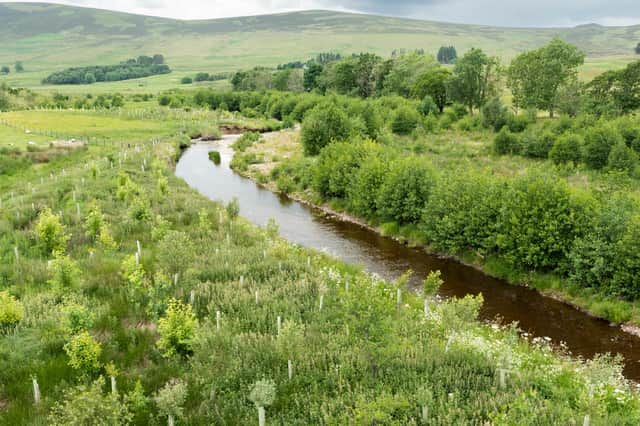
River woodlands provide food, habitat and shade for a wide variety of species, and corridors of movement for others. They filter and purify water, stabilise soils and store carbon – contributing to Scotland’s goal of net zero by 2045.
But after years of neglect, our river woodlands are at great risk. In 2015-16, the Scottish Environment Protection Agency found that over 50 per cent of vegetation on Scotland's river network is in poor condition without any trees or shrubs.
This decline can be largely attributed to human activity, including agricultural intensification and increased development. If we are to protect and restore our river woodlands for future generations, action is needed now.
Replanting our river banks
‘Riverwoods’ brings together a coalition of likeminded individuals and organisations to create a network of healthy river woodlands and resilient river systems. The Riverwoods Blueprint Project, a partnership led by the Scottish Wildlife Trust, with funding from the National Lottery Heritage Fund, sits at the core of these activities and is demonstrating, through on-the-ground delivery, how to achieve meaningful river woodland restoration at scale.
Across the country, the project’s partners are working closely with farmers, land managers and communities to plant more than 138,000 trees over the next three years. Last week we were delighted to award over £200,000 in funding to 11 trailblazing organisations through the Riverwoods Development Grant, enabling them to produce river woodland development plans – the essential first step in enhancing local river health.
A more sustainable and resilient Scotland is possible – one where healthy waterways and terrestrial habitats are abundant and native species thrive. By working together, we can create spaces where people can connect with nature in an environment which purifies our water, conserves biodiversity and protects us from climate change.
Nicole Still is the Riverwoods project manager at the Scottish Wildlife Trust. Anyone interested in becoming a river guardian and monitoring their local river, planting trees or organising a screening of Riverwoods: The Film, can learn more at www.riverwoods.org.uk.
Comments
Want to join the conversation? Please or to comment on this article.