
How harnessing Scotland's natural capital and peatlands will show we can turn problems into solutions
George Gunn writes on how to make the most of Scotland’s natural capital
Scotland stands on the brink of a natural capital renaissance, a transformative opportunity to tackle two of our most pressing challenges – climate change and economic inequality.
As the urgency for action mounts amongst the public and policymakers, the solutions we seek may be more interconnected than often realised.
Critics frequently argue that investing in climate change solutions is prohibitively expensive and that prioritising these could hinder economic growth. But these arguments overlook the costs of inaction and fail to recognise the vast potential of our natural resources.
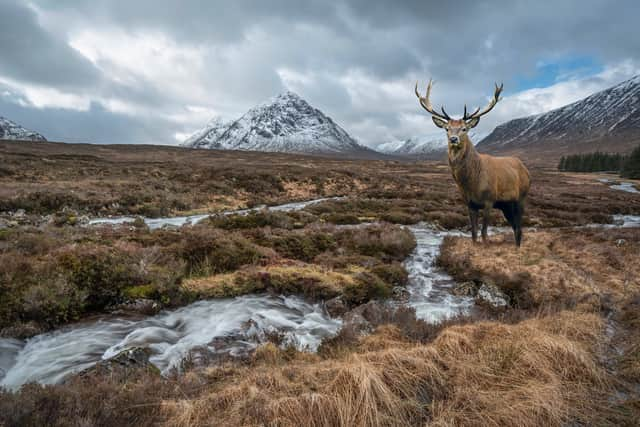

A key part of my work involves exploring how parts of rural Scotland could better benefit from valuing and enhancing natural capital. This includes all eco-systems and resources such as forests, peatlands, freshwater and soils.
For generations, we’ve placed an emphasis on financial and manufactured capital, often at the expense of the environment. Despite the ongoing depletion of our natural capital for short-term financial gain, it’s possible to reverse this trend and stimulate economic growth through restorative efforts.
The value of Scotland’s natural capital is an estimated £230 billion, providing eco-system services worth £15bn annually – a sum almost rivalling the nation’s oil and gas revenues.
Peatlands cover over 20 per cent of the country’s landmass and exemplify the potential to invest in natural capital. These are among the world’s best stores of carbon, yet most are degraded and in need of restoration. Degraded peatlands release carbon into the atmosphere, so delaying their upkeep means missing out on both environmental and economic gains, including green job creation.
Research led by Professor Klaus Glenk, at Scotland’s Rural College, found restoring peatlands urgently, rather than delaying efforts, could generate £191 million annually in societal benefits, including reduced greenhouse gas emissions, improved water quality and enhanced biodiversity.

Delivering such benefits requires long-term investment and the creation of jobs in the growing green employment sector, particularly in rural Scotland. This can help to support repopulation efforts and enable a just transition for workers who have historically relied on industries such as oil and gas.
These workers possess a wealth of transferrable skills - whether in construction, plant operation, project management or technical roles – all directly applicable to the green economy. Investing in training and upskilling opportunities would therefore ensure that these workers and their children are equipped for more secure jobs in the future.
In the Highlands, Cairngorms Connect is an ambitious project aiming to restore over 230 square miles of woodland, peatland and rivers over the next 200 years. The project already provides around 50 high-quality jobs, plus apprenticeships. It majors on community engagement, which fosters inclusivity, breaks down social barriers and crucially showcases the appeal of rural green jobs to future generations.
To scale up these success stories requires sound management of the inevitable interest in Scotland’s natural capital opportunities. A failed initiative by the UK government in the 1980s sought to attract investment through tax breaks for tree planting. Notoriously exploited by celebrities, this scheme led to large-scale planting of conifers in the Flow Country – severely degrading the peatland of what is now a Unesco World Heritage Site.
Avoiding blunt financial levers and progressing a responsible, values-led approach is important to prevent the same mistakes of the past. The Scottish Government has been pro-active in this regard by developing a market framework to mobilise high integrity inward investment.
This type of approach is essential to achieving investment that fosters economic growth while promoting social equity. And providing the ability for future generations of Scots to experience the world better than we do today is a worthy raison d'être.
These enhancements are therefore key for long-term adaptation to the impacts of climate change. Practically, they can boost resilience to flooding and safeguard infrastructure from coastal erosion – protecting homes and livelihoods nationwide. Restoring habitats promotes biodiversity and supports vital species, including pollinators, which are essential for food production and security.
As Scots, we’re renowned for our ability to turn problems into solutions. Now is the time to fully embrace this spirit. As the world prepares for what comes next, we have a prime opportunity to lead a renaissance in natural capital that genuinely benefits our society and beyond.
- George Gunn is a research associate at the University of the Highlands and Islands, a local government officer and consultant.
Comments
Want to join the conversation? Please or to comment on this article.