
The sub-text to Keir Starmer's bitter resignation statement was crystal clear – Euan McColm
Keir Starmer became Prime Minister in the manner of a dog that caught the car it was chasing

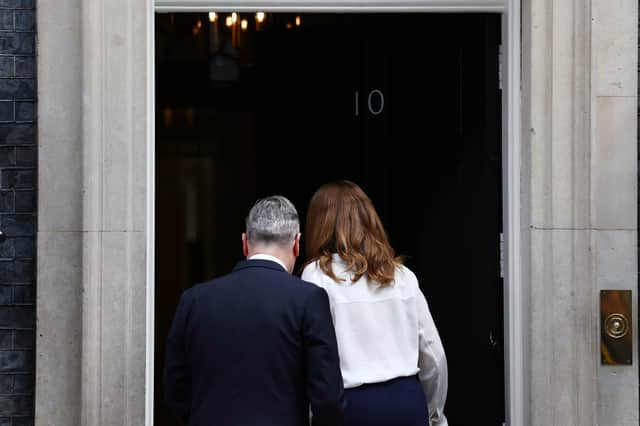
If you want to know what simmering rage sounds like, listen to Sir Keir Starmer’s resignation speech. The Prime Minister's address to the nation shortly after 9.30am on Monday was sharp, direct and coolly brutal.
From behind a lectern on Downing Street, Starmer said the Labour party he’d inherited was “politically, financially and morally bankrupt”. He’d been told “time and time again” it was finished but he’d “proved those people wrong”, changing Labour by “ripping out the poison of antisemitism”.
The PM’s resignation statement was less an announcement to the country and more a f***-you to the Labour party. The message to those colleagues who'd been agitating for Starmer’s resignation was clear: “You ungrateful bastards.”

Starmer’s failings
The departing Prime Minister had a point. When he succeeded Jeremy Corbyn as Labour leader in 2020, the party had become a cesspit of anti-Jewish hatred. Starmer’s decisive leadership on this crisis – including the suspension of Corbyn who’d later be expelled for standing as an independent candidate – saved his party at what many considered a real moment of existential crisis.
But Prime Ministers are not in power to improve things for their parties but for their countries. This is where Starmer’s leadership failed.
If the PM, now keeping the seat warm for Andy Burnham, had showed even a scintilla of the clarity and focus he displayed on Monday morning during the past two years, he would not now be ringing round removal firms. Instead, having led Labour to a landslide victory in July 2024, Starmer quickly revealed himself to be a dog-that-caught-the-car Prime Minister.
Flashes of statesmanship
Rather than outlining a vision, Starmer offered bromides – his father was a toolmaker, you know? – and when he did take big policy decisions such as that earlier cut to the pensioners’ fuel allowance, he forgot to apply even a whisper of politics.
It was not all terrible. At key moments, particularly on the global stage, Starmer has shown flashes of statesmanship.
Whether Andy Burnham – still very much leaning in to his ‘our kid’ persona – has the gravitas we might hope for in a Prime Minister working to support Ukraine while dealing with a wildly unpredictable American President we will learn, soon enough, but Starmer deserves recognition for the role he played, internationally.
A facsimile of a leader
Ultimately, Starmer’s political career failed because he’s not a politician: he’s a technocrat, shaped while opposition leader by focus group findings rather than any personal mission. If such a thing as a ‘Starmer Project’ exists, Starmer, himself – a facsimile of a political leader – is it.
Starmer is a man of considerable accomplishments. A barrister at 25, he went on to become head of the Crown Prosecution Service. As director of public prosecutions, Starmer took on major cases such as the racist murder of black teenager Stephen Lawrence. By any standard, he’d given a huge amount of public service before his election to the House of Commons in 2015.
But his track record of achievement was irrelevant once he took office. In power, he was exposed as a man who’d become Prime Minister because he could, not because he should.
Comments
Want to join the conversation? Please or to comment on this article.