
The democratic financial revolution that's saving community facilities across Scotland
Through community shares and collective ownership, people can raise money and run locally important shops and services themselves
Across Scotland, a quiet financial revolution is under way. In towns, villages and cities, people are resisting the idea that the closure of a local service or asset is inevitable or irreversible. Instead of waiting for decisions to be made from afar, communities are coming together to buy and run what matters most to them.
This is economic democracy and democratic finance in action, and it could be one of the most important tools we have for strengthening local economies and supporting communities.
Democratic finance shifts the focus from individual control to collective responsibility and shared benefits. It can change how communities organise their assets and create value together.

Democratic finance
For decades, our economic system has tended toward centralisation; investment decisions are often made far from the communities they affect and tend to prioritise short-term financial gain. Local residents have often had limited influence over the closure of a village shop, the sale of a woodland or the loss of a valued community building.
Democratic finance is changing all of that and development trusts are at the forefront. Through community shares and collective ownership models, people can raise money locally and take ownership of sites together via development trusts.
READ MORE: Taxpayer-backed Scottish National Investment Bank hails £1 billion milestone and latest deal
They operate on a ‘one person, one vote’ basis: whether you invest £50 or £5,000, your level of influence is the same – ensuring decisions are made fairly and reflect local priorities.
This isn’t a fringe movement, nor is it a new concept. It’s already happening successfully across the country, from remote rural and island communities to Scotland’s major cities.
First urban right-to-buy scheme
In Edinburgh, Action Porty shows how community-led ownership can shape the local area. What began as a campaign to repurpose a former church building for community use – and became the first successful urban community right-to-buy in Scotland – has grown into a development trust focused on urban regeneration, recreational facilities, environmental protection and more.
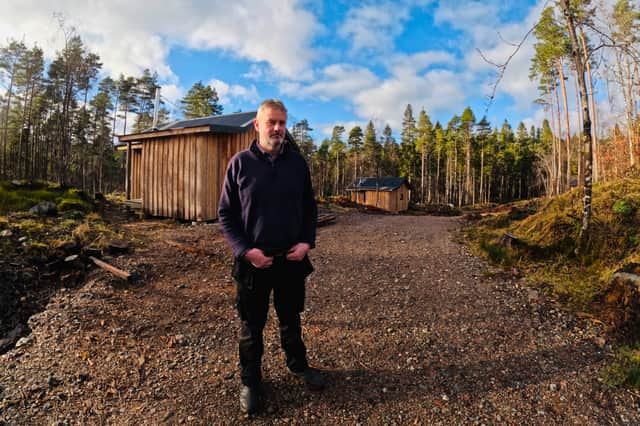
In the Highlands, Glengarry Community Development Trust shows what’s possible when communities take ownership of local woodland. The trust set up a wide range of activities in the forest and started a firewood supply business. Following discussions with local residents about affordable housing and employment, the trust is developing an eco-tourism site, linking environmental responsibility with economic development.
In the Western Isles, the Northton Heritage Trust celebrates Hebridean culture through a previously closed visitor centre that now has a shop, exhibition space and tea room. Similarly, in Drumnadrochit, the Loch Ness Hub took ownership of a tourist information centre to help visitors, a baggage transfer service for local hikers and more. Both of these trusts have created employment and a tourist focal point for the area, extending economic benefits within the region.
These are just a handful of the development trusts and community-owned assets found across Scotland – all showing how local people are coming together to give the community what it needs: building vibrant democratic infrastructures in communities across the country.
Personally invested
A successful development trust requires local people to invest their own time and passion into the services and activities they run. Democratic finance takes it one step further with the investment of hard-earned savings, creating a profound sense of responsibility. There is risk involved – particularly at the outset, when business plans must be developed and assets acquired and maintained – but it often translates into long-term stability.
Importantly, people aren’t just financially invested, but personally invested in the project’s success. They live nearby; they may use the services themselves or have family members or friends employed there. And because every member has an equal vote, decisions are made by people who must live with the outcome.
As a result, projects are managed with stewardship and long-term viability in mind rather than short-term financial gain. And because it’s a democracy, decisions reflect collective priorities within the community.
Investors can receive a modest return, and many projects aim to repay the initial capital over time. But many community shareholders choose to reinvest, showing their confidence in the project and its wider value to the community.
Taking ownership of land or buildings is a complex process. But there is support available.
Development Trusts Association Scotland (DTAS) is currently discussing a new Community Shares Booster Fund. By matching community investment to double funds raised locally, lower-income and deprived communities could access opportunities otherwise out of reach. Booster funds, wider access and long-term backing will be essential to strengthening Scotland’s commitment to economic democracy, community ownership and community empowerment.
A practical, proven mechanism
In our recently launched manifesto, we call for stronger national backing for the fund and set out clear calls to action to ensure development trusts – many of which we support across Scotland – have the power they need to succeed.
Decisions made by communities, for communities, are the most effective way to meet the needs of people living and working in them. Every community should have the opportunity to set up a development trust. It forms the backbone of local resilience and innovation.
Democratic finance shouldn’t be seen as a niche choice or a last resort when other options fail. It’s a practical, proven mechanism for regeneration and renewal based on participation, accountability and long-term commitment to the community.
At a time when many people feel decisions are being made about them rather than with them, community ownership offers proof that we can shape our own community – with the right support.
The capacity to build thriving local communities in Scotland already exists. The challenge lies in ensuring that our systems support that. We need to give people the tools and backing to shape their own communities and take control of what matters to them. Across the country, they’re already proving what is possible when they do.
Pauline Smith is chief executive at Development Trusts Association Scotland
Comments
Want to join the conversation? Please or to comment on this article.