
Tiny island with 20 residents secures funding for £5.6m community and tourist hub

The island hopes to see its population double in the next decade.
A small Scottish island — home to just 20 people — is celebrating after securing a quarter of a million pounds to kick-start one of its most ambitious development projects yet.
The Isle of Canna, the most western island of the Small Isles archipelago, has been awarded £250,800 in Scottish Government funding to begin its £5.6 million Coroghon Barn project.


The plans will see a ruined 18th-century barn on the National Trust Scotland-owned island turn into a cultural hub for residents and visitors.
The fresh cash injection from the Scottish Government’s 2025/26 Islands Programme will support design work for the development.
The overall project will see Coroghon barn, located above a black sand beach and within sight of an ancient Dun (or fort), restored and extended to create a new gathering space for the island’s 20-odd permanent residents.
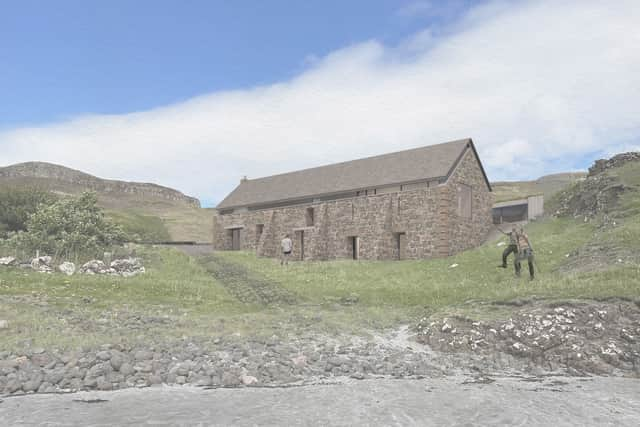

The development will replace the unheated and draughty shearing shed which is currently the only community space available to islanders.
The Isle of Canna Community Development Trust (IOCCDT), which received the funding, said the new hub will help modernise life for those living on and coming to the island.
It hopes to see Canna’s population double in the next ten years.
As well as catering for community events and functions, the multi-purpose space will work in tandem with an adjoining 20-bed “bunk hotel” to host some of the 10,000 people who visit Canna each year.
Currently, overnight accommodation options on Canna and the nearby tidal island of Sanday are very limited which means most visitors to the islands are day-trippers.

ICCDT director Isebail MacKinnon said the new development should help change that.
“The idea of the bunk-hotel is about nurturing a more sustainable model of slow tourism in the Small Isles,” she said.
“As a community-owned enterprise, more of the income generated stays in our local economy, helping build community wealth.”

The heritage project will also tell “the people’s story” of Canna and Sanday through a newly digitised community archive.
IOCCDT chairwoman Geraldine MacKinnon said: “Canna has a unique story of 2,000 years of human occupation, and a small but determined community today who want to see our island thriving into the 21st century.’”
WT Architects, based in South Queensferry, has been working with the community and the NTS on design proposals taking into account the sensitivity of the site.
In addition to the award from the Islands Programme, the next stage of design work on Coroghon has been funded with £30,000 from the NTS, and £25,000 from Highlands and Islands Enterprise.
Other projects the IOCCDT has overseen on Canna include the setting up of a community shop, community moorings, an all tides road to enable Sanday residents vehicular access at all times and an integrated renewable energy project.
Canna is part of a group of islands that includes Rùm and Muck.
The island is home to a bird sanctuary, with its coastline supporting more than 20,000 breeding seabirds, according to NTS.
Most of the island is a Site of Special Scientific Interest thanks to its geographical and biological importance and is also a Special Protection Area due to its birdlife.
Canna was gifted to the National Trust for Scotland in 1981 by the previous owners, Gaelic scholars John Lorne Campbell and Margaret Fay Shaw. Together, they amassed and researched a huge archive of Gaelic and Celtic songs, stories, poetry as well as a unique collection of butterflies and moths.
Comments
Want to join the conversation? Please or to comment on this article.