
If lives of all Scots are of equal value, SNP must change its harmful approach to drug addiction
Methadone has been implicated in more fatalities than heroin for the fifth year in a row
In 1983, I moved to Wester Hailes, the large public sector housing scheme on the edge of Edinburgh, just as one of Scotland’s biggest public health emergencies started to take hold.
Unemployment was endemic on the estate, which had been built with two parking spaces for every household, except that very few residents could afford a car. The high-rise blocks that dominated the skyline were rabbit warrens of damp and despair. Edinburgh’s historic city centre, with its bankers and lawyers, was a short bus ride away, but it might as well have been on a different continent.
People who lived in Wester Hailes, or any of the capital’s large council estates, were dismissed as “schemies”, viewed as a problem to be ignored rather than full citizens. Our life was cheap. Little wonder then that hundreds, then thousands of young people started experimenting with the heroin from Afghanistan and Iran that flooded the city during the Thatcher years.

Close neighbours were addicts
Heroin use led to sharing needles, which erupted in an Aids epidemic among Edinburgh’s intravenous drug users. By 1986, it was estimated that 85 per cent of addicts were HIV-positive, condemned to death before they hit 30.
I had close neighbours who were addicts, friends whose sons and daughters were lost to heroin. Addiction and Aids were accepted facts of life in the city’s ‘deprived’ communities, but as the disease threatened to seep out into the rest of the city, panic set in among health chiefs, and the country’s first needle exchange programme was established.
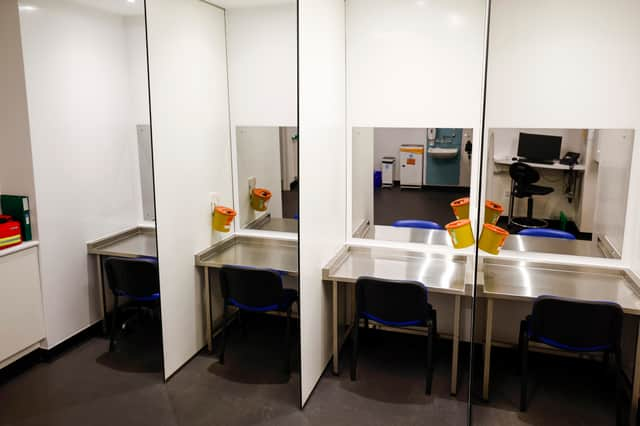
Methadone prescriptions exploded and the sticky green ‘turtle juice’ became as common on the streets as smack. A harm reduction approach to addiction, rather than rehabilitation and recovery, began to take root, for the very good reason at the time that thousands of lives were at stake.
Nearly 40 years later, Scotland has the highest rate of drug deaths in Europe. After a slight drop in 2024, provisional figures for the first half of 2025 suggest deaths are on the rise again, with 607 people suspected to have died from drugs since January.
Chaotic cocktails of drugs
Socioeconomic deprivation – or hopelessness – is a factor in this epidemic, just as it was in the 1980s. But today the drug scene is far more complex, with four in five deaths involving multiple substances.
Users will take whatever is on offer, whether it is street heroin, benzos (benzodiazepines, a class of psychoactive drugs, such as Valium), cannabis, cocaine, and increasingly synthetic opioids like nitazenes, all washed down with cheap cider. This chaotic cocktail of drugs is echoed in the prescriptions handed out to users in an effort to reduce the harm their addiction is causing them.
Data from Public Health Scotland shows there are currently a minimum (their words) of 28,644 people prescribed either methadone or buprenorphine. As of September last year, there were only 513 residential rehabilitation beds available for the treatment of both drug and alcohol addiction.
More resources are invested in medically assisted treatment as it appears to be more 'cost effective' than residential rehabilitation, and some working in the field now argue that the term addiction should be replaced with 'substance use disorder', as if chaotic poly-drug misuse was a genetic health condition – a disorder from which it seems there is no recovery, only lifelong dependence on medication or death.
The case for rehab
Campaigners like Annemarie Ward, chief executive of Favor UK, and Steve Wishart, both former addicts, argue from experience and with passion that the focus should be on rehabilitation and recovery. They have found support from Douglas Ross, the former leader of the Scottish Conservatives, who has introduced the Right to Addiction Recovery Bill, a member's bill which seeks to give people with drug or alcohol addiction the statutory right to receive treatment from a relevant professional within a specified period of time.
Ross’s measure is a thoughtful one, which would complement the Scottish Government’s National Mission on Drugs, launched four years ago in response to the rising death toll. But on Tuesday this week, the parliament’s health committee refused to back the bill’s general principles.
In its scrutiny report, the committee acknowledged that while there was a high level of “dissatisfaction” about the availability of support for addicts, the bill was too narrow in its focus and could put further pressure on over-stretched resources. The committee’s convenor, SNP MSP Clare Haughey, said a majority of the committee “do not believe this bill is the correct vehicle to effectively support those suffering harm from alcohol or drug use”.
Ross will now argue his case to the full parliament next month. MSPs of all parties will have to decide whether the bill’s principles are strong enough for it to move to the next stage or whether they will kill it off without further discussion.
Progressive vs puritanical?
Ward believes the bill is a chance to change direction. “It is not too late for the rest of the parliament to recover its conscience,” she wrote earlier this week. “If MSPs pass it, the bill moves to stage two, where amendments can be made and flaws ironed out.”
Her argument – that harm reduction, born of the 1980s Aids crisis, has been framed as progressive and compassionate, while recovery and abstinence is viewed as authoritarian and puritanical – is very powerful.
Scotland’s shameful record of drug deaths suggests that plying addicts with methadone and other medical opioids does not reduce harm, and instead can cause even more damage. Last year, there were 412 drug-related deaths involving methadone, the fifth consecutive year in which it was implicated in more fatalities than heroin.
On October 9, MSPs have a choice. Do they give the thousands of Scots locked in a cycle of addiction the chance of a new life, or will they choose methadone over rehabilitation? Surely if the lives of all Scots are of equal value, there is only one answer. Choose life.
Comments
Want to join the conversation? Please or to comment on this article.