
Drug deaths Scotland: 'Urgent' call for more safer consumption rooms as Edinburgh Old Town sites considered
Charities condemn ongoing scale of deaths amid calls for improved treatment services
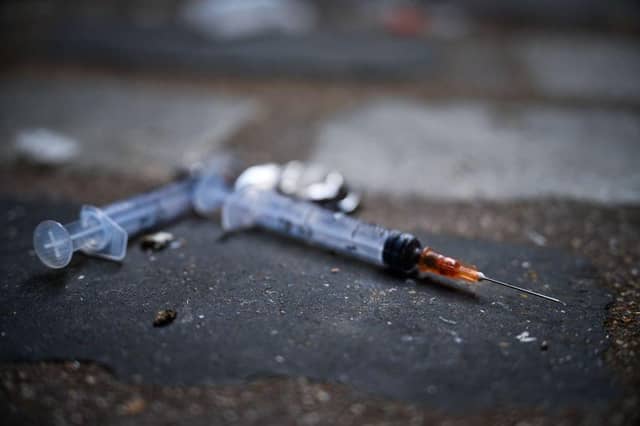


A leading charity has called for the “urgent” roll-out of further safer consumption facilities across Scotland as part of a generation-long strategy to tackle the “tragic and preventable” scale of drug-related deaths.
Official figures released by the National Records of Scotland (NRS) on Tuesday showed there were 1,017 drug misuse deaths in 2024 - a 13 per cent fall on the previous year. However, the total remains the highest in Europe.
Amid renewed criticism of the Scottish Government’s approach to the crisis, Kirsten Horsburgh, chief executive of the Scottish Drugs Forum, said the organisation wanted to see further safer drug consumption facilities like the one opened in Glasgow earlier this year. She described the facilities as a “compassionate, evidence-based response” that saves lives.
Two potential sites for such a facility have been identified by Edinburgh City Council, including one on the Cowgate in the Old Town. A consultation is set to take place next year, but Ms Hosburgh said the need for the facilities was pressing.
“We urgently need to see them rolled out wherever people are using drugs in unsafe environments and undignified conditions,” she told The Scotsman. “A range of models, including facilities for inhalation, are essential to meet people’s needs and provide real safety and connection.”
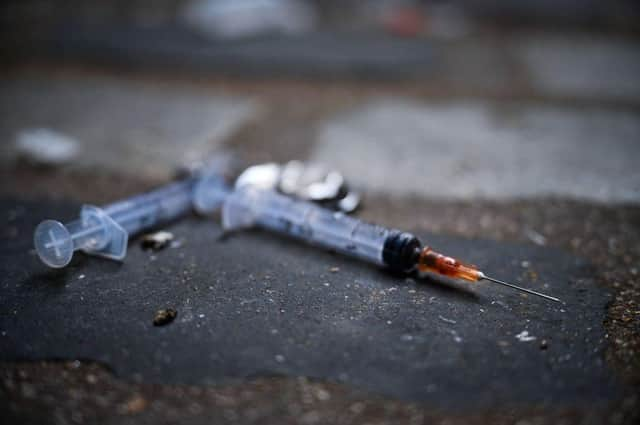
In the wake of the latest NRS stats, Ms Horsburgh cautioned against policies that last for a parliamentary cycle. She called for a long-term strategy spanning 15 to 20 years to address what she described as the “structural inequalities and social conditions” that drive such fatalities.
Ms Horsburgh argued that Scotland could be the first nation in the world to deliver a public health response that tackles poverty and trauma while recognising the need to decriminalise people as part of the solution.
She also said there were questions about whether existing funding was being allocated and managed in a way that delivered real change. “Are integration joint boards truly ensuring that resources reach the people and communities who need them most?,” she asked.
“Without ring-fenced investment and strong systems of accountability, can we even be sure the money is being tracked and used as intended? This is a moment to reflect not only on the amount of investment, but on how transparently and effectively it is being spent.”
Ms Horsburgh is among a host of senior figures from drug charities and support services to call for change. Annemarie Ward, chief executive of the charity Faces and Voices of Recovery UK, warned against depicting the fall in deaths as a “victory,” pointing out Scotland still has one of the highest drug death rates in the developed world.
She said: “The Scottish Government and its cohort of quango press officers will spend today spinning this as a success. But Scotland’s drug death rate remains around three times higher than England, and is still the highest in Europe. That isn’t progress - it's a national shame.”

Ms Ward stressed the trend, which she described as “managed decline”, would see Scotland remain as Europe’s drug death capital without proper investment in prevention, detox and recovery services. She pointed to flashpoints in the latest death statistics which required attention.
They include the fact that methadone was implicated in 412 deaths, something Ms Ward said demanded “urgent scrutiny”, and a more than threefold increase in the number of deaths where nitazenes - a category of potent new synthetic opioids - were implicated. Scotland, she added, was “entirely unprepared” for such a scourge.
Meg Jones, director of new business and service at the drug misuse support charity Cranstoun, also expressed concern at the “sharp rise” in fatalities linked to nitazenes, which are up to 500 times stronger than heroin, and up to five times more potent than fentanyl. The charity said it could not be “entirely sure” about the level of nitazene harm, and suggested there may be a “lag in data” being recorded due to strenuous post-mortem examinations.
Ms Jones also cited RADAR data, which covers suspected overdoses, for the first quarter of this year. These figures indicated 38 people died from nitazenes, up from 25 in the same period last year. “This demonstrates a clear increase in the prevalence of nitazenes appearing in the drug supply,” she said. “Without further action, we may be walking into a public health emergency.”

Ms Jones acknowledged a clear political will to take action, and cited positive developments such as the shifts towards diversion and a diamorphine assisted treatment centre in Glasgow. But she said despite discussion about how to solve the crisis, the implementation of globally evidenced interventions was too slow, with the scale of measures brought in not at the level required.
“We urge the Scottish Government to consider proposals which both increase the number of people in treatment, whilst also keeping others alive,” she said. “This includes stronger collaboration with the third sector to deliver alternative, more financially feasible models to overdose prevention centres, diamorphine assisted treatment, and arrest referral services which can be rolled out more widely.”
Turning Point Scotland, the charity that operates an alcohol and drug residential stabilisation service in Glasgow that helps people to stabilise and reduce the harm of their drug use via medication assisted treatment, said Scotland had a “great approach” to the drug deaths crisis on paper, but had not delivered it.
In a statement, the charity said: “We know that stabilisation saves lives. The Scottish Government knows that too, and when it committed to the expansion of stabilisation services as part of the National Mission, it was a welcome step. But that expansion never came, and our 16 bed stabilisation unit remains the only one of its kind in Scotland.”
Drugs and Alcohol Policy Minister Maree Todd said, despite the fall in deaths, “there is still work to be done”.
“This is particularly true as we face new threats from highly dangerous synthetic opioids like nitazenes, which further raise the risk of overdose and death,” she said.
“That is why we are providing record levels of funding for drugs and alcohol programmes and widening access to treatment, residential rehabilitation and life-saving naloxone. We have also supported and funded the opening of the UK’s first safer drug consumption facility and are working at pace to deliver drug-checking facilities.”
Comments
Want to join the conversation? Please or to comment on this article.