
How I found generosity and compassion after fleeing Taliban to study medicine in Scotland
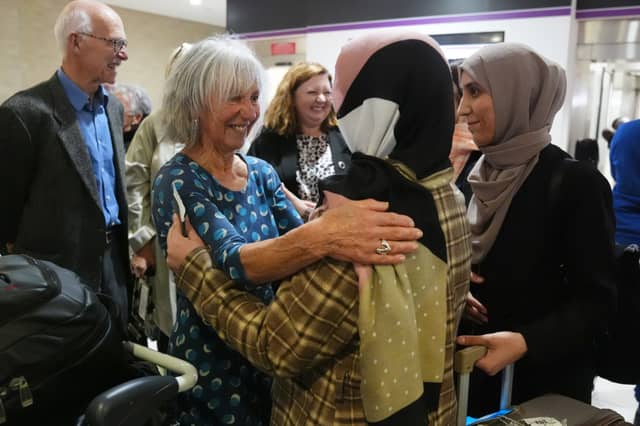

Khatera Amin writes about her dream of becoming a doctor and giving back to her home country Afghanistan, to Scotland, and to the girls robbed of similar opportunities
I am Khatera Amin, a girl who always imagined herself in a doctor’s scrub, becoming someone who could make a real difference in the world. Unfortunately, my wings were clipped when I was deprived of my basic right to study in Afghanistan. I was in my third year of medical school when everything was taken away from me, simply because I was a girl.
But that was not the end of my journey. The Linda Norgrove Foundation, a Scottish charity, lit up my dark days twice, first by supporting my education in Afghanistan, and later by giving me the chance to continue my studies in Scotland.
Have you ever thought deeply about the word immigration? It mixes the old version of yourself with a completely new one, and sometimes you feel stuck between them. People move to other countries for many reasons: some join their families, others pursue education for self-improvement, and some are forced to leave because of war.
But in every case, the common point is starting life from zero. It feels like becoming a child again, learning how to speak, how to behave, how to follow rules, and even how to find your way.

Happy, free and deeply worried
When I first entered Scotland, I looked out of the airplane window and saw green fields with trees everywhere. Everything looked so different from Afghanistan. At the airport, I was warmly welcomed by the Linda Norgrove Foundation founders, UK Government officials, and others. Everyone seemed genuinely happy that we had arrived.
I was so emotional when I saw those people who had worked day and night for me, people I had never met, people I had done nothing for, yet they had given me a life-changing opportunity to pursue my dream of becoming a doctor.
I felt both happy and free, yet deeply worried about how I would manage everything on my own without my family. Moving to a strange country and leaving my loved ones behind was one of the hardest things I have ever faced. But everyone in Scotland was so friendly, and I noticed something special about them: they were always ready to help in any way they could. I felt safe in Scotland.
Everything around me was new. I had to adapt to a completely different way of life. It wasn’t just about my studies; I had to learn daily life as well. In my first days, I relied on Google Maps so I wouldn’t get lost.

So many forms and rules
Back in Afghanistan, I had never gone grocery shopping, as most families managed that. In Scotland, I had to do it myself, and I struggled to know how much to buy. Even the payment system was unfamiliar. At first, I had no idea about the money, especially the coins. Once, I tried to overpay in a shop, but the shopkeeper noticed and kindly explained it to me.
There were also many forms to fill out, and I realised how many rules there were here. The culture was completely different. I found many different accents in Scotland and England, and people used expressions I had never heard before.
Sometimes I wondered to myself, “is that really English?” Most of the time I didn’t understand the expressions and didn’t know how to react because I didn’t want to seem rude.
The first new word I learned was “hiya”. One of the workers in my accommodation used to say it to me every day, and at first I had no idea what it meant. Later I understood that it was just a casual greeting, like “hello”.
Another big challenge was the university accent. In my first days, I could barely understand what my tutors were teaching. At night, I would listen to the lecture recordings again and again. Everything felt stressful because it was so new, and before every experience I felt overwhelmed.
Sometimes I felt broken
When I started working in the NHS, I discovered the importance of teamwork. It was not easy to adapt to the hospital environment. Many older patients used words I had never heard before, and I struggled to understand them.
Living alone was very difficult. Without family support, even making friends took time because of cultural differences. Many times I felt isolated, but often a kind stranger would include me in a gathering. Maybe they could see from my face that I was alone.
Moving to a new place changes you completely. I experienced both strength and weakness. Sometimes I felt broken, but reminding myself why I was here gave me the reason to stay calm and continue.
Despite the challenges, Scotland is a very beautiful country. During my summer holiday, I visited some of its most stunning places: waterfalls, rivers, beaches, castles, and the Glenfinnan Viaduct, which I had always wanted to see. I loved the way the country has preserved its unique architecture.
Achieving my dream
This one-year journey has been full of challenges and growth, living without my family, facing emotional breakdowns, and enduring the pain of being newly married but separated from my husband.
At the same time, it has been a year of strength, of learning how to ask for help, and of realising how much kindness can make a difference. The generosity and compassion of Scotland have been the most significant part of my journey.
I hope I will achieve my dream of becoming a doctor and give everything back, to Afghanistan, to Scotland, and to the girls who still have goals and dreams but are deprived of opportunities.
Once I finish my studies, I want to serve humanity, because medicine does not belong to one group of people, it belongs to everyone.
Khatera Amin is a medical student from Kabul, Afghanistan, who has been supported by the Linda Norgrove Foundation to continue her degree in Scotland
Comments
Want to join the conversation? Please or to comment on this article.