
Chair of Sheku Bayoh inquiry resigns amid bias row

Former judge warns of undermining public confidence in report
The chairman of the inquiry into the death of Sheku Bayoh has resigned with immediate effect after concluding that persistent criticism and concerns about his conduct meant he was unable to continue in his post.
The decision by Lord Bracadale to step down from a position he has held since 2020 is expected to cause further delays to a long-running inquiry which has already cost more than £26 million.
It comes just two months after the former High Court judge ruled out recusing himself after rejecting accusations of bias from the Scottish Police Federation. The federation, which represents rank-and-file officers, had expressed concerns about Lord Bracadale's private meetings with the family of Mr Bayoh.
In a written decision issued in August following a procedural hearing into the concerns, Lord Bracadale said any “fair minded and informed” observer would have concluded that there was “no real possibility” that he was biased.


However, he has now decided to step down, explaining in a resignation letter to Deputy First Minister Kate Forbes how it had become clear that “the concerns about my conduct had not been allayed by my decision and that the criticisms have persisted.”
Aamer Anwar, the lawyer representing the family of Mr Bayoh, said his clients are “devastated” to hear of Lord Bracadale’s resignation.
He said: “The family are devastated by the decision of Lord Bracadale.
“Over ten years ago, Sheku Bayoh died in police hands and his family have fought for the truth and justice ever since.
“Over the last three years, evidence at the Inquiry exposed the truth of what happened to Sheku Bayoh, the systemic failures, the failure to investigate racism and the devastating and deadly force used on an unarmed black man.
“For the Bayoh family, an unholy trinity of the Police, SPF and Crown Office have tried their very best to shut down this Inquiry, but they cannot hide from the truth.
“The family will now consider its position overnight and make a full statement tomorrow.”
The shock resignation comes just weeks before a judicial hearing into Lord Bracadale’s decision to stay on as the inquiry chair was due to come before the Court of Session, with a hearing scheduled to take place across 17 and 18 November.
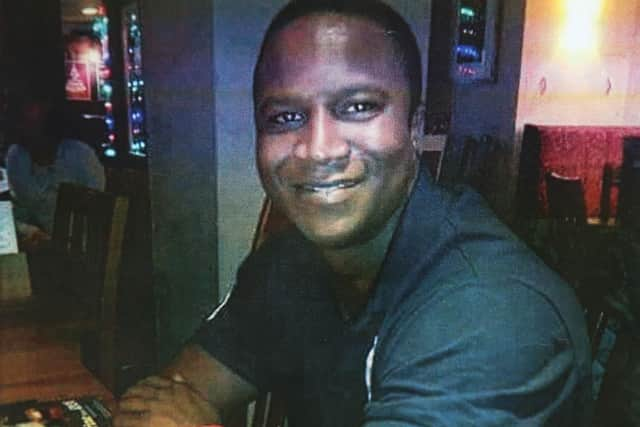
Mr Bayoh, 31, died in May 2015 died after he was restrained by around six police officers in Kirkcaldy, Fife. The inquiry into the circumstances of his death is focusing on how police dealt with the incident, their conduct after his death, and whether Mr Bayoh's race was a factor.
Members of the public called the police after Mr Bayoh was reported to be carrying a knife and behaving erratically. He was not carrying the knife when officers arrived at the scene but a violent confrontation followed,
The inquiry has completed the process of gathering evidence and was due to hear closing submissions, but the extent to which Lord Bracadale’s resignation will impact those plans is unclear.
In his resignation letter to Ms Forbes, Lord Bracadale said that it was clear to him that his written statement in August was not enough to win back the confidence of those who had questiond his conduct.
He wrote: “As a result, it is now clear to me that many of the core participants have lost confidence in my conduct of the inquiry to such an extent that it cannot be retrieved.”
Lord Bracadale added that was concerned that the majority of core participants would have “no confidence” in the findings of any report he prepared, adding: “I consider that that, in turn, would be likely to have a damaging effect on public confidence in the findings of a report prepared by me and recommendations flowing from it. In my view the best interests of the inquiry would be served by the appointment of a new chair to whom the existing evidence, all of which is available on tape and transcript, would be available. “
He reiterated that his decision to meet with the family member of Mr Bayoh was to “obtain and retain” their confidence in the inquiry, and their engagement with it.
“Given their central role, it seemed to me that the participation of the families was essential to the Inquiry fulfilling its terms of reference and if they did not engage with it the effectiveness of the inquiry would be seriously undermined,” he pointed out.
“The families had already lost confidence in all the investigating institutions with which they had contact, including Police Scotland, the Police Investigations and Review Commissioner and the Crown Office and Procurator Fiscal Service. As the inquiry progressed it became apparent at various points that they were losing confidence in the Inquiry and were likely to cease engaging with it. I consider that if I had not had meetings with members of the Families, it is likely that they would have walked out of the inquiry.”
He added: “I very much regret that my conduct in relation to meeting the families for what I considered to be a reasonable purpose of maintaining their engagement with the inquiry has led to a loss of confidence by other core participants in my position as chair.”
The former judge also noted that during the course of the inquiry, former Police Scotland chief constable Sir Iain Livingstone said that the force was institutionally racist, and was taking steps to address the issue under new leadership.
His letter concluded: “I very much hope that the Scottish ministers will be able to appoint a new chair in early course in order to restore the confidence of all the core participants in the inquiry and that the families of Sheku Bayoh will continue to engage with and participate in the inquiry under a new chair.”
Responding to Lord Bracadale’s resignation, the Scottish Police Federation said his position had become “untenable” after details of his several meetings with the Bayoh family came to light.
David Kennedy, the federation’s general secretary, said: “It is unfortunate for all those involved in the Inquiry that this situation has occurred. The meetings between Lord Bracadale and the family of Sheku Bayoh had created an appearance of bias. We look forward to the final stages of the inquiry and bringing this matter to a conclusion.”
Comments
Want to join the conversation? Please or to comment on this article.